

Short Summary
A CDMO performance scorecard helps pharma sponsors track delivery, quality, capacity, release timing, and unresolved actions. Eight focused KPIs provide clearer oversight, highlight problems earlier, and support better decisions without adding unnecessary reporting complexity.
Smaller pharmaceutical companies often rely on CDMOs because internal manufacturing requires major investment. Outsourcing allows teams to focus resources on product development and commercialization. That flexibility still creates clear responsibilities for monitoring external manufacturing performance.
Regular updates may not show whether schedules, releases, or problems remain under control. A CDMO performance scorecard brings those signals into one practical view. Smaller sponsors may only need a shared spreadsheet and regular review meeting.
Why CDMO Performance Measurement Matters
A manufacturing partner can meet certain contractual obligations while the sponsor still experiences operational difficulties. For example, a batch may be manufactured on schedule but remain unavailable because testing or documentation is incomplete.
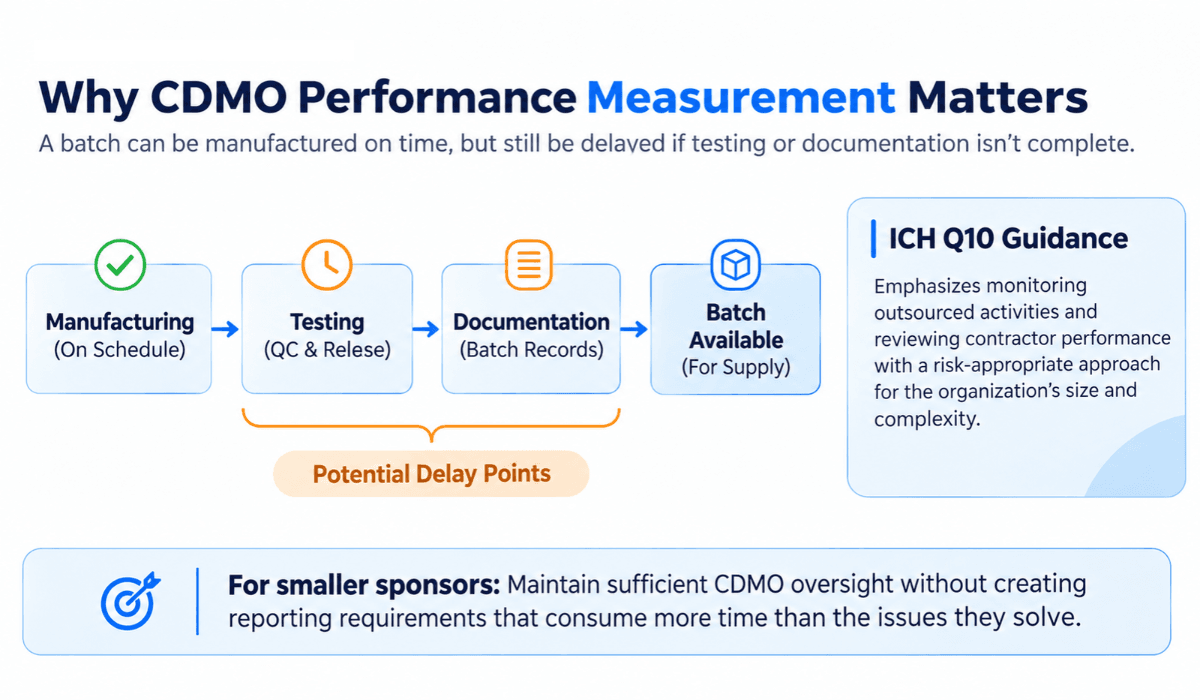
The ICH Q10 Pharmaceutical Quality System guidance emphasizes monitoring outsourced activities and reviewing contractor performance. Importantly, it also recognizes that quality systems should be appropriate to the size and complexity of the organization.
This is particularly relevant for smaller sponsors. They need sufficient oversight without creating reporting requirements that consume more time than the problems they are intended to solve.
Production Schedule Adherence
What to measure: Whether manufacturing activities start and finish according to agreed dates.
A CDMO may provide an estimated manufacturing date when a purchase order is placed, but schedules can change because of equipment availability, materials, or competing production commitments.
Rather than tracking every activity, sponsors can monitor a few agreed milestones: material readiness, manufacturing start, manufacturing completion, and expected batch release. This gives the sponsor an opportunity to adjust downstream plans before a delay becomes a delivery problem.
On-Time, In-Full Delivery (OTIF)
What to measure: The proportion of deliveries received by the agreed date and in the agreed quantity.
OTIF is useful only when both parties define completed delivery clearly. A finished batch still on quality hold is not available inventory. That distinction matters when sponsors review delivery performance and plan downstream supply.
For smaller sponsors, percentages can also hide what actually happened. Tracking deliveries, delays, and their causes often gives better context. A DCAT Value Chain Insights interview also highlighted delivery performance and schedule adherence as important execution measures.
Right-First-Time Batch Documentation
What to measure: Whether batch records and required documentation are completed correctly without avoidable rework.
Manufacturing may be complete, but documentation gaps can still delay batch disposition. Missing signatures, discrepancies, or incomplete records often create additional review work. These issues can slow release even when production has finished.
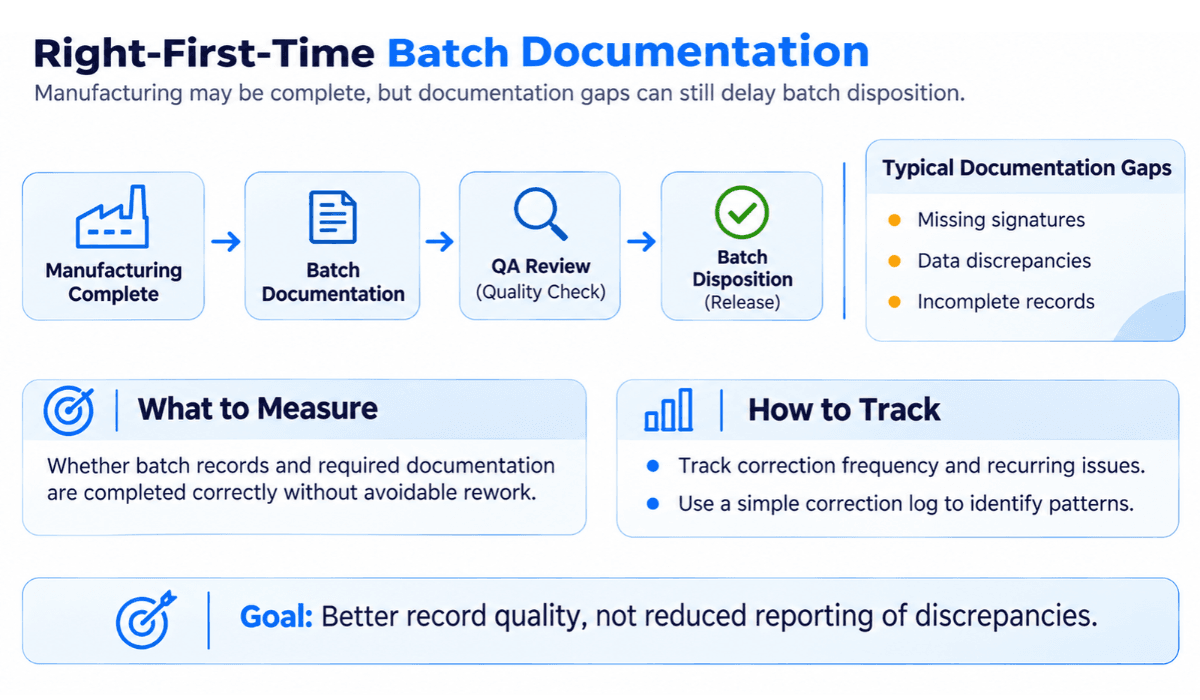
Sponsors can track correction frequency and recurring documentation issues over time. The goal is better record quality, not reduced reporting of discrepancies. A simple correction log can reveal where repeated problems need attention.
Deviation Investigation Timeliness
What to measure: Whether deviations are investigated and addressed within agreed, risk-appropriate timelines.
Deviations are part of regulated manufacturing and do not automatically indicate poor performance. More useful questions focus on communication, investigation progress, and corrective action completion. That context shows whether the response remains timely and controlled.
The FDA's guidance on contract manufacturing quality agreements stresses clearly defined responsibilities for manufacturing and quality activities. The sponsor's quality team should continue overseeing the relevant quality processes. Operational scorecards can show delays without replacing formal investigations or approvals.
Batch Release Cycle Time
What to measure: The time between manufacturing completion and the applicable release or disposition milestone.
A batch can be physically complete but still unavailable for shipment. Testing, documentation review, investigations, and quality approvals can extend release timelines. Sponsors should compare actual release timing against a realistic agreed plan.
Delays should also be separated by the party responsible for action. Some issues sit with the CDMO, while others require sponsor review or approval. Both parties can influence the final release timeline.
Material Readiness
What to measure: Whether required raw materials, packaging components, and other inputs are available before scheduled manufacturing.
A production slot has little value when critical materials are unavailable. Smaller sponsors may face delayed packaging, missing components, or materials awaiting quality clearance. These issues can disrupt manufacturing even when capacity is available.
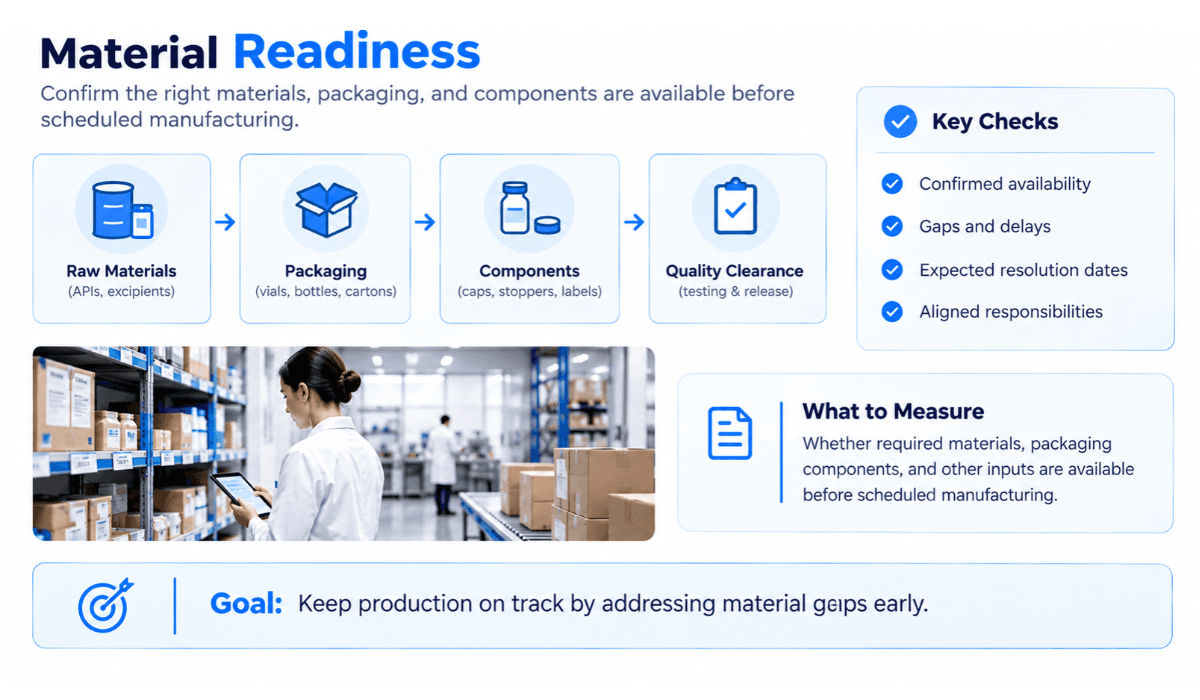
A simple material-readiness report can show confirmed items and unresolved gaps. Expected resolution dates also help teams adjust plans before schedules change. Responsibilities should remain aligned with applicable supply and quality agreements.
Capacity and Forecast Confirmation
What to measure: Whether planned manufacturing requirements have been reviewed and confirmed against available CDMO capacity.
Forecasts often change during launches and early commercial growth. Higher demand does not always mean extra CDMO capacity is available. Sponsors should separate forecasted demand, requested production, and confirmed manufacturing slots.
Monthly capacity reviews may be enough for smaller sponsors. More frequent discussions can help before critical batches or launch milestones. For further context, see why CDMO capacity plans fail.
Issue Resolution and Action Closure
What to measure: Whether agreed operational actions are completed by their target dates.
CDMO performance issues do not always come from manufacturing itself. Delayed responses, unclear ownership, or unresolved decisions can disrupt sponsor planning. These issues often signal communication or decision-making gaps across the relationship.
An action log can track owners, target dates, status, and next steps. Repeated overdue actions may reveal where follow-up needs improvement. Pharmaceutical Technology also highlights structured communication and regular reviews in contract manufacturing management.
Building a Practical Scorecard Without Additional Software
Smaller pharmaceutical companies do not always need a new dashboard platform. A spreadsheet can track eight indicators, current status, owners, and actions. That approach can provide a practical starting point for regular reviews.
Clear definitions matter more than adding another reporting tool or target. Both parties should agree what an on-time batch actually means operationally. It may refer to manufacturing completion, quality disposition, or delivery.
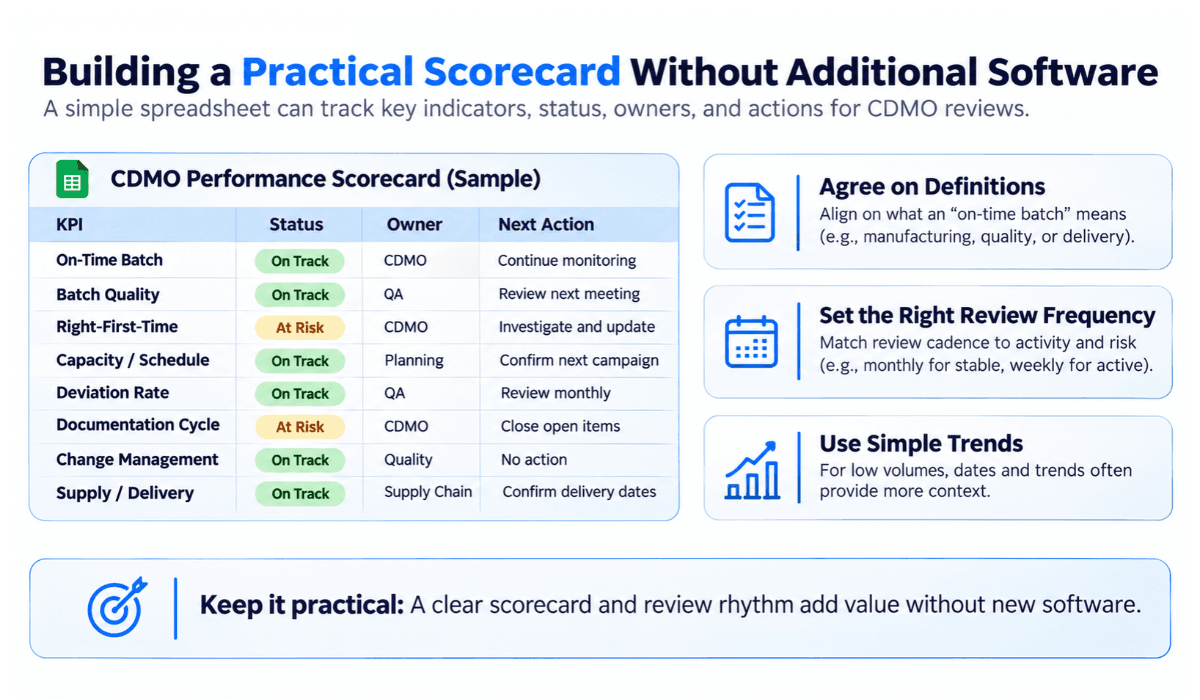
Review frequency should match manufacturing activity, risk, and current priorities. Monthly meetings may suit stable relationships, while active campaigns need weekly reviews. For low batch volumes, dates and trends often explain more than percentages.
The Value of a Simple Performance Review
A scorecard should help sponsors and CDMOs identify problems and agree on actions. It should support decisions, not create another reporting exercise with little practical value. Smaller sponsors often benefit more from improving existing processes.
At Gyan Solutions, our pharmaceutical supply chain consulting reviews CDMO coordination and manufacturing visibility. We also examine reporting processes, operational responsibilities, and delayed decisions. The focus remains on practical improvements the organization can manage.

JASPAUL
I'm Jaspaul, Operational Review Specialist at Gyan Solutions. With 6+ years in pharmaceutical supply chain consulting, I help biotech, CDMO, and medical device leaders build visible, resilient supply chains through business automation and operational alignment.



