

Pharma Operations Consulting
Pharmaceutical Operations Built Around Workflow and Quality Clarity
Gyan Solutions works with pharmaceutical teams to identify how SOPs, quality reviews, batch visibility, reporting, inventory, and ERP/QMS workflows are breaking down, before planning the correct operational or technology solution.
Consulting and implementation are scoped separately.
Align documented procedures with how pharma work actually moves across teams.
Review batch records, lot tracking, release checkpoints, and reporting gaps.
Clarify deviation, CAPA, QA review, approval, and documentation workflows.
Find where systems, data, approvals, and reporting are disconnected.
Prior operational and supply-chain roles within major global pharmaceutical manufacturers.
Experience with GMP environments, batch documentation, change control, traceability, quality review and commercial supply workflows.
Experience supporting CSV planning, ERP/QMS workflow alignment and electronic-record and electronic-signature requirements, including 21 CFR Part 11.
Pharma Operations
Experience
Gyan’s pharma operations perspective is shaped by former team experience inside large pharmaceutical environments, including GSK, Teva, Thermo Fisher Scientific, and Johnson & Johnson. That background helps us understand how SOPs, batch records, QA reviews, inventory updates, ERP/QMS data, reporting, and release decisions move in real pharma operations.
We use that experience to identify pharmaceutical teams where manufacturing, quality, supply chain, reporting, system handoffs, and regulated workflows slow down daily execution before any process change or technology implementation is planned.




See How We Work
Clarify the Workflow Before Changing the System.
Talk through your SOPs, quality steps, reporting, systems, and handoffs before planning dashboards, automation, integrations, or AI-enabled tools.
Where You Are in the Pharmaceutical Lifecycle
Gaps in operation evolve as pharma progresses from the early development stage to commercial scale. We assist teams to identify areas in workflows, systems, reporting, documentation and quality handoffs that are not supporting daily work.
Early Development / Pre-Clinical
At the early development and pre-clinical stage, pharmaceutical teams often work with evolving processes, early documentation, and limited system structure. This is where workflow clarity, reporting discipline, and operational alignment matter most before complexity grows.
The Problem
Work is often handled through informal steps, shared files, emails, and team memory. SOPs, responsibilities, and reporting habits may not be fully defined yet.
How We Help
Structuring workflows, documentation, reporting requirements, and ownership before it becomes difficult to manage.
Not sure where the gap is?
Start with an operational review.
Common Operational Gaps in Pharmaceutical Companies
Pharma operations depend on strong coordination across SOPs, batch records, quality reviews, inventory movement, ERP/QMS workflows, reporting, and release decisions.
SOPs and Daily Workflows
Pharma teams may have documented procedures, while daily execution still depends on emails, shared folders, manual follow-ups, or local habits to keep work moving.
Batch and Release Visibility
Batch status, lot movement, production updates, QA reviews, release checkpoints, and inventory activity may sit across records, spreadsheets, systems, and team updates.
ERP and QMS Alignment
ERP and QMS often support different parts of the operation. Gyan reviews how deviations, approvals, inventory, quality records, reporting, and handoffs connect.
CAPA and Quality Follow-Ups
Deviation, CAPA, QA review, documentation, and approval steps work best when ownership, next actions, due dates, and status updates are easy to follow.
Reporting and Decision Timing
Leaders need reliable visibility into batch status, quality activity, inventory movement, release readiness, and operational priorities before decisions depend on outdated information.
Systems That Support Scale
Processes and tools may need stronger structure as operations move into commercial manufacturing, scale-up, CDMO coordination, or multi-site execution.
Seeing these gaps in your operation?
Start with Clarity. Build Only When the Need Is Clear
Before jumping straight into dashboards, automations, integrations, or custom software, Gyan Solutions enables the pharmaceutical team to understand the actual workflow, quality, reporting, batch, and system gaps.
Advisory & Process Improvement
For pharmaceutical teams that need clearer workflows, stronger process alignment, better reporting, and more practical use of existing systems. Operational Advisory may include operational reviews, workflow and SOP improvement, governance, accountability, performance reporting, system optimization, technology advisory, tool evaluation, and implementation support. The outcome may be a stronger process, better use of current ERP/QMS/LIMS tools, clearer reporting, improved handoffs, updated governance, or a practical roadmap for future system changes.
Explore Pharma Operations Consulting →AI Automation & Technology Implementation
For pharmaceutical teams that already know what needs to be implemented and need technical delivery support. Technology & AI Implementation may include dashboards, systems integration, APIs, portals, workflow automation, data alignment, ERP/QMS/LIMS implementation, AI readiness, AI governance, and AI-enabled operational tools. This work may follow an advisory engagement, but it can also begin independently when the operational need and technical requirement are already clear.
Talk About Technology Implementation →Operational Advisory and Technology Implementation are scoped separately. Clients may engage us for consulting, technical delivery, or both.
Systems Alignment
Align Pharma Systems Around Operational Reality
ERP, QMS, LIMS, MES, document systems, dashboards, spreadsheets, and email workflows often support different parts of the same pharma process. We identify how work, data, approvals, quality records, inventory updates, and reporting move between these systems. The focus is to understand the real operational flow behind the tools and strengthen how systems support daily execution.
The goal is simple: align systems with the real workflow so teams gain clearer visibility, stronger coordination, and more practical use of the technology already in place.
Review ERP / QMS / LIMS Alignment →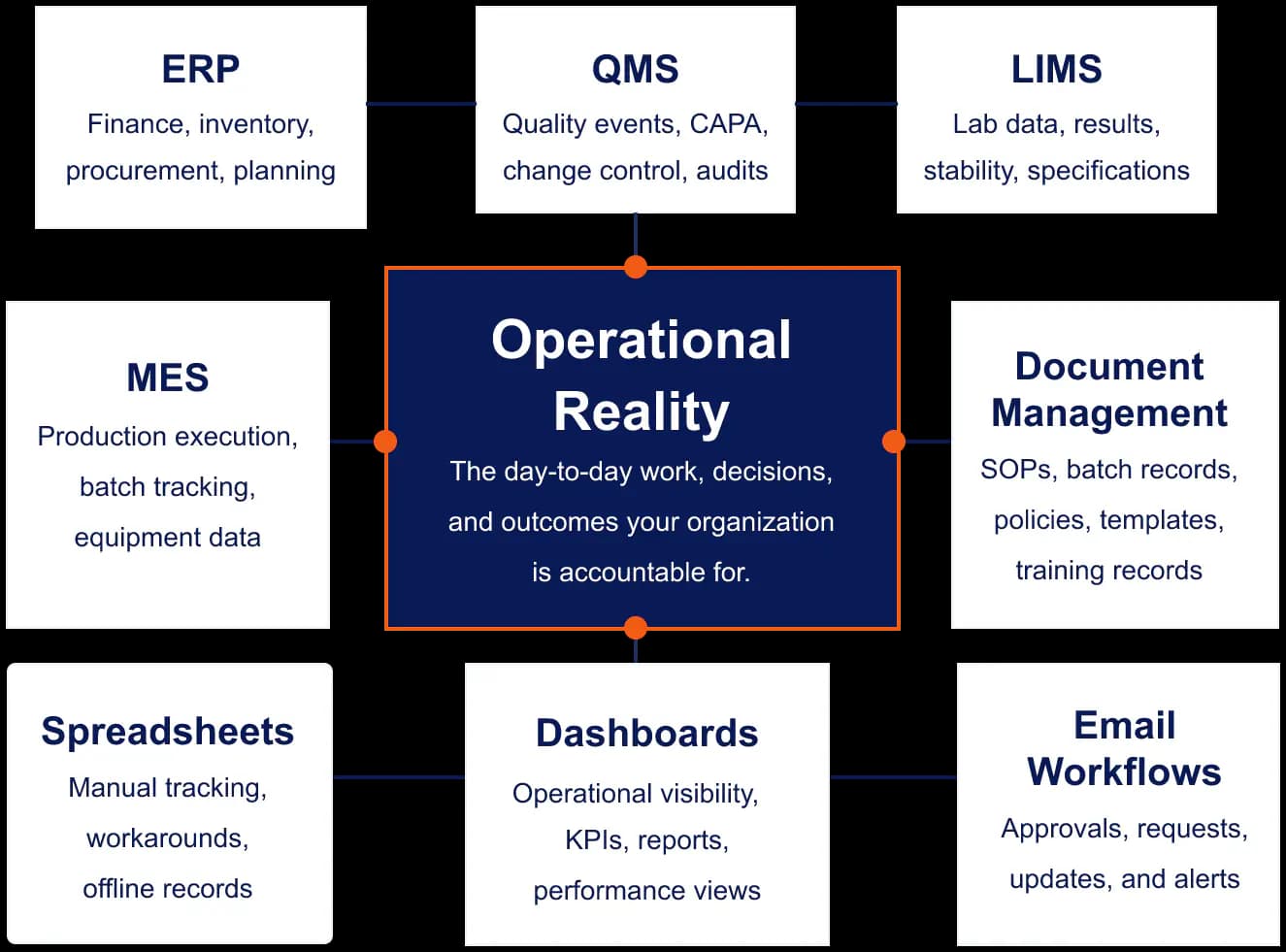
Systems should support the workflow, not force teams to work around it.
Systems Review + Implementation
Review Existing Systems. Implement the Practical Fix.
Pharmaceutical teams invest in ERP, QMS, LIMS, MES, document systems, supplier portals, dashboards, spreadsheets, and internal workflows to support regulated operations. Each platform plays an important role across planning, quality, batch activity, inventory, reporting, approvals, and release visibility. We review the existing system environment against the operating workflow, then help implement the right capability when the need is defined. This may include dashboards, integrations, ERP/QMS/LIMS alignment, automation, portals, reporting improvements, data alignment, AI readiness, or AI-enabled tools.
This path supports teams with a clear operational or technical priority that needs implementation aligned with existing workflows, quality requirements, and system landscape.
Discuss Systems Review →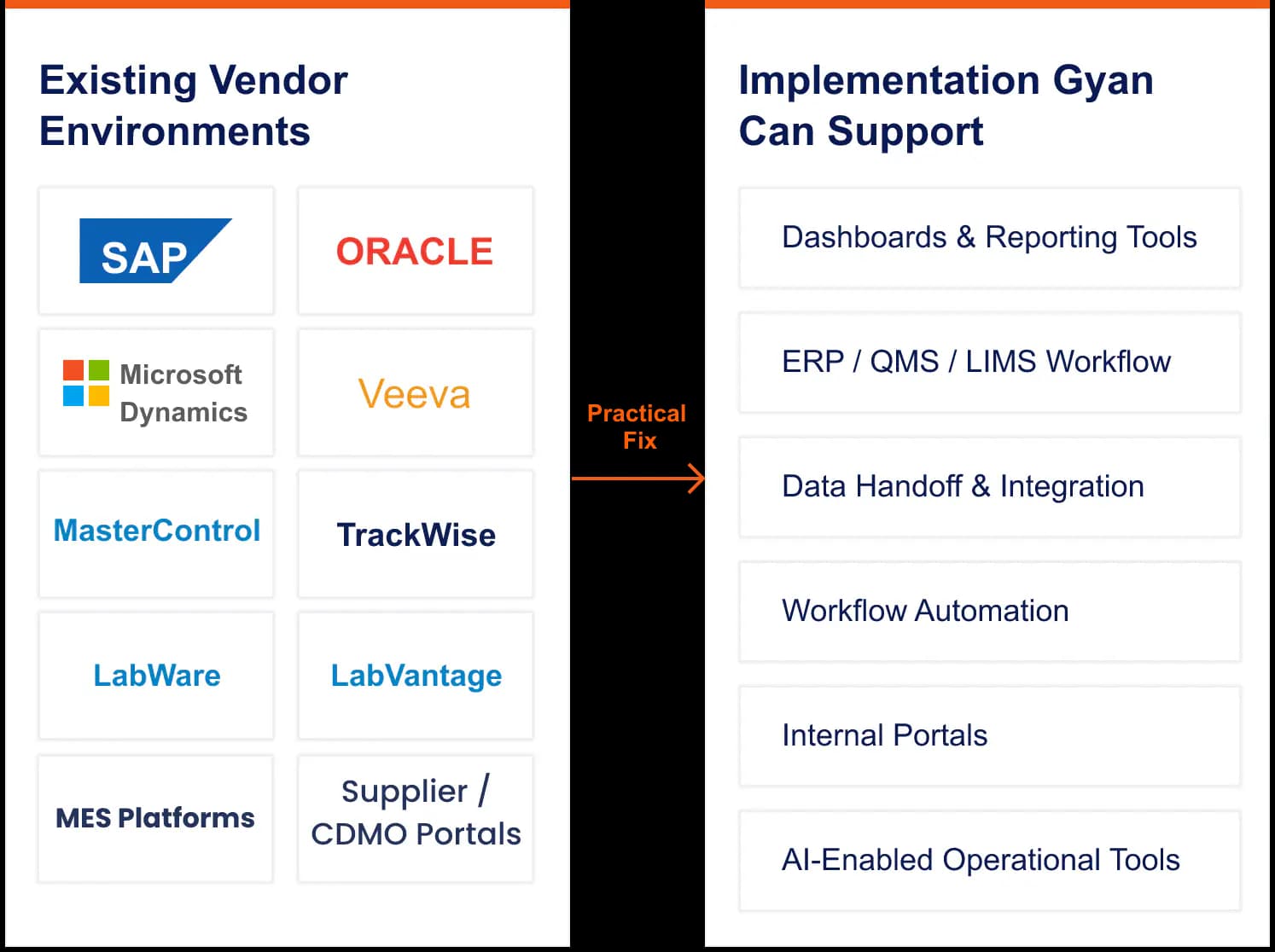
How a Pharma Operations Engagement Works
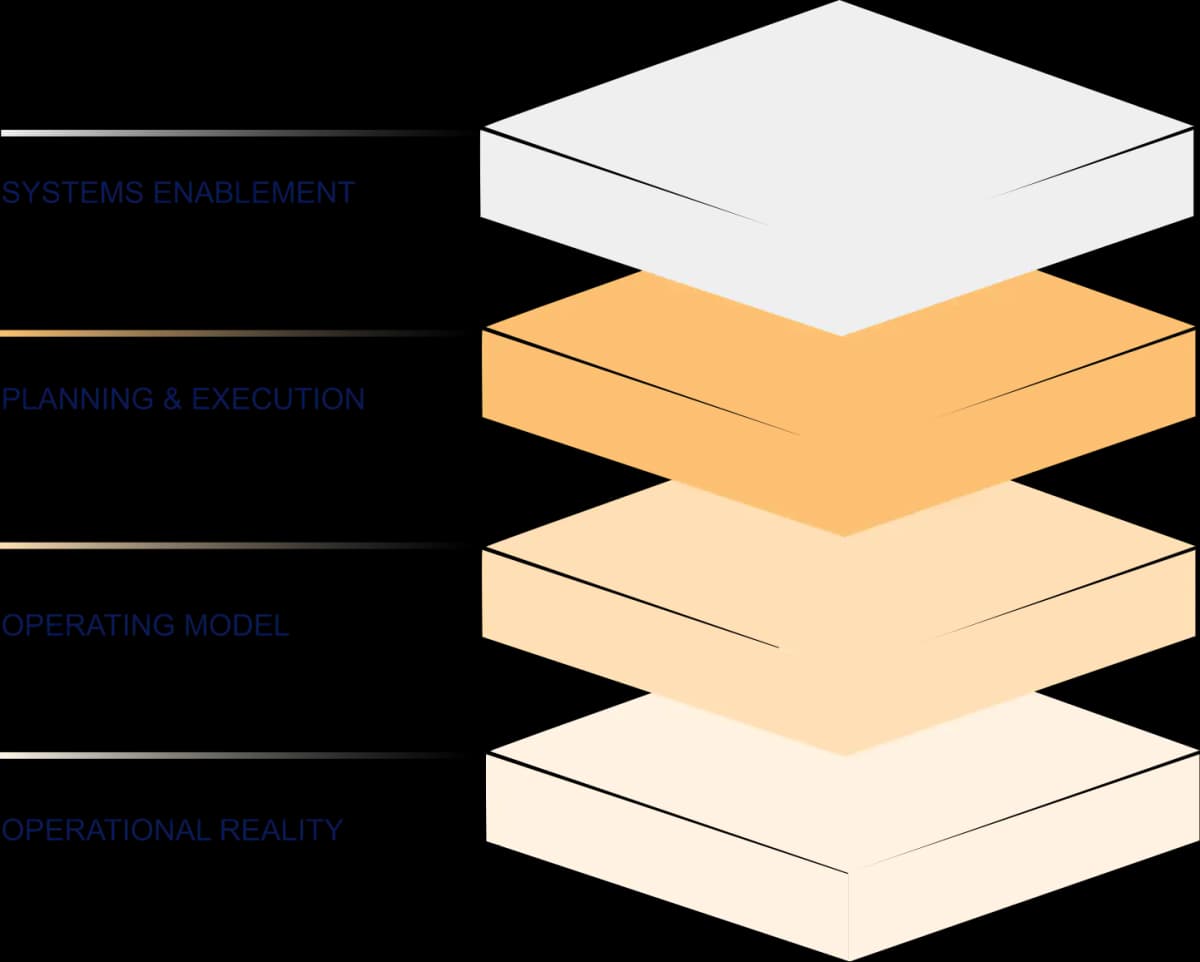
We start by understanding the real workflow before recommending process changes, system work, automation, or implementation.
Operations Fit Call
We discuss your current workflows, quality processes, systems, reporting priorities, and any defined technology requirements across ERP, QMS, LIMS, MES, or related tools.
Engagement Scope
We identify whether the right approach is Pharma Operations Consulting, Technology & AI Implementation, or both, then agree on the scope, outcomes, responsibilities, and delivery path.
Advisory, Implementation, or Both
We deliver the agreed work, from SOP alignment, governance, reporting, workflow improvement, and system optimization to dashboards, integrations, automation, portals, and AI-ready operational capabilities.
Consulting and implementation are scoped separately.
Healthcare & Life Sciences Engagement Experience


Selected Case Studies
Real outcomes from our operations consulting and implementation engagements.
Watch Our Solutions in Action
Find What’s Not Working in 30 Minutes.
Start with a practical conversation about your workflows, systems, reporting, and next steps.
Request a Free Operations Fit Call→

30-minute call

No obligation

Consulting and implementation scoped separately
Common Questions
What is covered by a pharma operational review?
Pharma operational review is a deep dive into SOPs, batch records, quality workflows, reporting, ERP/QMS/LIMS handoffs, inventory visibility, approvals and system gaps to uncover where everyday work is slowing, or even halted.
Is new software required to resolve pharma workflow problems?
Not always. A lack of clear ownership, manual follow-up, disorganized reporting, or the use of systems in the wrong processes is a root cause of many problems. New software is only useful when the actual need is apparent.
Can you help align ERP, QMS, and LIMS workflows?
Yes. We examine how ERP, QMS, LIMS, MES, documents, spreadsheets and dashboards interrelate in the work of the day and identify where there is a need for better alignment between these data, approvals, records and reporting.
What pharma problems do you usually help uncover?
We often help uncover SOP gaps, batch visibility issues, CAPA follow-up delays, late reporting, inventory and lot tracking gaps, system handoff issues, and workflows that no longer fit the current stage of the business.
What happens after the pharma operational review?
After the review, we help decide what should be fixed first. If implementation is needed, it may include dashboards, integrations, ERP/QMS/LIMS workflow improvements, automation, portals, or AI-enabled operational support.
Request a Free Operations Fit Call
Tell us a bit about your goals and challenges. We'll schedule a 30-minute Operations Fit Call to understand your needs and recommend the right next steps.
Focused on your goals
You decide the next step.
Consulting & implementation