


Quick Summary
Delivery delays drain revenue, damage customer satisfaction, and overwhelm dispatch teams. Most late arrivals come from predictable issues poor route planning, traffic, bad load sequencing, and tight service windows. AI route optimization solves these challenges by analyzing real-time data, predicting bottlenecks, and automating the most efficient routes. With smarter planning and dynamic adjustments, logistics teams reduce delays, cut costs, and boost on-time delivery performance.
Delays do not merely represent a small inconvenience, as they directly affect the satisfaction of the customers, performance, and profitability. The logistics managers are frequently seen to be on the hunt for the shipments, making frequent calls and manually modifying routes but the flow is still lagging behind. Every failed delivery is a lost revenue as well as a lost image in a very competitive market.
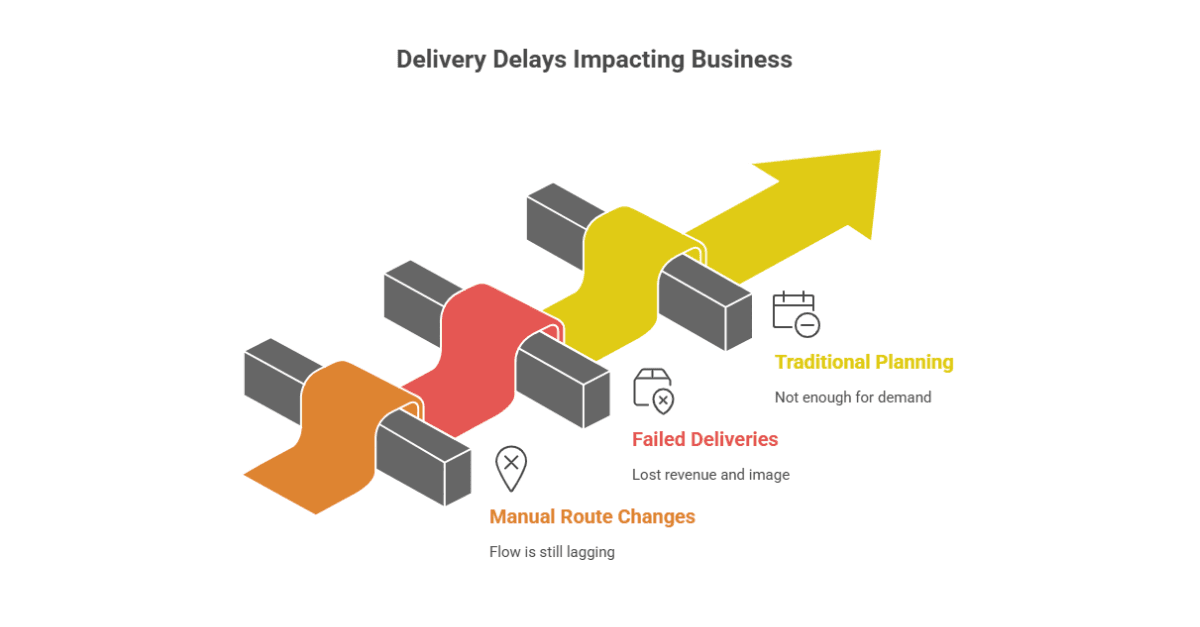
As the demand of e-commerce and complicated supply chains increases, using traditional methods of planning is not enough any longer. The actual answer to this question is in the solution of the problem of why delays occur and how the efficiency of the delivery can be changed by AI-based route optimization. AI assists fleets to remain proactive rather than always reactive by practicing predictive bottlenecks.
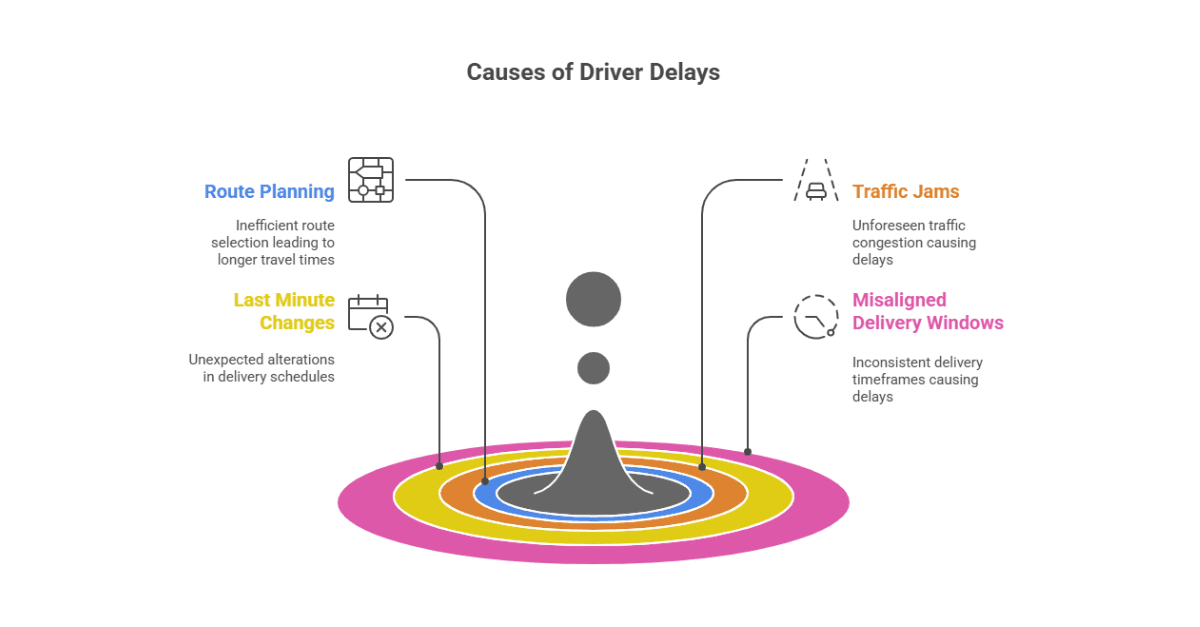
Traffic Patterns and External Disruptions
Much of the reasons for late delivery are urban congestion and unplanned road occurrences. The conventional schedulers might not use dynamic traffic information or they will not adapt to the real time situation and the drivers will end up stuck in the same predictable jam. Smart routing uses AI to respond to the real-time traffic and reroutes drivers before it is too late to avoid a delay, especially when integrated through Generative AI solutions tailored for logistics.
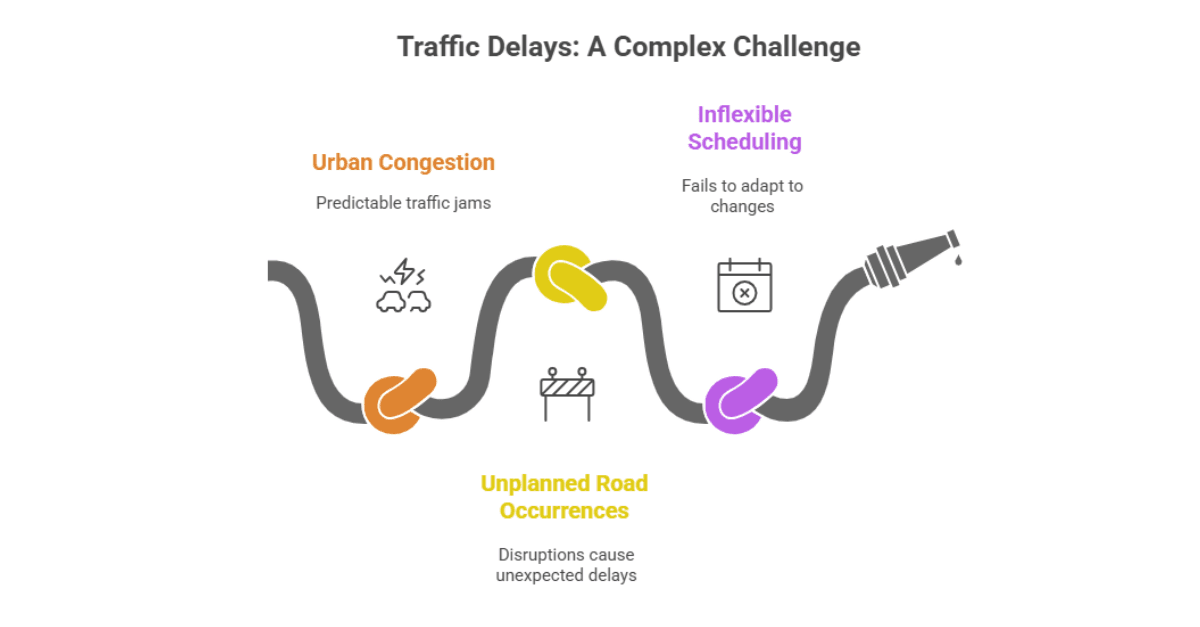
In its turn, AI route optimization incorporates live traffic flows, meteorological data, and warnings. Delays can be prevented before they happen as routes can be dynamically adjusted in real time, saving gallons of wasted fuel and man hours, and enhancing on time performance. This active strategy transforms the uncertain conditions on the road into data-driven choices.
Inefficient Load Planning and Dispatch
The other issue is lack of good load sequencing. The drivers could be given deliveries that are not geographically optimized, which involves going out of their way or taking the long way. There is overlap and inefficient grouping that increases the delivery time and stress to the drivers. AI streamlines stop order in an automated manner, allowing routes to be logical and removes wastages.
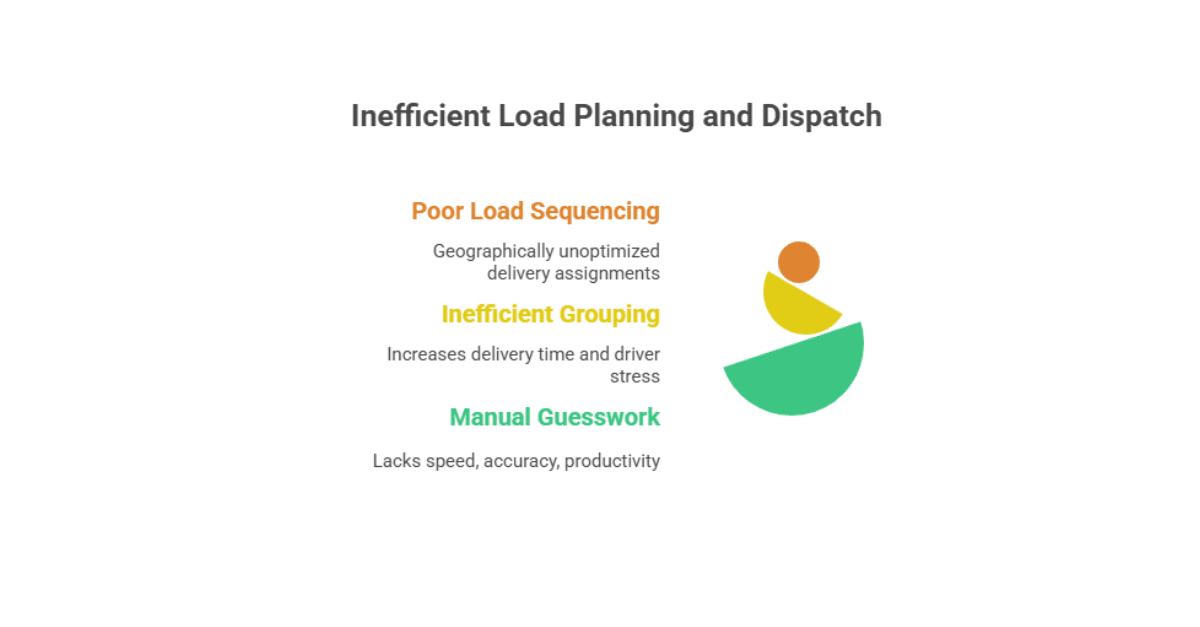
Generative AI-powered systems are used to compute the most efficient order of the routes with factors such as the capacity of the vehicle, delivery times, and stop priorities. This will minimize the idle time, reduce missed appointments and maximize the number of deliveries per route. AI eliminates the manual guesswork to optimize each route in terms of speed, accuracy and overall productivity.
Customer Expectations and Tight Windows
The consumers are now in need of speed in delivery and accurate arrival times. Delays or failure to deliver on time may lead to complaints, bad reviews or even failure to secure contracts. Manual scheduling systems have difficulties in balancing these narrow windows with several drivers and paths. AI forecasts the delivery windows that are on the brink of failure and reallocates resources to safeguard service-level contracts before they fall.
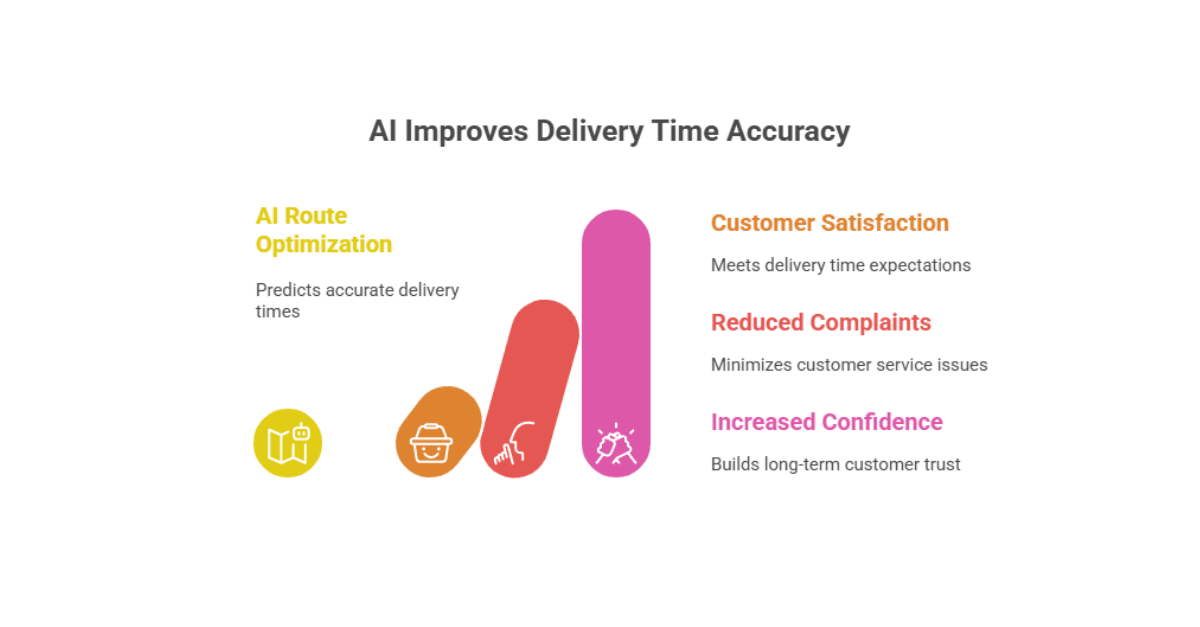
AI route optimization accurately predicts delivery times by adjusting for traffic, loading durations, and service windows, as shown in our real-world logistics case study on LinkedIn. This helps managers provide reliable arrival estimates, meet customer expectations consistently, and strengthen long-term confidence in their delivery performance.
The AI Solution: Real-Time Route Optimization
AI-based route optimization is based on machine learning algorithms to work with vast amounts of data within seconds. It analyses the past traffic patterns, driver actions and delivery restrictions to produce the most efficient path to take on a given day in the shortest time possible. The system becomes smarter as it learns with time and each delivery cycle enhances the quality of routes and operational efficiency.
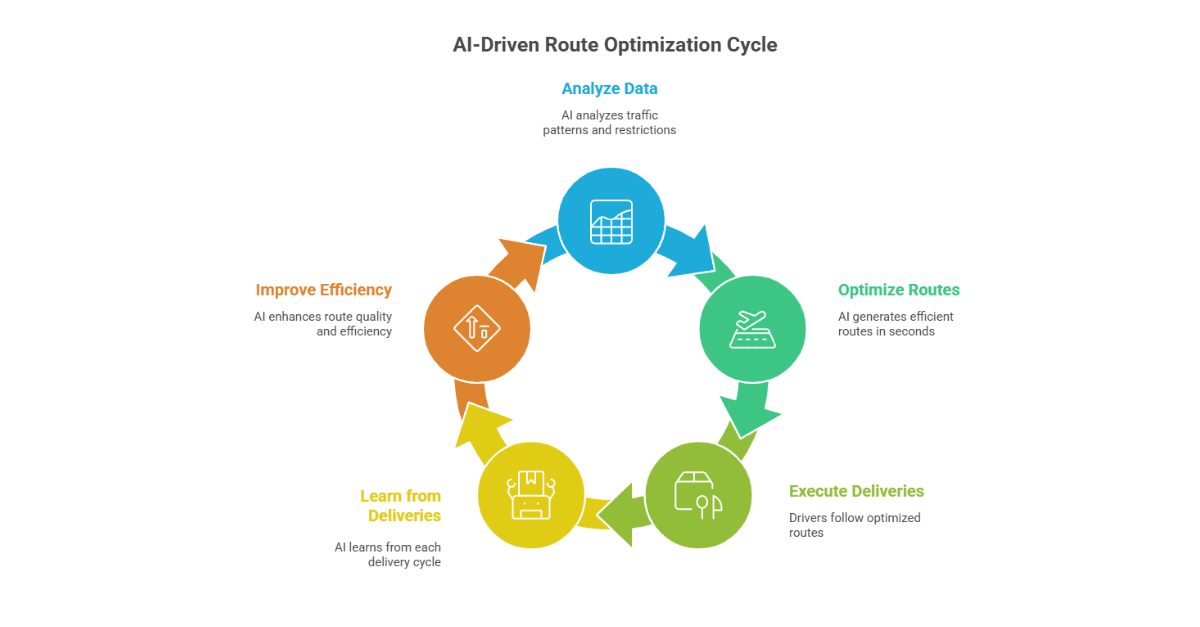
The AI will be able to adjust routes through time by learning constantly on every delivery, anticipating delays before they occur and automatically deterring drivers. Firms that have applied this strategy have had deliveries up to 2530 percent faster and their operational costs greatly reduced. This is a continuous improvement cycle that puts routing into the form of a living system that gets increasingly more precise and efficient with each mile travelled.
Case Study: Success in Action
One of the logistics companies, which is mid-sized, incorporated AI in its 50-truck fleet to optimize the routes. Their punctuality rate of delivery was around 72 before AI. Implementation enhanced on-time performance to exceed 92 after implementation, it also reduced overtime work of drivers and fuel consumption by implementing real-time route optimization and dynamic load planning.
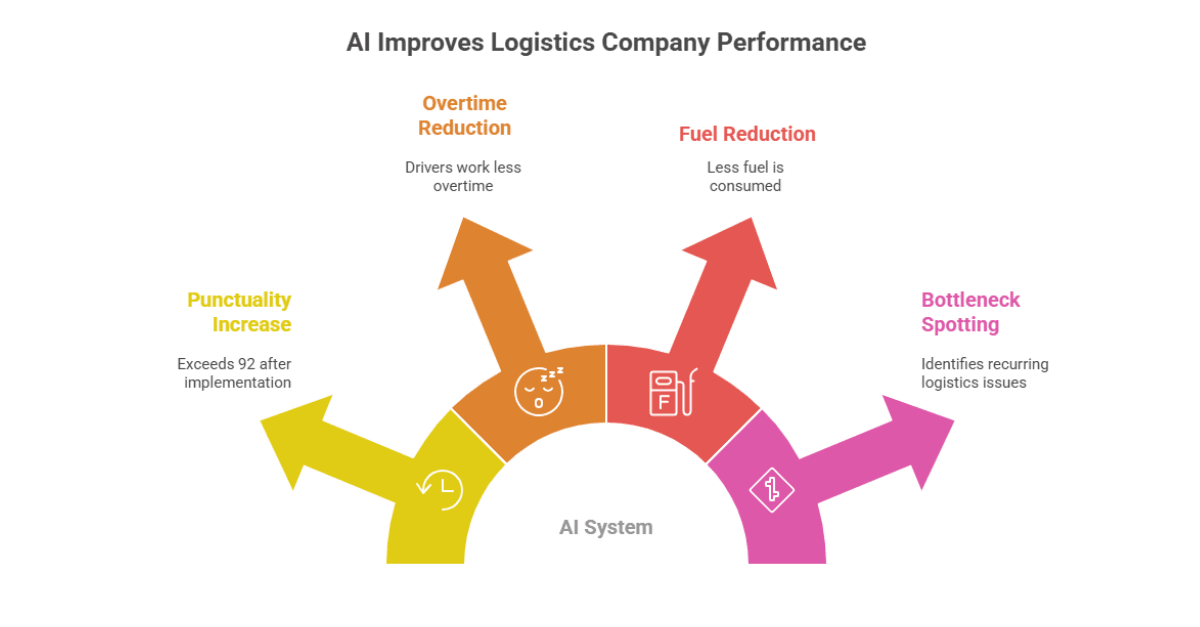
The AI system further gave the management actionable analytics and was able to spot recurring bottlenecks and enabled them to improve the process beyond routing. The findings confirmed that delayed deliveries are not predetermined - they can be avoided with the appropriate tools, just like we observed in this shared insight from our leadership. AI helps teams address the underlying causes of issues rather than the daily battles by transforming the unknown into the visible.
Conclusion
Delays in delivery are seldom occasioned by one thing. The inefficiency is caused by traffic, load planning, strict delivery window schedules and old systems. The initial step towards resolving these root causes is having an understanding of them.
The optimization of routes with AI is a very viable and scalable solution. Driven by real-time dynamically analyzing several variables and being able to modify them, AI ensures that drivers reach their destination in a shorter time, lowers operational expenses, and makes customers happier.
We, at Gyan Consulting, assist the logistics and 3PL firms to deploy AI route optimization solutions that will be specific to their business. Predictive routing to real-time adjustments Our AI-based system will help us to change how delivery operations are conducted in a reactive way and make it proactive. Delayed deliveries will not help your business update your routes with AI today.

SUKHPREET SINGH
I'm Sukhpreet Singh, Director of Innovation & Technology at Gyan Solutions, specializing in generative AI, AI chatbots, and ERP integration. I design AI solutions that integrate seamlessly into existing systems without disruption. I build conversational chatbots that improve decision speed and agentic AI systems that automate complex workflows. Over 8+ years, I've deployed AI-powered decision-support platforms that improve visibility and planning accuracy. My approach centers on alignment: AI works best when designed around your business, not when your business is forced around the AI. I believe intelligent systems should be invisible they simply improve decisions and outcomes.





