


Quick Summary
Global certifications like the ITC Quality in Business have become essential for tech companies competing in a trust-driven digital landscape. These standards strengthen credibility, reduce compliance risks, and help companies stand out in crowded markets. By demonstrating operational excellence, ethical governance, and security, certified tech firms gain stronger visibility, smoother international expansion, and greater confidence from enterprise clients and global partners.
Trust and credibility have become a key element in the fight in the hyper-competitive digital economy where gaining or losing a client depends on trust and credibility. The world certifications are now no longer a nice-to-have but are vital representations of quality, safety and uniformity. In the case of tech firms, in particular, where services are international, and data moves without limit, the certifications are the evidence that a specific firm is competing on the most advanced global standards.
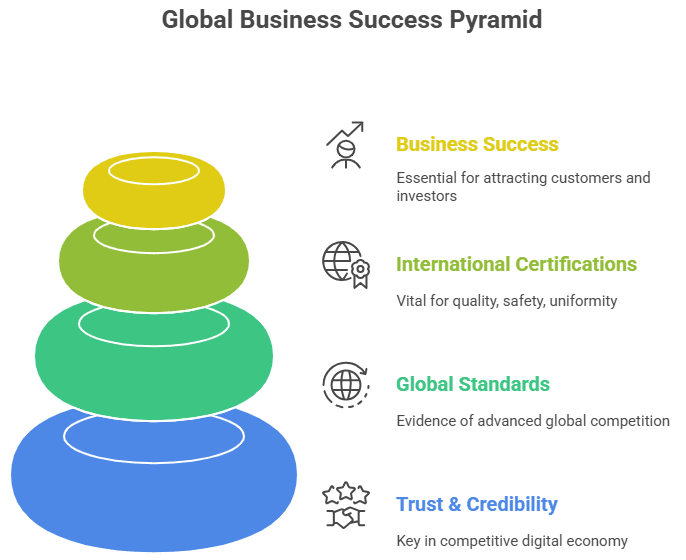
Within the coming twenty five years, any business that does not embrace internationally recognized certifications will be forgotten as time goes by. Certifications such as the ITC Quality in Business are becoming a standard component of business success whether it is the attraction of enterprise customers, the introduction of new markets or investor confidence.
Understanding the ITC Quality in Business Certification
The ITC Quality in Business certification was developed by the International Trade Council (ITC) in order to have an international standard of operational excellence. In contrast to sector-related certifications, the framework of ITC examines all the aspects of governance of a company, customer satisfaction, ethical conduct, and performance.
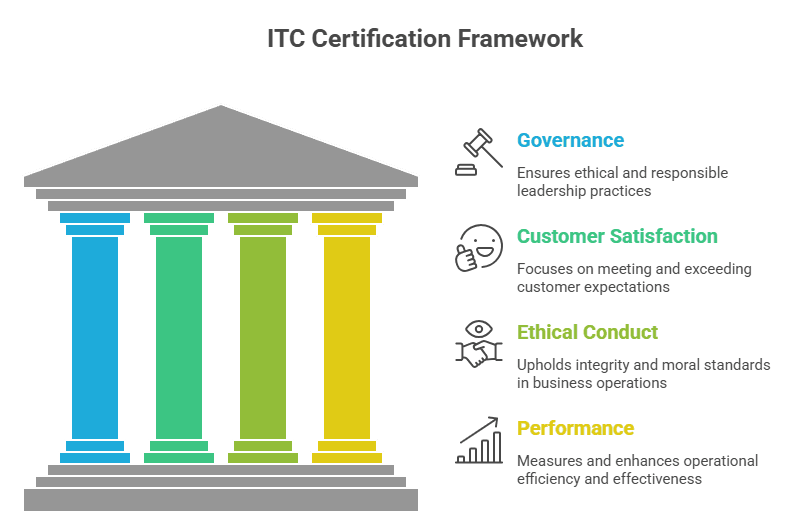
In the case of tech companies, this is important since technology is widely experienced across a number of industries simultaneously. The certification of a company by ITC is an indication of not only technical competence but also adherence, responsibility, and stability. Such recognition is an effective differentiator in a world where software malfunctions can cost millions.
Building Global Trust with ITC Quality in Business Certification
Faith is money in the digital age. Edelman 2023 Trust Barometer report indicated that 71% of businesses in the world would prefer to work with certified technology partners. Certifications are the third party attestations of the ability of a company to provide consistently, ethically and safely.
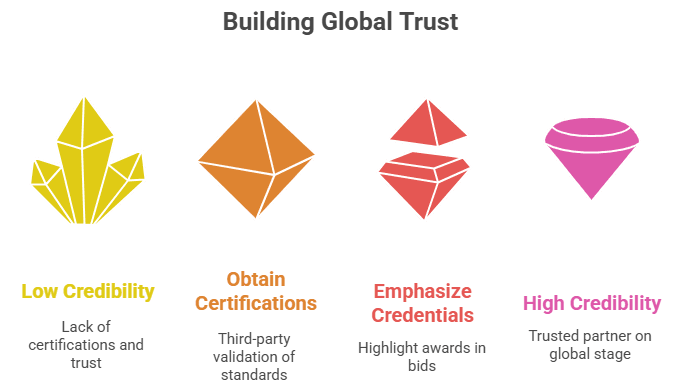
As an illustration, once IBM emphasizes its ISO and ITC awards in bids, it will be seen as a less risky partner by international clients. Smaller technological companies as well are able to even the playing field by displaying credentials which demonstrate that they are at international standards, which will be given credibility even on a global level.
Compliance and Risk Management Made Easier
International standards assist technology firms in overcoming complicated laws. Data privacy regulations such as GDPR in Europe, CCPA in California, or the Digital Personal Data Protection Act that is currently being developed in India may leave one confused about how to keep up. This is facilitated through the use of certifications which harmonize the internal policies to international standards.
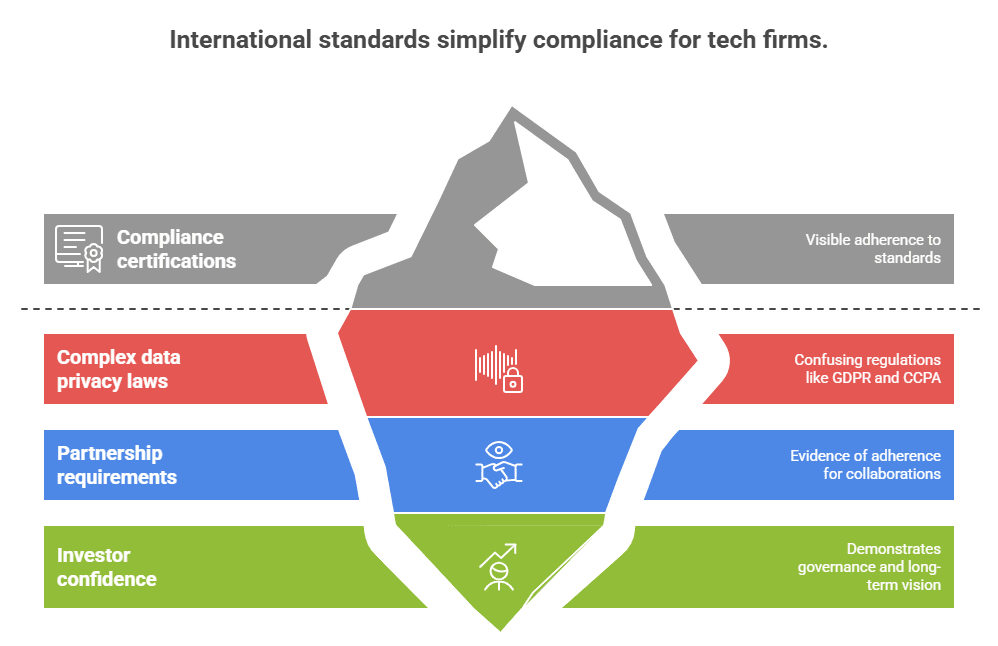
Take as an example fintech startups. Most of them cannot even partner and even go international without evidence of adherence. The certifications serve as an intermediary that mitigate both to the partners and the clients and indicate that regulatory requirements will be fulfilled. Another benefit is that they establish investor confidence which demonstrates to them that the startup takes governance and long-term development seriously.
Competitive Advantage in Crowded Markets
The worldwide market of tech services exceeded 5.3 trillion dollars in 2023 and it is expected to rise continuously up till 2030. Certifications may be the difference between a business and its competitors in such a saturated field. The certifications are commonly used by the clients as a filter to reduce the list of vendors.
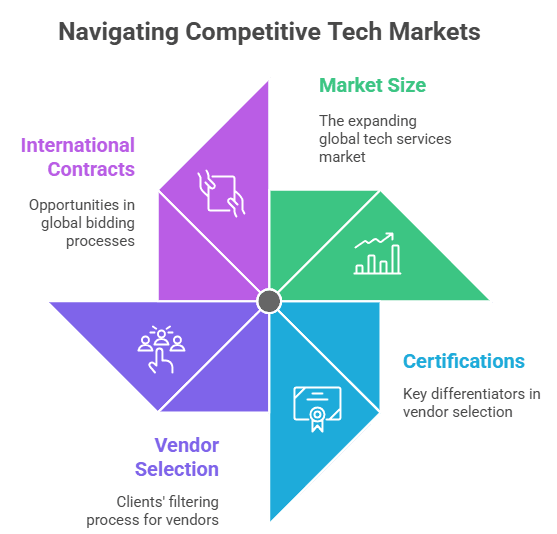
Indicatively, in the bidding of international contracts, firms that have ITC or ISO certifications are usually sidelined and moved into consideration. Through a highly competitive setting where RFPs (Request of Proposal) are worth millions, appropriate certification may make the difference.
Driving Partnerships and Customer Confidence
The tech industry is sustained by partnerships. Cloud service providers to systems integrators, world technology ecosystems are built on trust. Such certifications as that of ITC provide an assurance to a potential business partner that your organization adheres to the best practices in management and service delivery. They also pave the way to high value partnerships that would have not been accessible thereby providing a competitive advantage to your business venture in highly populated markets.
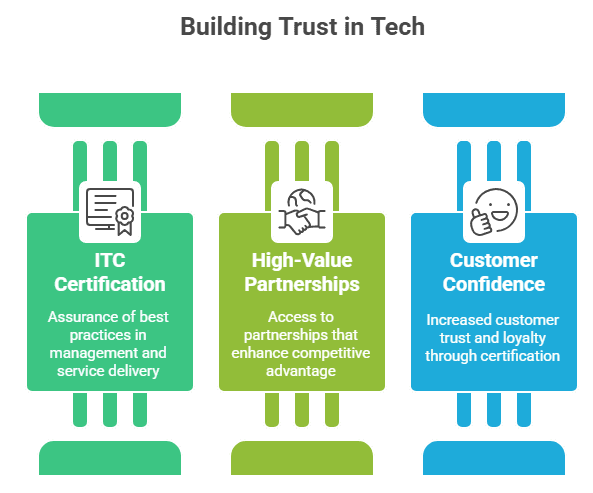
Even customers are more assured to invest in certified company solutions. In a survey conducted by PwC, it was revealed that a majority of the consumers (52%) would choose a brand that is in compliance and certified in their communication. In the case of a tech company, this may be in the form of quicker customer acquisition and better long-term loyalty.
Case Studies: How Certifications Propel Tech Companies
Apple has been promoting its ISO certifications to demonstrate its dedication toward data privacy and sustainability, which have been able to keep it competitive despite increasing global regulation. In the same way, Microsoft uses the certifications within the cloud services to provide assurance to enterprise clients in highly regulated sectors such as finance and healthcare.
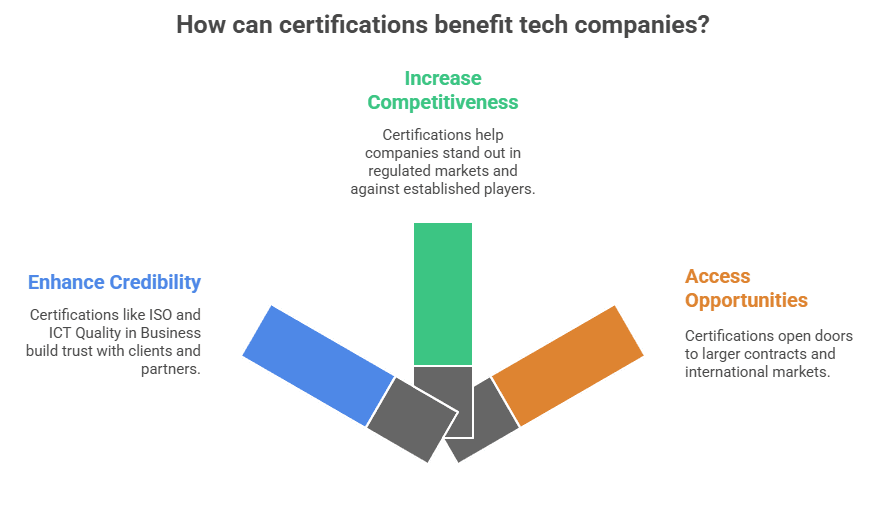
At a smaller scale, startups in Southeast Asia which had obtained ICT Quality in Business certification had better rates of success when pitching to international clients. To them, the certification was a passport, they were already fit to compete with other established players in the international scene. Other than credibility, it also provided these startups with access to bigger contracts and cross-border opportunities, which they could not access before.
The Future of Certifications in Tech
The importance of certifications will continue to increase in the coming decade. As cybersecurity threats have been on the rise, costing businesses more than 8 trillion around the world in 2023, companies will have no other choice but to show resilience by certifying on data security, sustainability, and ethical governance. The early adopters of these standards not only will protect themselves, but also will be at an advantage in gaining customer trust as well.
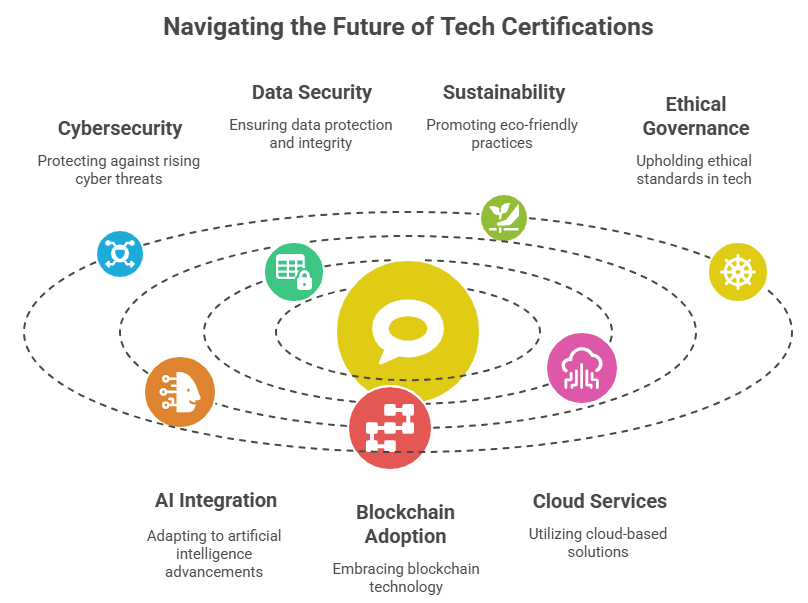
Certifications will change to accommodate such risks as artificial intelligence, blockchain, and cloud services transform industries. In the case of tech firms, flexibility and retention of well-known certifications will be the determinant of their relevance in the international markets. Individuals that view certification as an ongoing process, not a box to be checked once, will be in a better position to drive change, and will not lose client trust.
Conclusion
International awards such as the ITC Quality in Business are beyond badges to being a strategic instrument of trust, compliance and competitive edge. Tech companies that have certifications are committed to quality, security, and sustainability from multinational corporations to agile startups.
The business case is evident, certifications speed up the process of client trust, secure partnerships and open opportunities in foreign markets. They will become inevitable as industries become more competitive and regulations become stricter. The ones that adopt certifications today will be the ones that are shaping the global tech tomorrow.
Gyan.Solutions assists companies in getting ready for this future. Being fully compliant, highly secure and innovative, we guarantee our clients are not simply certification ready, but also poised to expand globally. In case you want to take your business to the next level with globally known standards, then we can begin to lay the groundwork to your success.

PAUL LUCKI
I'm Paul Lucki, Head of Business Development at Gyan Solutions, specializing in business automation, ERP implementation, and operational reporting. I partner with C-suite leaders to diagnose coordination failures and design systems that align teams, data, and processes. I've helped organizations reduce operational delays by 30-40% through integrated systems and decision-support infrastructure. My expertise focuses on automating manual processes, developing ERP implementations that reflect operational reality, and building reporting systems that drive real decisions. I believe operational excellence begins with systems that reflect reality, not theory.





