


Quick Summary
Detroit's tech sector is growing fast. Businesses choosing IT partners in Detroit aren't just buying software. They're solving execution coordination problems rather than purchasing off-the-shelf solutions. The region offers specialized expertise in Industry 4.0 adoption, ERP integration, and systems automation that offshore vendors cannot match.
Detroit's tech momentum is accelerating. The region is no longer defined by a single automotive legacy; it's evolving into a genuine technology center. Thirty-seven percent of manufacturing firms in Michigan now invest in automation and software transformation. Companies searching for IT companies in Detroit Michigan are typically evaluating long-term execution partners who understand regional manufacturing complexity, automotive standards, and healthcare compliance requirements. The difference matters. Offshore IT vendors offer transactional services. Detroit IT companies offer regional intelligence combined with systems expertise. They understand automotive software timelines. They navigate ERP integration challenges. They know which healthcare platforms work in Michigan regulatory environments. Selecting the right partner determines project success. The wrong choice delays timelines and creates coordination friction. This guide explains how Detroit's IT sector works, which companies specialize in which areas, and how to evaluate partners for long-term execution.
Why Detroit's Technology Sector Is Growing Rapidly
Detroit's IT boom isn't luck. Three things are driving it.
- Companies are adopting new manufacturing technology. Manufacturers across Michigan are buying connected systems. They're investing in data analysis. They're automating production lines. This isn't just talk, it's real money. Companies need architects who understand factory floors and data systems.
- Automotive software is changing fast. Electric vehicles aren't like traditional engines. They need different software designs. Battery management, self-driving systems, car connectivity all demand developers who know automotive rules. Detroit has those developers. Most offshore companies don't.
- Michigan's startup scene is growing. New companies are launching in autonomous delivery. They're building supply chain technology. They're creating last-mile logistics solutions. These companies need engineers, cloud specialists, and integration experts. Local IT firms are filling these roles.
Manufacturing automation investment is driving measurable IT spending. According to CompTIA 2025 workforce data, Michigan's technology sector grew 4.2% year-over-year, driven primarily by manufacturing digitization and automotive platform modernization.
Top IT Companies in Detroit Michigan to Know in 2026
Detroit's IT market has many types of firms, some are small specialists and some are full-service integration shops. Here are companies worth considering.
KitelyTech: Enterprise Digital Transformation Solutions
KitelyTech is a Detroit-based technology consulting firm that helps organizations solve complex business problems through custom software and AI implementation. The company works with startups and enterprises across healthcare, fintech, and logistics to build scalable applications and automation systems.
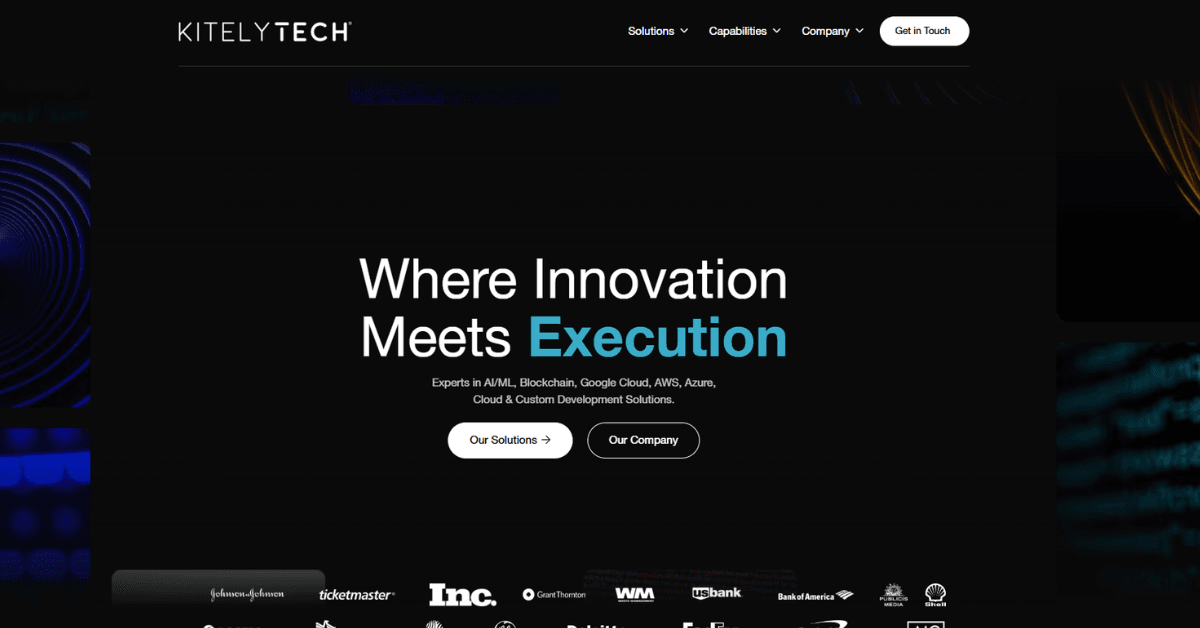
What makes KitelyTech stand out is their focus on practical results. Rather than selling technology for its own sake, they prioritize solutions that improve how organizations operate. Their team builds custom platforms, implements artificial intelligence systems, and modernizes cloud infrastructure to help companies make faster, data-driven decisions.
What KitelyTech Does Best
- Custom software platforms built for enterprise scale
- Artificial intelligence and machine learning solutions
- Cloud infrastructure modernization and optimization
- DevOps automation for continuous improvement
- Data analytics systems for better decision-making
Detroit Labs: Mobile & Web Application Development
Detroit Labs is a digital innovation studio based in Detroit that builds mobile apps, web applications, and enterprise software for organizations in automotive, finance, and healthcare. Since 2011, they've partnered with major brands like Volkswagen and Rocket Companies to launch products used by millions.
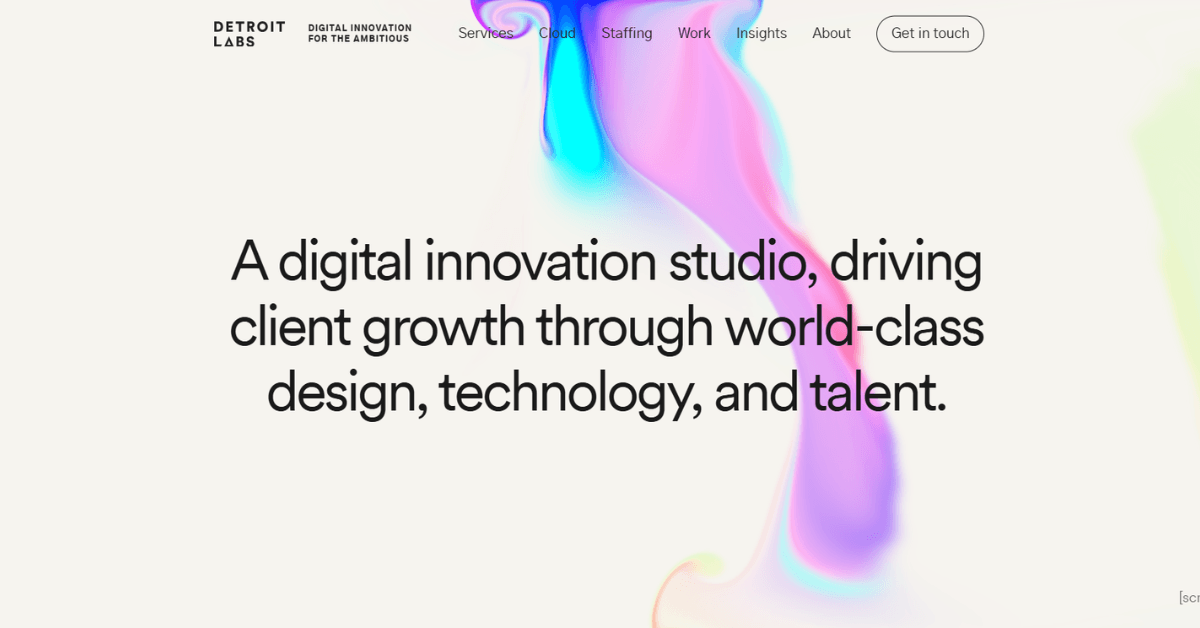
Their approach combines strategy, design, and technical expertise. Detroit Labs doesn't just code, they partner with your team to understand your goals, design solutions that work for real users, and build products that scale. They also provide technical staffing solutions, helping companies expand their engineering capabilities without the overhead of permanent hires.
What Detroit Labs Specializes In
- Mobile application development (iOS and Android)
- Web application design and development
- User experience (UX) driven product innovation
- Cloud engineering and infrastructure support
- Technical staffing and engineering team augmentation
Altair: Simulation Software & High-Performance Computing
Altair is a global technology company headquartered in Troy, Michigan, that serves industries like aerospace, automotive, and manufacturing. They're known for simulation software and computing solutions that help engineers design better products, faster.
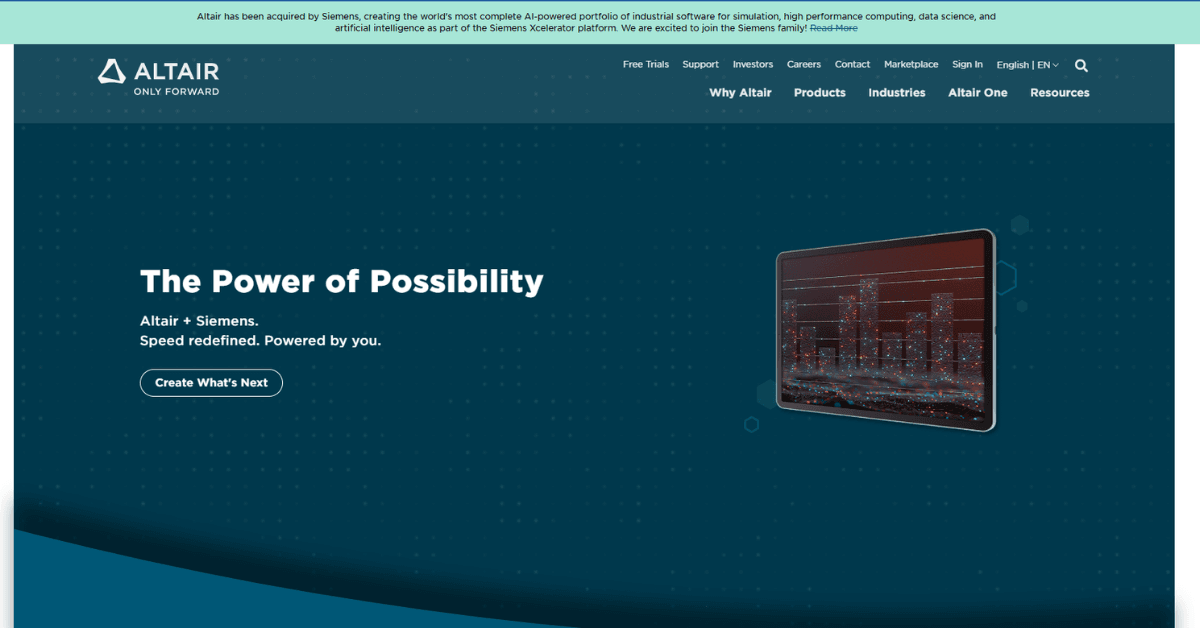
Altair's tools are used by NASA, Airbus, and major automotive manufacturers because they deliver results. Their software simulates real-world conditions, helping companies optimize product designs before manufacturing, saving time and money. With artificial intelligence integration and IoT platforms, Altair helps enterprises accelerate innovation cycles and improve engineering accuracy.
Altair's Core Capabilities
- Engineering simulation and modeling software
- High-performance computing infrastructure
- Artificial intelligence for product design optimization
- Internet of Things (IoT) and sensor data analytics
- Computational modeling for complex engineering challenges
Tata Technologies: Automotive & Aerospace Engineering Services
Tata Technologies is a global engineering services company with strong roots in Detroit, supporting automotive, aerospace, and industrial manufacturers. As part of the Tata Motors family, they bring deep manufacturing expertise to digital transformation projects.
They specialize in helping manufacturers modernize operations through connected systems, simulation, and digital engineering. Their teams work directly with original equipment manufacturers (OEMs) and suppliers to accelerate product innovation, reduce time-to-market, and improve engineering efficiency through model-based approaches.
Tata Technologies' Key Strengths
- Product lifecycle management (PLM) software and services
- Automotive engineering and embedded software development
- Model-based systems engineering (MBSE)
- Digital manufacturing and industrial transformation
- Aerospace and industrial equipment engineering support
MBM Technology Solutions: Managed IT Services & Cybersecurity
MBM Technology Solutions has been serving Southeast Michigan businesses since 1985 as a trusted IT partner for organizations that need reliable, secure infrastructure. They specialize in managed IT services that reduce downtime and keep operations running smoothly.
Their managed service model means companies can consolidate multiple IT vendors into one partner that handles everything from network security to cloud services. MBM provides the stability that mid-size and enterprise organizations need to focus on their core business without worrying about IT problems.
MBM's Service Areas
- Managed IT services and infrastructure support
- Cybersecurity monitoring and threat protection
- Cloud services and disaster recovery planning
- Network infrastructure and workplace connectivity
- Data backup and business continuity solutions
Rinf.tech: Enterprise AI, Embedded Systems & Robotics
Rinf.tech is a global software engineering company delivering custom AI solutions, embedded systems, and robotics platforms for automotive, fintech, retail, and IoT-driven organizations. With delivery centers across North America, Europe, and Asia, they bring global scale to local projects.
Their engineering teams excel at taking complex technology challenges and building practical solutions. From artificial intelligence platforms to connected vehicle software, Rinf.tech helps enterprises modernize their technology infrastructure and automate critical business processes. They're particularly strong in automotive technology and digital cockpit systems.
Rinf.tech's Technical Expertise
- Enterprise artificial intelligence and machine learning platforms
- Embedded software development for automotive systems
- Robotics and industrial automation integration
- Cloud migration and digital system modernization
- Connected vehicle and IoT software solutions
Gyan Solutions: Enterprise Integration & Operational Alignment
At Gyan Solutions, we take a different approach than most software vendors. Instead of building standalone systems, we focus on connecting systems so data flows cleanly and decisions are faster. Our specialty is helping organizations eliminate gaps between planning, execution, and reporting.
We work with manufacturers, logistics companies, and complex multi-system environments where outdated reporting delays decisions. By improving data integration and system alignment, we help companies scale without adding coordination overhead. Better data means better decisions.
What We Focus On at Gyan Solutions
- ERP system integration and alignment
- Operational decision-support infrastructure
- Workflow automation and process visibility
- Cross-system data integration and reporting
- Execution-focused enterprise software architecture
What Services Leading Detroit IT Companies Typically Offer
Detroit IT firms generally provide five core service categories:
Custom Software Development.
Firms build industry-specific applications for manufacturing operations, supply chain coordination, and automotive platforms. Development typically includes requirements analysis, architecture design, agile delivery, and long-term maintenance planning.
ERP Integration Services
SAP, Oracle, and Microsoft Dynamics implementations require industry expertise and integration capability. Detroit firms specialize in manufacturing ERP setups, supply chain modules, and automotive-specific customizations that generic integrators miss.
AI and Automation Solutions.
Manufacturers need predictive analytics for production optimization, demand forecasting, and preventive maintenance. Detroit IT companies are building AI platforms that process factory data, identify patterns, and support decision-making at production scale.
Cloud Modernization.
Legacy systems running on-premise infrastructure need migration strategy, security hardening, and operational redesign. Detroit firms guide companies through cloud platform selection and execution, balancing cost with performance requirements.
Systems Integration.
Multiple platforms rarely work together automatically. Integration work connects ERP systems to production scheduling software, supply chain platforms, and business intelligence tools. This is coordination work that requires deep domain knowledge.
Industries That Detroit IT Companies Commonly Support
Detroit's IT sector grew around specific industries. Understanding this helps you find the right partner.
Automotive Technology.
Car makers and suppliers require software for supply chain coordination, production scheduling, and quality management. Tier 1 suppliers in Michigan specifically need systems engineers who understand automotive standards and just-in-time manufacturing constraints.
Advanced Manufacturing.
Metal fabrication, precision machining, and specialized component production drive significant IT spending. These firms need production data visibility, inventory optimization, and equipment monitoring platforms.
Healthcare Platforms.
Hospital networks, medical device manufacturers, and healthcare IT companies need ERP systems aligned to healthcare workflows, HIPAA compliance built into architecture, and integration with patient data systems.
Logistics and Supply Chain Systems.
E-commerce growth and regional distribution hub concentration create demand for warehouse management systems, route optimization software, and real-time inventory visibility platforms.
Enterprise SaaS.
B2B software companies based in Detroit building vertical solutions for manufacturing, automotive, and logistics sectors need infrastructure architects and platform engineers to scale operations.
Each industry segment has specific demands. An automotive software project differs significantly from a healthcare implementation. Local IT companies understand these differences.
How to Compare Detroit IT Companies Effectively
Evaluation should follow a checklist rather than impressions.
- Industry Experience. Does the firm have documented success in your specific sector? Manufacturing and automotive projects are different from general enterprise software. Request case studies or references from similar industry projects.
- Integration Capability. Can they work with your existing systems? Ask specifically about ERP experience, API integration expertise, and data migration approaches. Integration complexity often determines project success more than new development.
- Delivery Reliability. Do they meet timelines? Request references from past clients specifically about schedule adherence, scope management, and communication consistency. Ask about their project governance methodology.
- Scalability Readiness. Can their architecture grow with your business? Discuss their approach to cloud platforms, database performance at scale, and infrastructure-as-code practices. Small projects often fail at scale due to poor architecture decisions.
- Support Structure. What happens after launch? Clarify ongoing support models, response times for critical issues, and their approach to platform updates and security patching.
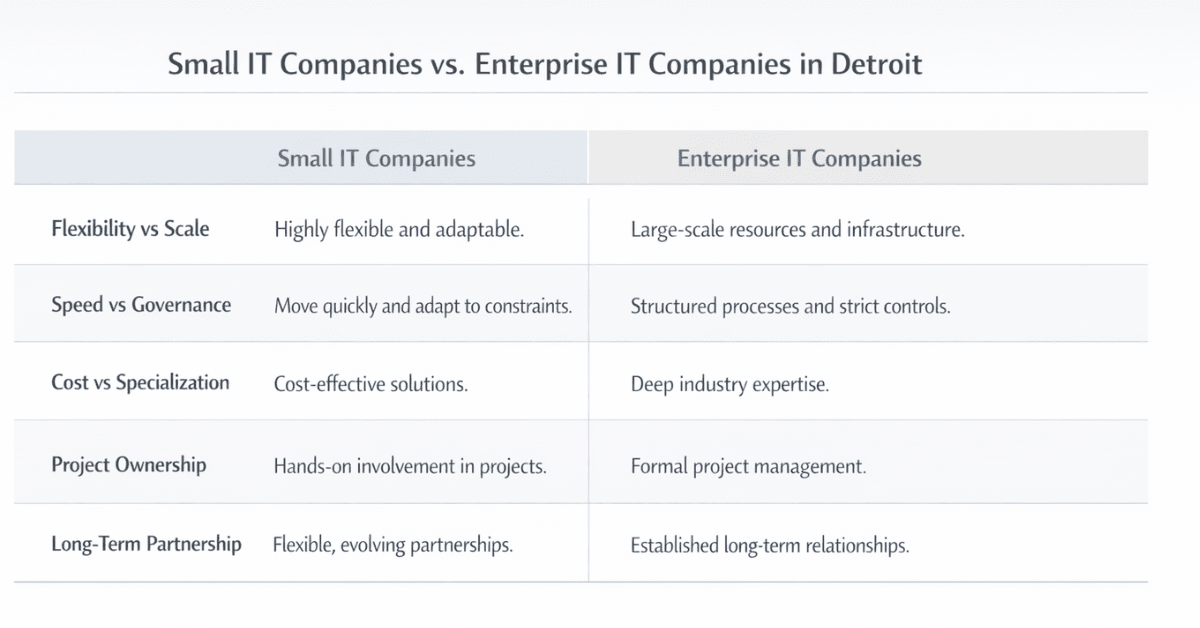
Comparing Small vs Enterprise IT Companies in Detroit
How to Select the Right IT Company in Detroit for Long-Term Projects
Long-term success needs a clear plan.
- Step 1: Define Your Problem. What are you actually solving? Upgrading old systems? Adding new technology? Building competitive advantage? Be specific. This prevents choosing the wrong vendor.
- Step 2: Check Your Systems. List what you currently use. What's your ERP? What scheduling systems do you have? What supply chain software? What reporting tools? The vendor must understand all of this. Ask how they'd handle your complexity.
- Step 3: Discuss Your Architecture. Do you want cloud systems? Hybrid systems? On-site systems? Ask if they use proprietary solutions. Ask if they use open standards. Will their choice limit your future options?
- Step 4: Plan Your Workflow. How will decisions get made? How often will you communicate? How will changes happen? A good process reduces friction.
- Step 5: Clarify Ownership. Who owns what? How do you solve disagreements? What's the escalation path? Clear answers prevent mid-project surprises.
Why Businesses Prefer Local IT Companies Near Detroit
Location matters more than software vendors admit.
- Communication Speed. Same time zone means real-time collaboration. When integration issues emerge, local firms respond immediately. Offshore vendors work on your tomorrow; local firms work on your day.
- Regional Expertise. Detroit IT companies understand automotive standards, manufacturing compliance, and regional healthcare regulations. They've worked on similar projects. They anticipate problems offshore vendors miss.
- Industry Familiarity. Local firms attend industry conferences. They know sector trends. They understand that automotive projects in 2026 differ from automotive projects in 2023. That knowledge comes from proximity.
- Execution Transparency. Local firms depend on reputation. You can visit their office, meet their team, and evaluate their culture. This reduces hidden risks. You see who's actually building your system.
- Faster Iteration. When architecture decisions need revision, local teams iterate in days. Offshore teams iterate in weeks due to coordination overhead.
Offshore vendors offer cost reduction. Local vendors offer execution clarity. For long-term projects in regulated industries, execution clarity typically outweighs cost savings.
How Gyan Solutions Supports Detroit Businesses With Execution-Focused Technology
We do things differently than typical IT vendors.
Instead of selling features, we focus on clarity. We spend time understanding your problems. We ask questions before we propose solutions. For manufacturers, we ask: Do we understand your production limits? Do we see your data challenges? Can we map your system complexity?
Our work focuses on three areas.
- Systems Integration. We connect manufacturing systems. We connect business operations. We make everything work together.
- ERP Alignment. We make enterprise systems work for your industry. We don't force you to change. We adapt the system to your needs.
- Automation Architecture. We turn data into real improvements. We optimize production. We improve efficiency.
This matters. We don't claim to be the cheapest vendor. We don't claim to be the most innovative. We claim to make execution clear. We claim to keep projects on track. For Detroit manufacturers, that clarity has real value.
Key Takeaways
Detroit's IT sector is specialized and growing. Here's what we've learned working with manufacturers across the region:
- Detroit's tech sector is expanding. Automotive software is driving growth. Industry 4.0 is driving growth. Manufacturing automation is driving growth. We're seeing this firsthand through our clients' investment patterns.
- IT services in Detroit vary widely. Choose based on your project needs. Don't just pick based on company size. We specialize in execution clarity other firms may offer different strengths.
- Local IT companies reduce risk. We offer time zone alignment. We offer industry knowledge. We offer transparency. Offshore vendors can't match this level of partnership.
- Evaluation criteria matter most. Look at industry experience. Look at integration ability. Look at the delivery record. Look at support. When you evaluate us or any partner, reputation alone isn't enough.
- Long-term success depends on clarity. Define your problem clearly. Align on architecture. Establish clear processes. Create governance structures. This is how we approach every project.
FAQs About IT Companies in Detroit Michigan
What services do IT companies in Detroit Michigan typically provide?
Leading Detroit IT firms offer custom software development, ERP system integration, manufacturing automation, cloud migration, and systems integration services. Most specialize in automotive, advanced manufacturing, healthcare, or logistics sectors. Services are typically tailored to specific industry requirements rather than generic enterprise software.
How do I choose the best IT company in Detroit for my business?
Evaluate based on documented industry experience in your sector, integration capability with your existing systems, project delivery reliability (ask for references), scalability of their proposed architecture, and ongoing support structure. Request case studies from similar projects. References from past clients are more informative than vendor marketing.
Are Detroit IT companies strong in manufacturing technology?
Yes. Detroit's IT expertise evolved around the automotive and manufacturing sectors. Most established firms have deep experience with production scheduling systems, ERP implementations for manufacturing, supply chain integration, and Industry 4.0 platforms. Manufacturing expertise is a Detroit IT sector strength.
Do small businesses benefit from working with Detroit IT companies?
Small and mid-market manufacturers particularly benefit from local IT expertise. Detroit firms understand small supplier constraints, flexible engagement models, and scalable solutions. They avoid oversizing solutions to enterprise complexity. Smaller budget projects work well with specialized Detroit boutiques.
Why would a company choose a Detroit IT firm over offshore vendors?
Detroit firms offer time-zone alignment, industry expertise specific to automotive and manufacturing, regulatory familiarity, and execution transparency. Communication happens in real time. Problems get resolved faster. Long-term project coordination is clearer. Cost savings from offshore vendors are offset by coordination friction and expertise gaps for specialized projects.

NATHAN ALLEN
I'm Nathan Allen, Director of Artificial Intelligence at Gyan Solutions. With 8+ years building AI systems, custom software, and cloud-native platforms, I deliver applications that scale reliably and drive measurable business outcomes.





