


Quick Summary
Custom software is important when the work has become reconciliation: the orders in one software, the inventory in another, and the support in spreadsheets. An integrations, permissioning and traceability that is audit ready are combined in a purpose-built system, which makes dashboards reflect reality. You minimize handoffs and re-entry, eliminate repetitive discrepancies and scale processes without duct-taping new applications to old ones.
Software pain is manifested on a Monday morning: sales tries to use three systems to complete an order, support works with spreadsheets, and ops preaches again about a discrepancy. It is not the absence of software it is the absence of cohesion. ready-to-go tools are available but they hardly flex to your real work pattern.
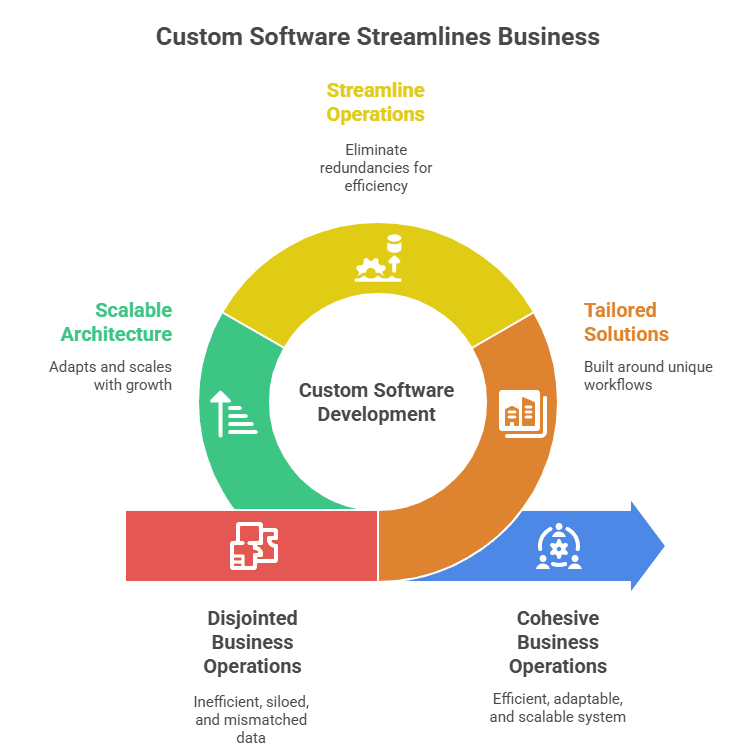
This article breaks down ten practical reasons custom software earns its keep: it fits your workflows, removes duplicate steps, connects systems cleanly, and scales without bolt-ons. Instead of adapting your team to the tool, you design the tool around the team so execution stays consistent as complexity grows.
Why Custom Software Development Solves Unique Challenges
No companies are alike, your operations, customer demands, and internal processes are not similar to the ones of your direct rival. Other off-the-shelf software may make you conform to a pre-defined image and this may result in work-arounds or compromising the process. Still, custom software is developed variously to match your individual pain points.
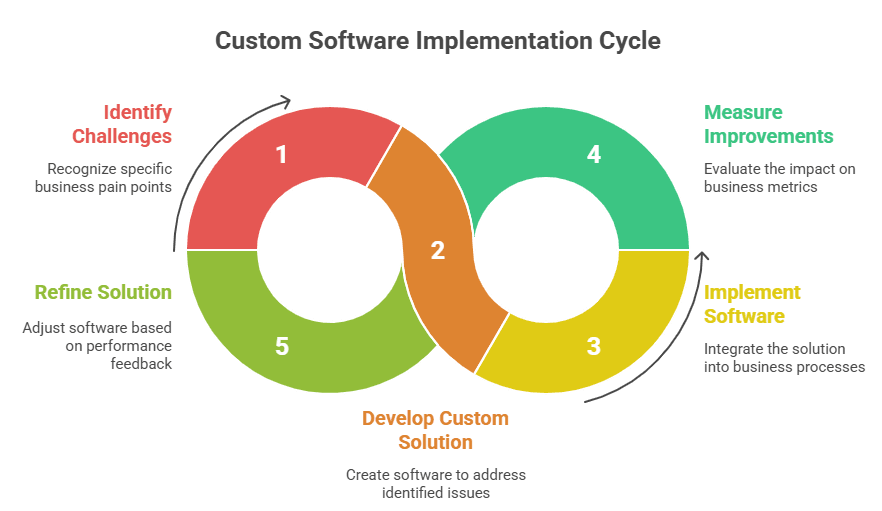
An example is that of a regional logistics company that was experiencing difficulties in the tracking of the shipments in several hubs. Off the shelf systems lacked enough flexibility and thus they invested in a custom logistics platform. By simply having in place a system that was built around their actual difficulties, it took them only six months before their tracking improved by 70 percent and their dispatch times were reduced by half.
It Grows Alongside Your Business
Majority of the ready-made software is mass marketed software-not designed to scale. This is an issue when your user base increases, your product volume augments or your operations are made complicated. Soon performance bottle necks, feature constraints and integration problems may ensue. When you have custom software, you are in a position to design your systems with scalability in mind right at the very beginning – so in the future when your business expands your systems can grow along with it.
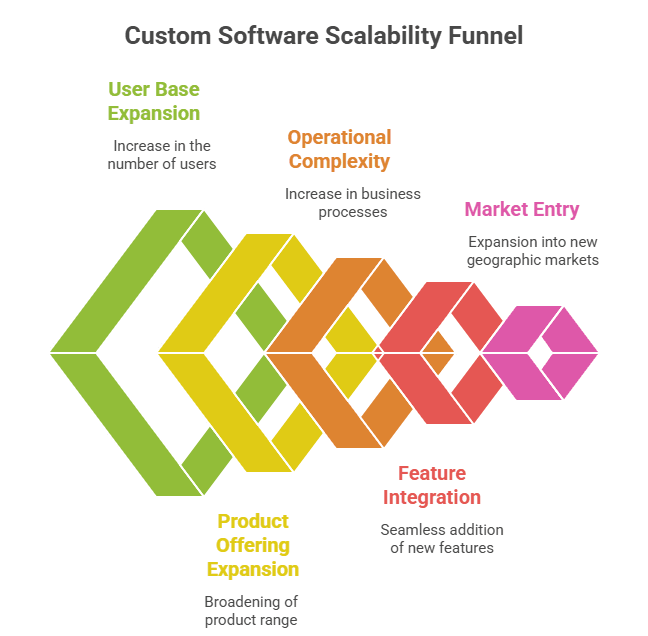
Custom software grows with you, not against you. Maybe it is during the building of it, setting up the modular functions, which can integrate neatly. Maybe it is additional support, multilingual interfaces, as you expand to new markets. To illustrate, Netflix started as a mail-order DVD service and has grown to become an international streaming company, which was all attainable by the help of a bespoke technology stack that was able to respond to change. A similar perspective is shared in our detailed blog on custom software development in Detroit .
Enhanced Integration with Your Existing Tools
The off-the-shelves applications have in-depth ties with older systems or they demand the use of several third-party bridges to integrate with your own back end. This leads to data silos, incomplete records and harder-to-use workflows that cause teams to slow down. However, customized enterprise software may be designed to fit into your central infrastructure where there would be ease of transfer of data and uniform functionality within the different departments.
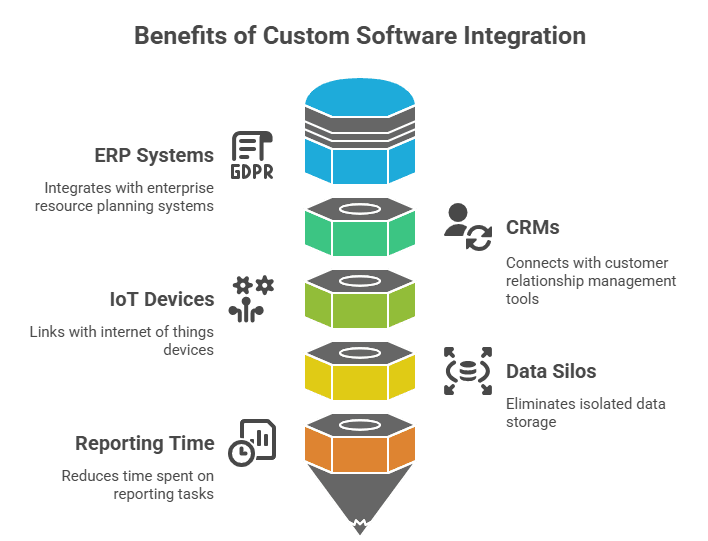
A custom software, in its turn, is designed to play well in your existing environment, be it an ERP system, a CRM, or an Internet of Things device. To give an example, a Canadian manufacturing company switched out the seven existing manual reporting tools with one custom dashboard, linking real-time information between sensors, sales platforms and inventory systems, reducing reporting time by 80%.
Better Security Tailored to Your Needs
Cyber threats are dynamic and your security strategy should also be dynamic. Off-the-shelf products have an in-built protection, which is usually not sufficient in cases of businesses that hold confidential information or engage in regulated sectors. The problem of a fit-for-all type of software is that you cannot design security into the architecture; you can only add it on top of the architecture. Whereas, with custom software, you can design security into architecture: implementing role-based access, encryption, audit trails, and compliance-specific security features that are designed to meet your specific risk profile.
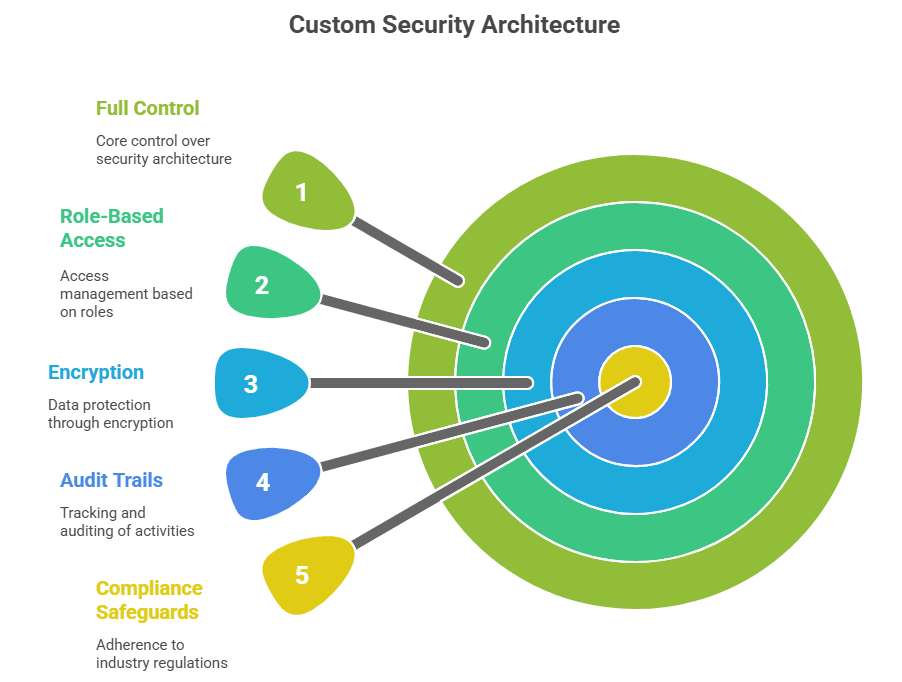
Custom software provides an end user with complete command of security architecture- including data encryption, as well as access management internally. It is possible to establish the multi-factor authentication, the specifications to the compliance (such as HIPAA or GDPR), and the audit tracks to fit your requirements. The IBM 2023 report revealed that data breaches were 30 percent less probable in custom-built systems with in-house security protocols when compared to the generalized SaaS tools.
Long-Term Cost Efficiency
Custom development is more expensive to implement, even when taking it on yourself because of server, hardware and support costs but in the long term the ROI can be much greater than the initial outlay. You do not get caught paying monthly subscription, per user cost or pricey add ons as generic platforms add later. Moreover, you are already purchasing a solution, which grows with your business- it becomes more efficient, productive, and eventually gives you the opportunity to scale without the necessity of using different tools.
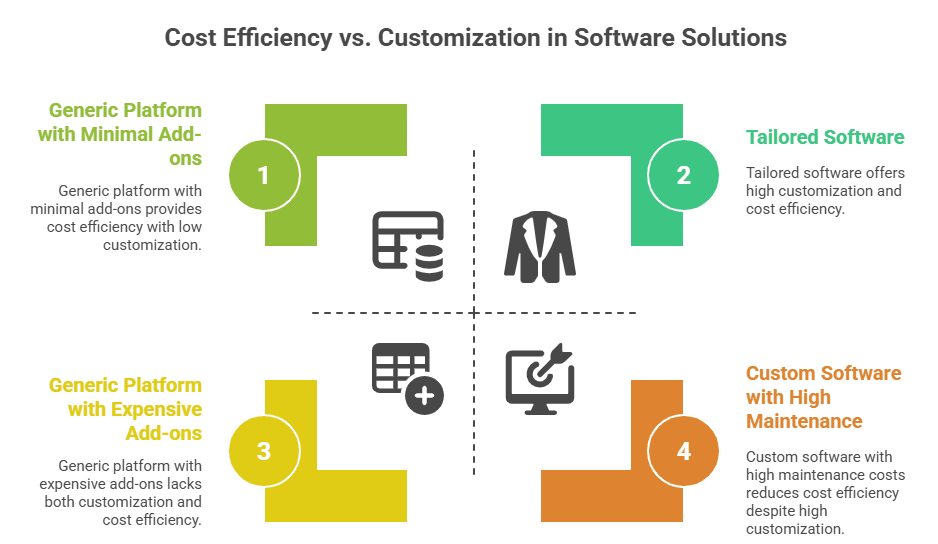
In addition, the personalized application assists in minimizing operational wastage that consumes thousands of dollars per month by businesses. A Deloitte study reveals that the average cost of operations reduced by 21 percent within two years after businesses moved to personalised software as opposed to off-the-shelf ones.
Real-Time Data and Decision Making
Out of the box solutions normally restrict the visibility of data or require manual exports which take time and effort. Those obstacles are removed with software development services in Detroit, which provide real-time dashboard views, proactive notifications, and analytics specific to your specific procedures. It translates to decisions being made faster, more accurate forecasting and an ability to see what is going on when it counts most.
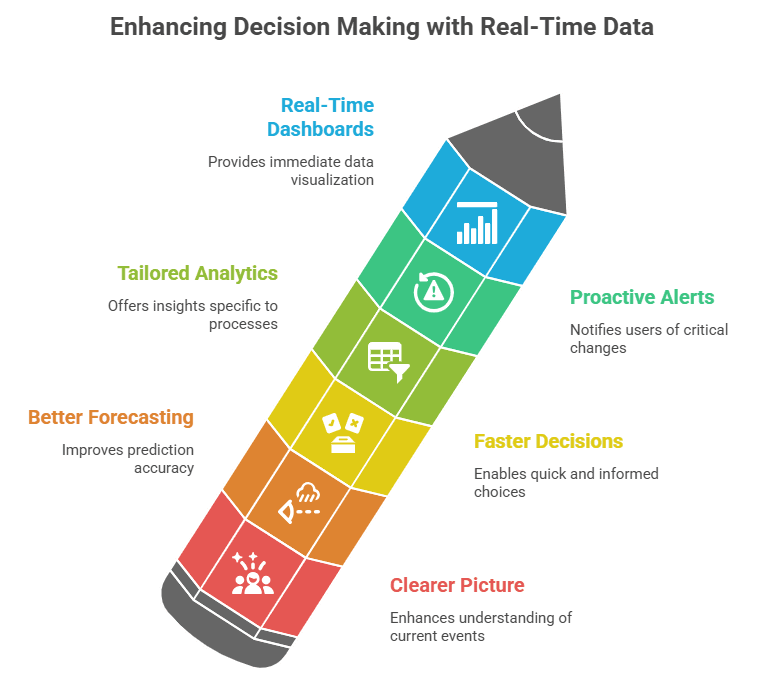
Think of a healthcare organization that has several clinics, custom software will provide them with a real-time view on appointments statistics, the work schedule of doctors, and the use of resources at all of their clinics. The result? Thirty percent more patients throughput and decreased wait time all due to the information that was updated each second.
Competitive Differentiation
The actual differentiation will be how you do things in your unique way when everyone is working with exactly the same off-the-shelf tools. By using custom software development, you can integrate and build that customization, be it a patented algorithm, a personalized onboarding experience or an AI-powered chat-bot that can read your customers’ behaviors straight into your workflow. It turns your competitive advantage into something you have built in, not only a superficial aspect.
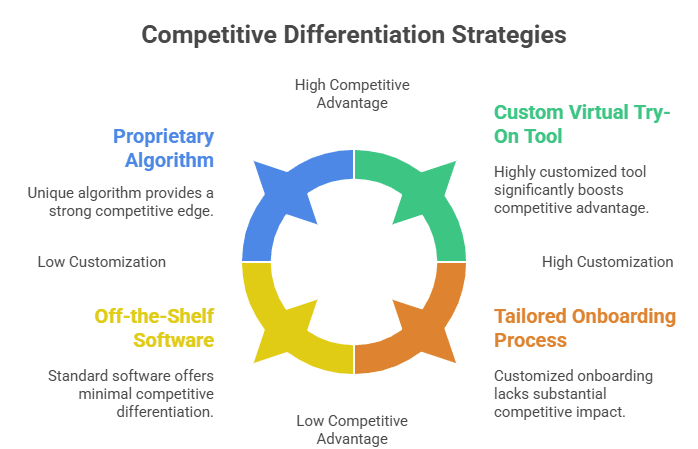
A D2C beauty company actually created a personal virtual trying-on solution, which was not only interactive but also linked to their own customer purchase history and product education. Such custom experience resulted in an improvement in conversion rate by 2.4x compared to conventional e-commerce environments. Making engagement measurable, the brand relied on digital tools to turn user behavior into measurable growth.
Customer Satisfaction with Custom Software Development
When your tools simply work, customers take notice of everything from super-fast response times and user-friendly streamlined interfaces to personalized features and just plain ease. By using custom-developed platforms, it is easy to create all customer touchpoints that are based on the needs of your customers, removing the friction before it actually occurs. Not only does that increase satisfaction, but it also enhances long term loyalty because they provide regular smooth experiences.
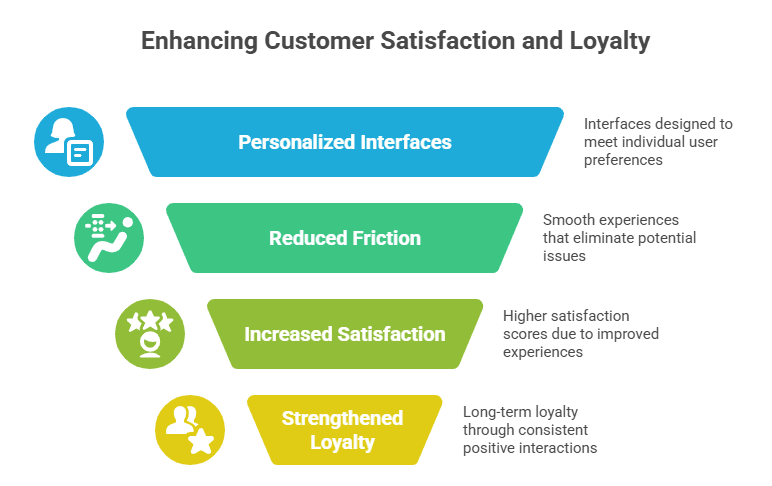
An example of real estate SaaS startups is one that is specifically built on a CRM with regional workflows, and regional compliance requirements. What it resulted in is a 35 percent increase in customer feedback scores and a 18 percent decrease in churn in six months. Where software is on the same level of the local peculiarities and the expectations of the users, it triggers the quantifiable contribution and the enhanced retention.
More Control Over Features and Updates
Off-the-shelf software: your success depends on somebody else’s agenda. You wait for an update, ask to add a feature that might never happen and have to pay to upgrade what you do not need. Being low-level, custom software places the user in the driver seat and enables the user to give precedence to what is important. You are in charge of the development lifecycle, functionality and scaling according to your own vision.
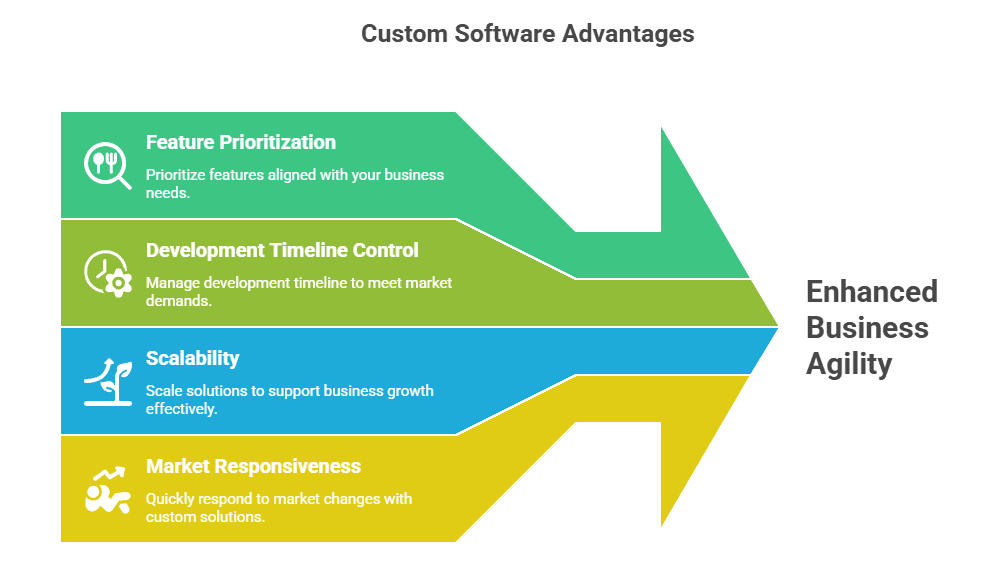
This independence is particularly precious in the environment with high levels of dynamism such as fintech or logistics, where timely introduction of a new feature may make the critical difference in terms of competitiveness. The ability to deploy custom software quickly on your schedule, design solutions to meet changing market needs, and strike unique opportunities before others are even waiting to consider vendor plans Custom software will provide you with this agility.
Greater Employee Productivity
The irritation of handling instruments that do fit almost is a fact. Switching between the applications, duplicating works, using manual workarounds are only a few of the issues that allow employees to utilize the enormously valuable resources just to get them done. These unproductivities accumulate, bring down productivity, and morale across departments. All those points of friction are removed when custom software matches internal operations perfectly.
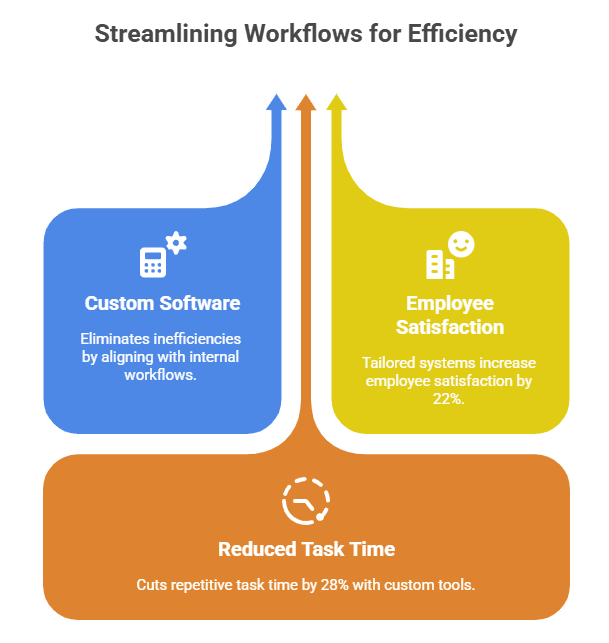
A Forrester report argued that businesses utilizing personalized internal systems had 22 percent increase in worker satisfaction as well as reducing time on repetitive exercises by 28 percent. You are able to authorize your team through its intuitive tools with what it needs, and nothing more, and nothing less: you can create something specific, that will make operations efficient that much easier.
Execution Blueprints
Custom software development will be custom-built to replace the patchwork to one that is designed to be used in your actual process. It is capable of consolidating data definitions, automating handoffs, and connecting with the ERP, CRM, and legacy platforms without frail workarounds. What will be the outcome is a reduced number of discrepancies, better accountability, and operations that do not rely on spreadsheets in order to make it true.
The custom solutions can be evolved as the volume, compliance or customer expectations vary since you are in control of the roadmap, security model and the reporting logic. Role-based access and audit trails and real-time visibility have been developed whereby teams dedicate less time to reconciliation and more to decision-making to ensure the business stays responsive without necessarily changing platforms.

NATHAN ALLEN
I'm Nathan Allen, Director of Artificial Intelligence at Gyan Solutions, specializing in generative AI systems, custom software, mobile applications, and cloud infrastructure. I design production-scale AI architectures and enterprise-grade applications that solve complex business challenges. I've spent 8+ years architecting AI solutions, building custom software across iOS and Android, developing scalable SaaS applications, and designing reliable cloud infrastructure. I've delivered 20+ enterprise applications, mentored engineering teams, and maintained 90%+ on-time delivery through disciplined development practices. My core belief: the best technology is invisible. It simply works reliably and drives measurable business impact.





