


Quick Summary
Choosing between Android and iOS is an early decision that can shape how fast a startup grows. Android helps reach a larger global audience quickly, while iOS helps attract users who are more likely to spend on apps. The right choice depends on your target market, budget, and how you plan to grow in the first stage of your product.
When a startup plans its first mobile app, one common question comes up: should we launch on Android first or iOS? Most startups cannot build both versions at the same time because of limited time and resources. That is why the first platform choice becomes very important.
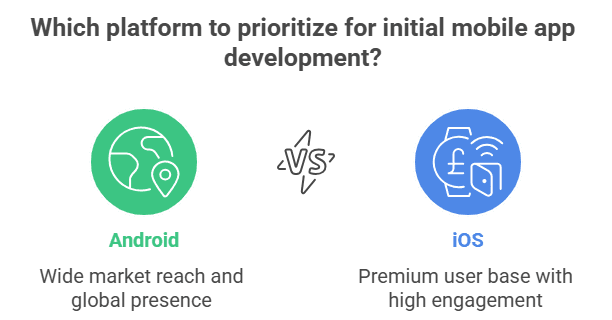
Android and iOS support different types of growth strategies. Android helps reach more users faster, while iOS helps build a strong brand presence in premium markets. Understanding this difference helps startups make a smarter launch decision.
Market Reach: Android’s Global Share vs iOS’s Premium Base
Android dominates approximately 70% of the world smartphone market, and iOS operates approximately 28% of the market. Android offers unparalleled access to a startup that is interested in accessing the entire world, particularly emerging markets such as India, Africa, and southeast Asia. Its superiority makes sure that even the resource-strained businesses are able to reach huge masses within the first day.
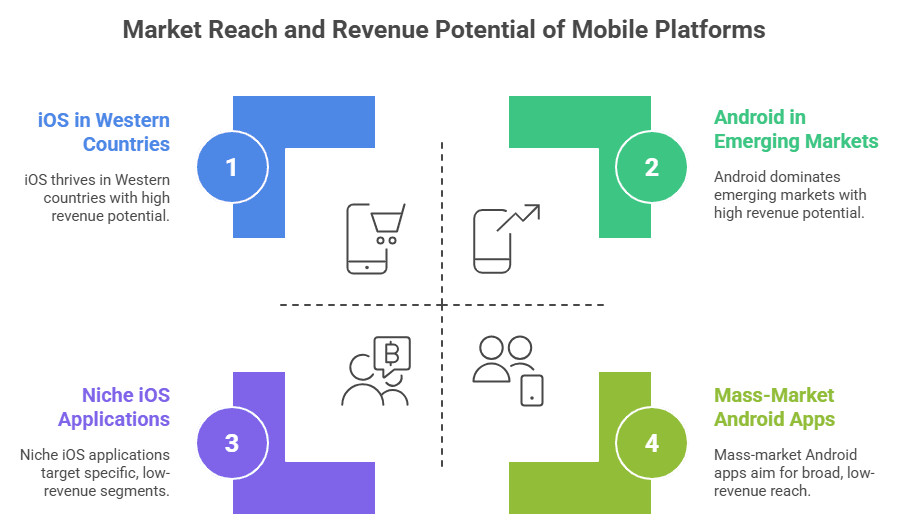
Conversely, iOS reigns in the western countries of Europe and North America, and wealthy localities, where consumers tend to spend on applications or on the extra features. Startups that focus on high-income customers, fintech users or luxury segments might find the adoption of iOS more rewarding in spite of lower total numbers. This helps iOS be a compelling launchpad to businesses whose goals are to maximize revenue per user and not the number of users.
Cost of Development and Time-to-Market
Costs of mobile software development are also varied. Android applications need to be optimized on very many devices, screen sizes and OS versions, which can add time to testing. Nevertheless, cross-device development is now more efficient with open-source frameworks and tools such as Flutter and React Native. This enables the startups to reduce time-to-market and costs whilst providing high quality apps that are cross-device scaled.
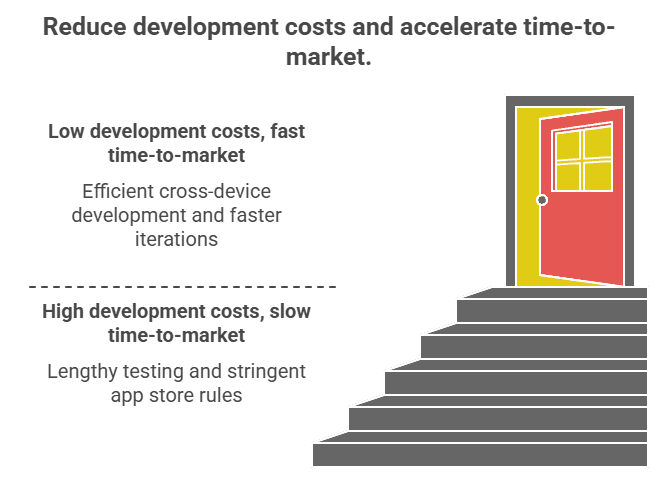
iOS development usually has fewer variations of the device, and hence the testing is quicker and sometimes the launch itself is quicker. Apple however has more stringent App Store rules and it may take longer to be approved, which postpones time-to-market. Android can be the faster path to startups that require a fast iteration. This flexibility enables founders to roll out updates fast, get feedback and pivot before any competitors can even clear the iOS review process.
User Demographics and Monetization Potential
The mean user of an iOS app development company is almost twice as likely to spend on in app purchases as compared to Android users. This renders iOS appealing to startups whose monetization strategies rely on subscriptions, premium applications or premium-value services. iOS can provide a more profitable initial platform to early-stage founders interested in more revenue per customer than the volume.
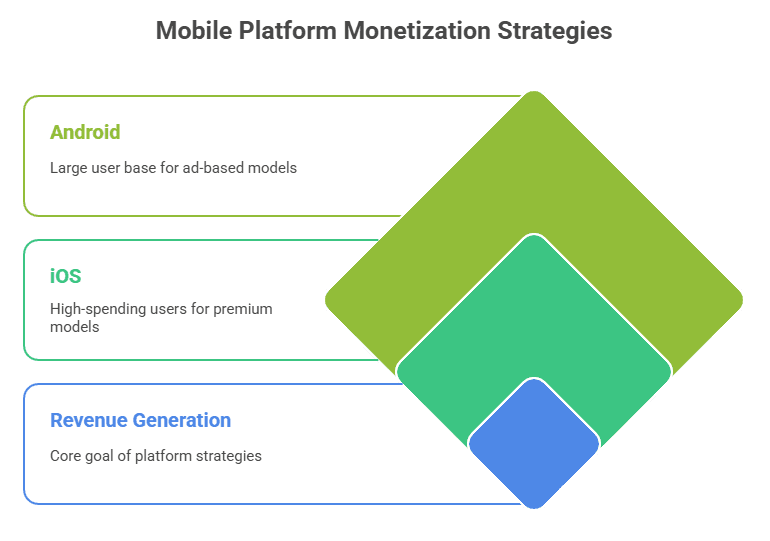
Android, on the other hand, can perform well with ad based models because of the high number of users. Statista reports that Android took in global mobile ads revenue of more than 60% in 2023, which is why it is best suited to startups focused on scale, interaction, and monetization via advertisements. Having billions of active devices all over the world, even a small interaction per a user may result in high start-up cumulative income.
Flexibility, Features, and Innovation
Android app development can be more flexible to startups. Experimental features or third-party tools, as well as unique designs, can be incorporated with fewer restrictions to the developers. That is why Android is a suitable solution of minimum viable products (MVPs) and fast innovation. The capability to experiment with big ideas with speed can provide a competitive advantage to startups in fast moving business environments where time is of the essence.
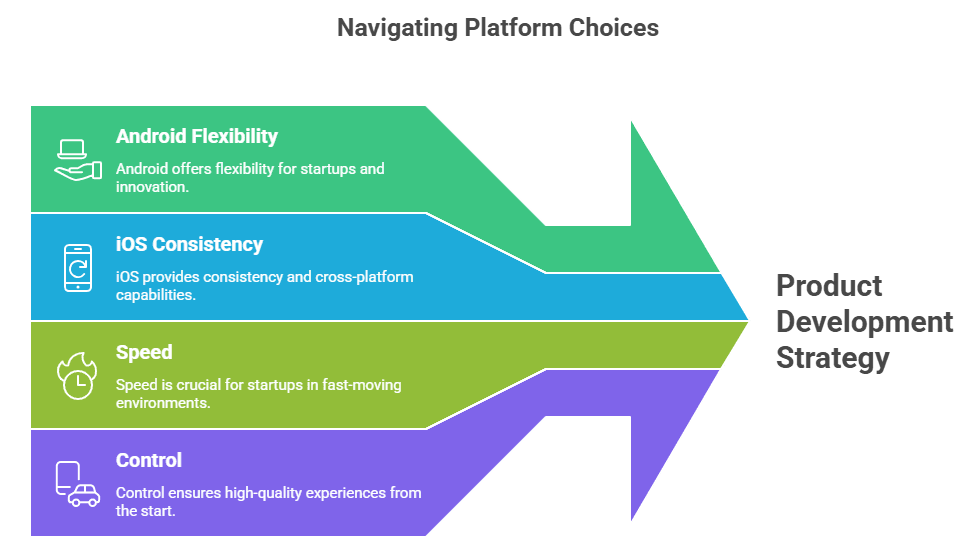
iOS is not as flexible but offers considerable consistency. The unifying ecosystem also makes it easier to perform cross-platform and is attractive to start-ups that want to create smooth and high-quality experiences right at the start. It is either between speed and flexibility or consistency and control. To most founders this choice is the dictator of how their product will be thought of during its initial period of development.
Testing, Iteration, and Speed of Updates
Survival is iteration in the case of startups. The accelerated app update cycle of Android will provide fast fixes and experimentation, which are essential in the process of testing business models and user flows. Google Play is known to go through with updates within hours, which provide startups with a competitive edge regarding flexibility. This speed allows teams to react to user feedback virtually immediately and to translate insights into improvements instead of it taking a lot of money.
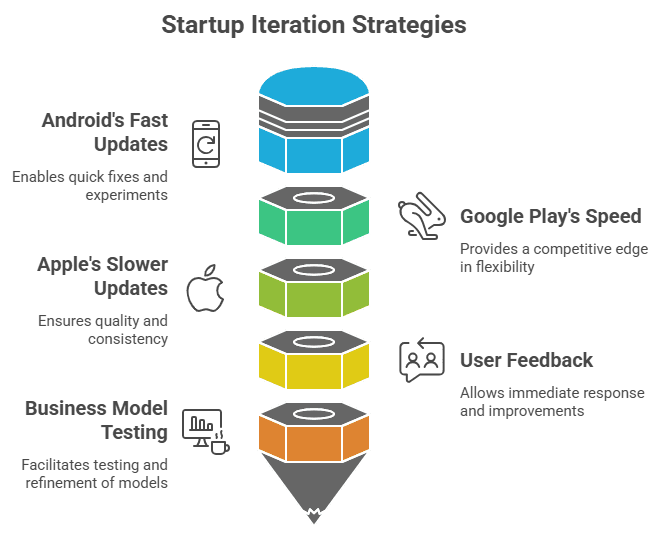
By comparison, Apple takes days to approve a change, which slows the speed of iteration. Nevertheless, this also imposes stronger quality requirements, and this could be helpful to startups that prioritize brand image and consistency over quick experiments. This slower cycle can be a protective factor in products where reliability and smooth user experiences count and the release is hasty or buggy.
Case Studies: Android vs iOS for Startups in Action
History offers lessons. Both WhatsApp and Uber use Android as the primary platform to capture users in the new market, and create huge networks globally, and then polish on iOS experiences. Their emphasis on ease of use at an early stage contributed to their quick uptake. By reaching users where they already were on low cost Android gadgets, they gained scale and loyalty that their competitors wouldn’t match until much later.
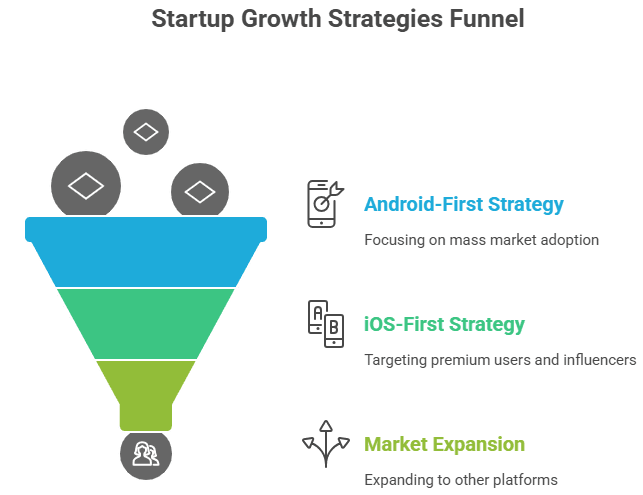
On the other hand, the startups such as Clubhouse were first created on iOS to go after influencers and early adopters in premium markets. The hype was generated by exclusivity, and the lag in the release of Android slowed down its expansion, and experienced the dangers of serving one master only. Android users entered too late in the cycle, when much of the momentum had died, a result of how timing can make or break a platform.
Balancing Both Platforms: When and How to Expand
Most of the successful startups finally become both Android and iOS developers. The key is sequencing. Android first can help gain scale, refine features and then go to iOS. Vice versa, a first-to-iOS-launch can pilot premium models and brand refinement before going worldwide. The wisest founders consider the choice of platforms as a roll-out approach, aligning the rollout sequence with market objectives as opposed to a one-fit strategy.
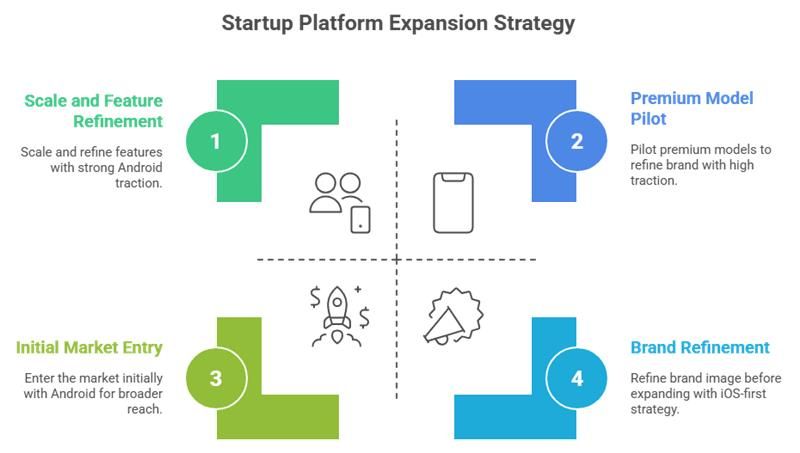
Expansion of timing is reliant on traction. Startups can invest to address both ecosystems once they have user adoption, product-market fit, or funding. Not using one of these platforms long enough will result in risk of losing future customers and investors. A measured rollout guarantees that startups not only capture scale, but also closer to high-value segments, a more robust basis of sustainable growth.
Conclusion
There is no universal answer to whether Android or iOS should come first. The stronger choice depends on how quickly a startup needs traction, what type of users it wants to attract initially, and how the product will generate revenue. Platform sequencing works best when treated as part of a rollout strategy rather than a permanent commitment.
Startups that begin with a clear expansion plan often move faster after validating their product in one ecosystem. By aligning platform selection with audience behavior, funding stage, and growth priorities, founders can reduce risk while building momentum in competitive markets.

NATHAN ALLEN
I'm Nathan Allen, Director of Artificial Intelligence at Gyan Solutions, specializing in generative AI systems, custom software, mobile applications, and cloud infrastructure. I design production-scale AI architectures and enterprise-grade applications that solve complex business challenges. I've spent 8+ years architecting AI solutions, building custom software across iOS and Android, developing scalable SaaS applications, and designing reliable cloud infrastructure. I've delivered 20+ enterprise applications, mentored engineering teams, and maintained 90%+ on-time delivery through disciplined development practices. My core belief: the best technology is invisible. It simply works reliably and drives measurable business impact.





