


Quick Summary
Mobile apps drive business growth by enabling instant customer access, repeat engagement through notifications, operational efficiency, and actionable customer data making them essential for businesses with recurring transactions, loyalty programs, or internal workflow needs.
Here's the truth: your competitors' customers check their phones 58 times a day. Your customers do too. The question is are you on their screen when they do? A mobile app helps your business by making customer access faster, repeat engagement easier, and daily operations more connected. It can support sales, loyalty, service, payments, bookings, updates, and better business decisions from one simple digital channel. Many business owners ask, “how can a mobile app help my business?” The better question is: where are customers or employees facing friction today? A website helps people discover you. A mobile app helps your business by bringing your products and services directly into your customers' pockets. If you already have a website and social media, you might wonder: do I really need a mobile app? The answer depends on what problems your business needs to solve. This guide explains exactly when, why, and how a mobile app drives real business growth.
A Mobile App Puts Your Business Closer to the Customer
Your website waits for customers to visit. An app sits on their phone, ready whenever they need you.
This difference matters. According to DataReportal, there are 411 million mobile connections in the U.S. in 2025 more than the population itself. People check their phones an average of 58 times per day. That constant connection is where your business opportunity lives.
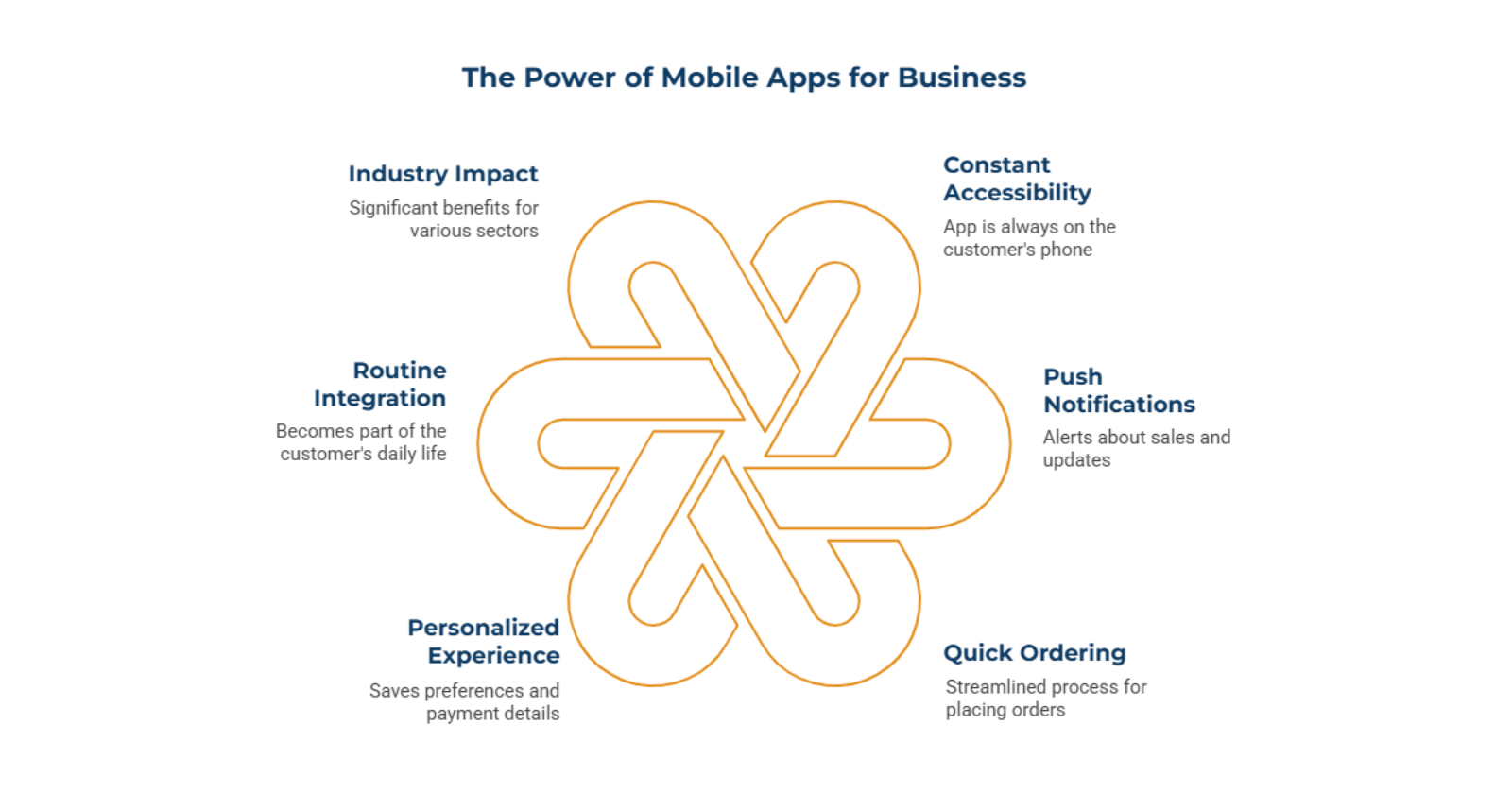
When customers have your app, they see push notifications about sales, new products, or appointment reminders. They can place orders in 30 seconds instead of hunting through your website. They save their payment details, favorite items, and preferences. The app becomes part of their routine, not something they do once in a while.
Restaurants, fitness centers, retail stores, and service providers see the biggest lift here. A salon app reminds customers about their next appointment. A coffee shop app lets loyal customers earn points faster. An ecommerce brand can announce flash sales directly to customers who opted in.
This is not about being everywhere. It is about being convenient where it matters most.
It Improves Customer Experience Without Adding More Work for You
Friction kills sales. When customers have to call, email, or search your website for answers, you lose them.
A mobile app removes friction. Customers can check order status, book appointments, upload documents, make payments, track deliveries, and contact support all in one place, anytime.
For your team, this actually reduces work. Instead of answering the same questions 100 times, your app's automated features handle routine tasks. Customers self-serve for simple needs. Your staff handles only what truly needs a human touch.
Here is what this looks like:
- Order tracking: Customer sees real-time updates instead of calling to ask "Where is my order?"
- Appointment booking: Customer books their own slot instead of waiting for your team to answer the phone
- Payment processing: Secure, saved payment methods mean checkout takes seconds
- Support access: Customers message support directly through the app, with their history right there
The result: happier customers and less busy work for your team.
It Helps Increase Repeat Sales and Customer Loyalty
Getting a customer once is hard. Getting them to return is harder. An app makes it easier.
Loyalty programs, personalized offers, and reminder notifications all live in an app. A restaurant app offers "buy 10 coffees, get 1 free." A clothing brand app shows customers new arrivals matched to their style. A salon app sends appointment reminders and special birthday discounts.
Push notifications are especially powerful here. A well-timed reminder increases the chance a customer will book again or make another purchase. Unlike email, which often gets ignored, app notifications are immediate and hard to miss.
Emarketer reports that mobile commerce reached $542.73 billion in U.S. retail sales in 2024 representing 44.6% of all online retail spending. Much of that comes from apps, not mobile websites. Customers buy more through apps when they feel rewarded and reminded.
Loyalty is not just about discounts, though. It is about being there when customers think of your business. An app does that better than anything else.
It Gives Your Business Better Data for Better Decisions
Here is what most business owners do not realize: your app becomes a window into how customers actually behave.
When customers use your app, you see what they search for, what they buy, where they stop browsing, what features they use most, and which offers convert best. This data is gold. You can use it to:
- Improve your products: If 80% of users click on a feature but few buy from it, something is wrong. Fix it.
- Personalize offers: Instead of showing everyone the same discount, show each customer what they are likely to buy.
- Reduce dropoff: If customers abandon the app during checkout, that is a problem you can see and solve.
- Understand customer journeys: You see the full path from discovery to purchase to repeat order.
Traditional websites give you some of this data. An app gives you much more, because users are logged in and engaged. You understand not just what happened, but why.
This insight lets you make smarter decisions about inventory, marketing, product design, and customer service.
A Mobile App Can Improve Internal Operations Too
Most people think apps are just for customers. Smart businesses use them internally as well.
Your field team, delivery staff, sales team, and managers can work faster with the right app. A delivery driver confirms proof of delivery with a photo. A field technician updates job status in real time. A manager approves expense reports from a coffee shop instead of waiting until they are back at the office.
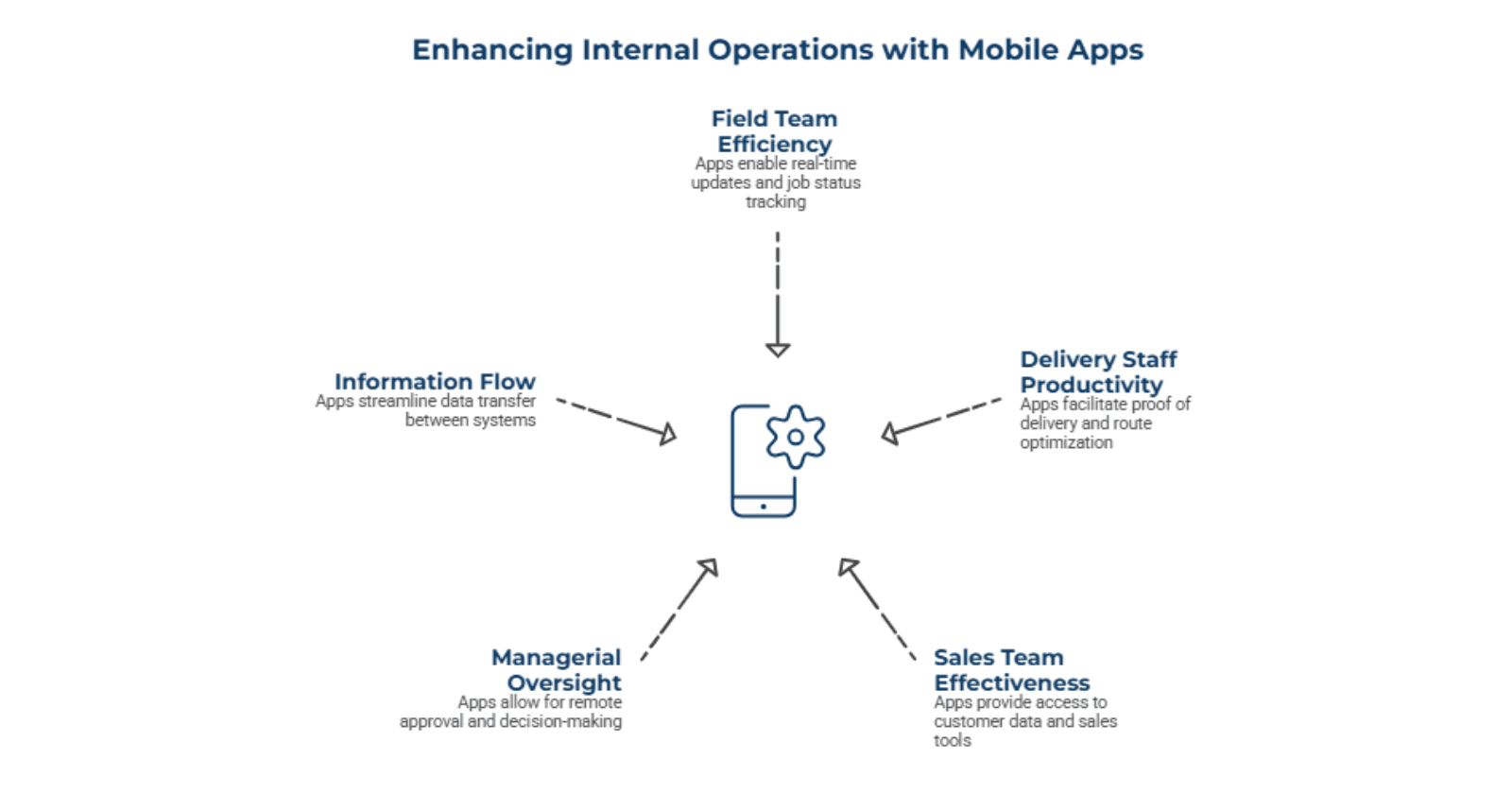
For healthcare, logistics, construction, and professional services, internal apps save time and reduce errors. Your team no longer relies on phone calls, email chains, or paperwork. Information flows directly into your systems.
This connects to your customer-facing app too. When your internal systems talk to your app, customers see accurate information: real-time inventory, exact delivery times, and honest availability. Trust grows.
Android, iOS, or Cross-Platform: What Should You Choose?
You do not need to understand coding to make this choice. You just need to understand your audience.
- Android apps work best when your customers use many different devices and brands. Android has broader global reach. If your business serves a diverse customer base, Android is often the starting point.
- iOS apps work best when your customers use iPhones, when your audience is premium or professional, or when you are based in the U.S. or Western Europe where iPhone usage is high. iOS users often spend more money through apps than Android users.
- Cross-platform apps mean you build once and release on both Android and iOS. This saves time and money. Most growing businesses start here.
Your app development partner will help you choose based on your budget, timeline, and where your customers actually are. The point: do not overthink it. Pick the platform where your customers spend the most time.
When Does Your Business Actually Need a Mobile App?
Not every business needs an app immediately. Be honest about your situation. A mobile app makes sense when your business has:
- Repeat customers: If customers buy from you multiple times per year, an app increases how often they return.
- Bookings or orders: If customers schedule appointments or place orders regularly, an app speeds this up.
- Loyalty potential: If you have a loyalty program or want to build one, an app is the best place for it.
- Customer accounts: If customers log in to track orders, manage subscriptions, or see history, an app improves that experience.
- Internal workflows: If your team needs mobile access to data, approvals, or customer information, an app solves that.
- Competitive pressure: If your competitors have apps, customers expect you to have one too.
If customers find you once and never return, an app will not help much. If your business model is one-time sales with no repeat interaction, invest in your website first. But if any of these apply to you, an app probably makes sense.
What Features Should a Business Mobile App Include?
The best app features depend on your business goals, not on what is technically possible.
Here are the features that matter most:
- User login and profiles: Customers save preferences, history, and payment methods. They know you remember them.
- Online booking or ordering: Fast, simple, works every time. No confusion.
- Push notifications: Remind customers about sales, appointments, and updates. Use them carefully too many annoy people.
- Payment integration: Secure checkout with saved cards and digital wallets. Customers expect this.
- Loyalty or rewards: Points, discounts, and status badges keep customers coming back.
- Real-time tracking: Order status, delivery times, or appointment confirmations. Reduce customer anxiety.
- Chat or support: Customers message you directly. Fast responses build trust.
- Admin dashboard: You see sales, customer activity, and app performance without logging into multiple systems.
- Analytics: Understand which features matter, where customers drop off, and what drives revenue.
Do not try to include everything. Start with the features your customers actually want. You can add more later.
How We Approaches Mobile App Development
The difference between a good app and a great app is understanding.
Most developers start by asking "What should we build?" Great partners start by asking "What problem are we solving? How do customers move through your business? What systems need to talk to each other?"
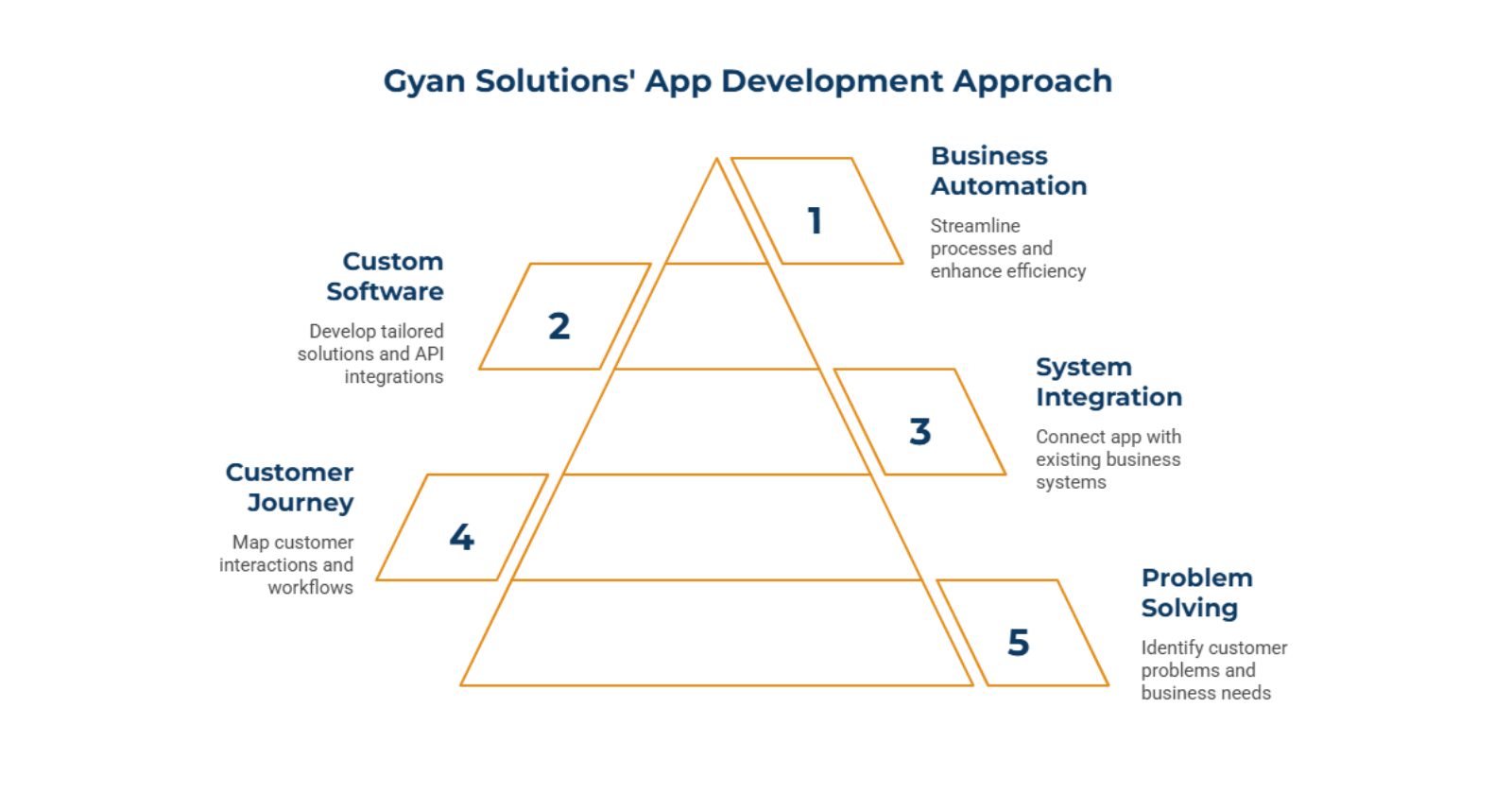
Gyan Solutions develops custom mobile apps for Android, iOS, and cross-platform use. We work with your existing CRM, ERP, payment systems, and inventory tools so your app is not an island, it is part of your business infrastructure.
We also build custom software development, API integration, and business automation. The point: an app is only as good as everything it connects to.
How Can a Mobile App Help Your Business?
An app helps when it solves a real problem: customers need faster access, your team needs better data, or repeat engagement needs a boost. An app does not help when your business is brand new, your customers buy once and disappear, or your website already works well for what you need.
Be honest about where you are. If an app makes sense, invest in one that is built around your actual business, not a template. The return comes from fit, not features.
Questions About Mobile Apps and Business Growth
Q: How can a mobile app help my business?
A mobile app helps by making it easier for customers to buy, book, and return. It also gives you data about what works and what does not. For your team, it means faster work and better information.
Q: Does every business need a mobile app?
No. A business usually needs an app when customers interact repeatedly, need faster service, use accounts, or expect a more convenient experience than a website provides.
Q: Is a mobile app better than a website?
Not always. A website is better for discovery and SEO. An app is better for repeat engagement, personalization, loyalty, and notifications. Many successful businesses have both.
Q: Should I build an Android app or an iOS app?
The choice depends on your customers. Where do they spend time? What devices do they use? A good app partner will help you decide based on data, not guesses.
Q: What is the biggest benefit of a custom mobile app?
Fit. A custom app works around your actual business process, your team's workflow, and your customer's real needs instead of forcing you to work around a template.
Final Thought
A mobile app is not magic. It does not automatically grow your business. But when you build it to solve a real problem faster ordering, repeat engagement, better data, or team efficiency, it becomes a tool that compounds your growth. Start with honesty about what you need. Then build the right solution. The rest follows.

NATHAN ALLEN
I'm Nathan Allen, Director of Artificial Intelligence at Gyan Solutions. With 8+ years building AI systems, custom software, and cloud-native platforms, I deliver applications that scale reliably and drive measurable business outcomes.





