


Executive Summary
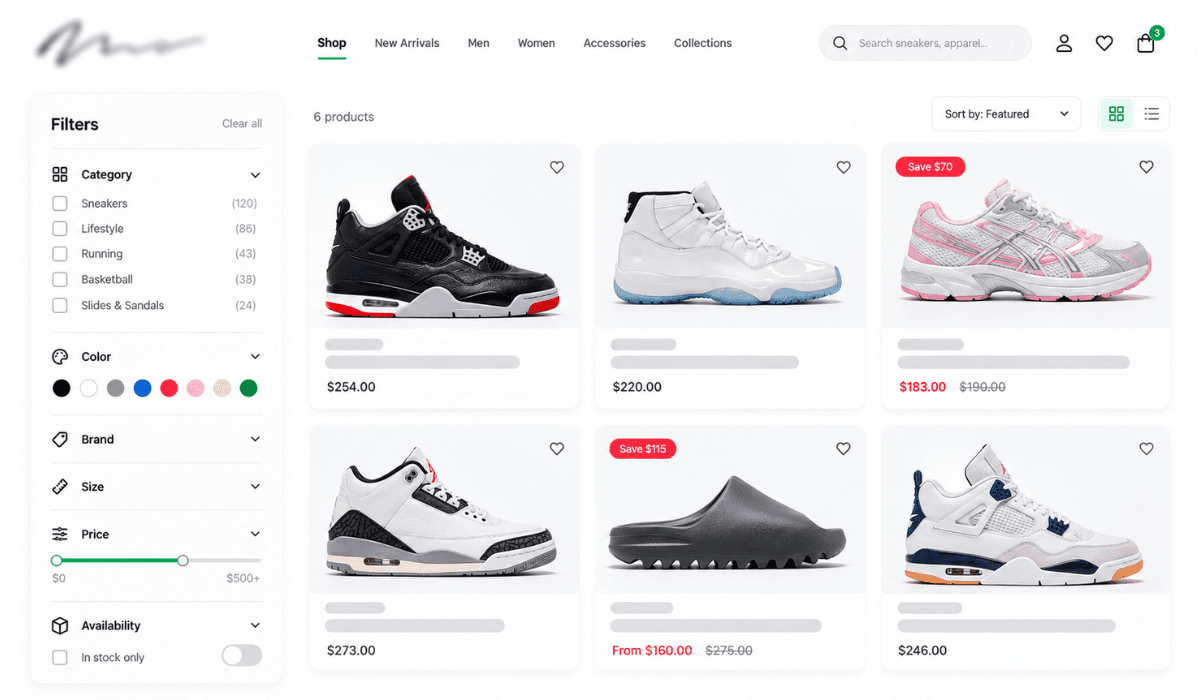
In April 2026, a footwear retailer in Toledo, Ohio, struggled with inventory discrepancies. Its online store showed sneakers as available, but staff sometimes could not find the correct sizes when fulfilling orders, causing delays and manual checks.
The retailer contacted Gyan Solutions, initially suspecting faulty stock synchronization. Our operational review uncovered gaps in transfers, order reservations, returns, and inventory adjustments. Rather than replace the software, we recommended clearer stock rules, ownership, and routine checks.
Background
The retailer operated two physical stores and an ecommerce website in the Toledo, Ohio area. Customers bought sneakers, running shoes, streetwear, and accessories across these channels.
Footwear makes inventory tracking harder than most categories. Each model comes in multiple sizes and colors, and each size is its own stock record. One missing size can mean an entire order cannot ship.
The business relied on its ecommerce platform and existing inventory records, while store employees kept their own records of sales, returns, and stock movements. As operations grew, keeping availability information consistent became harder. Employees increasingly had to check shelves manually before confirming whether a pair was available, and management wanted to know why the discrepancies kept coming back.
Initial Observations
In April 2026, management reported repeated stock availability problems. Some online orders could not be fulfilled even though inventory records showed the products in stock.
The decision-maker believed delayed synchronization between systems was the cause, and replacing the inventory software seemed a likely fix.
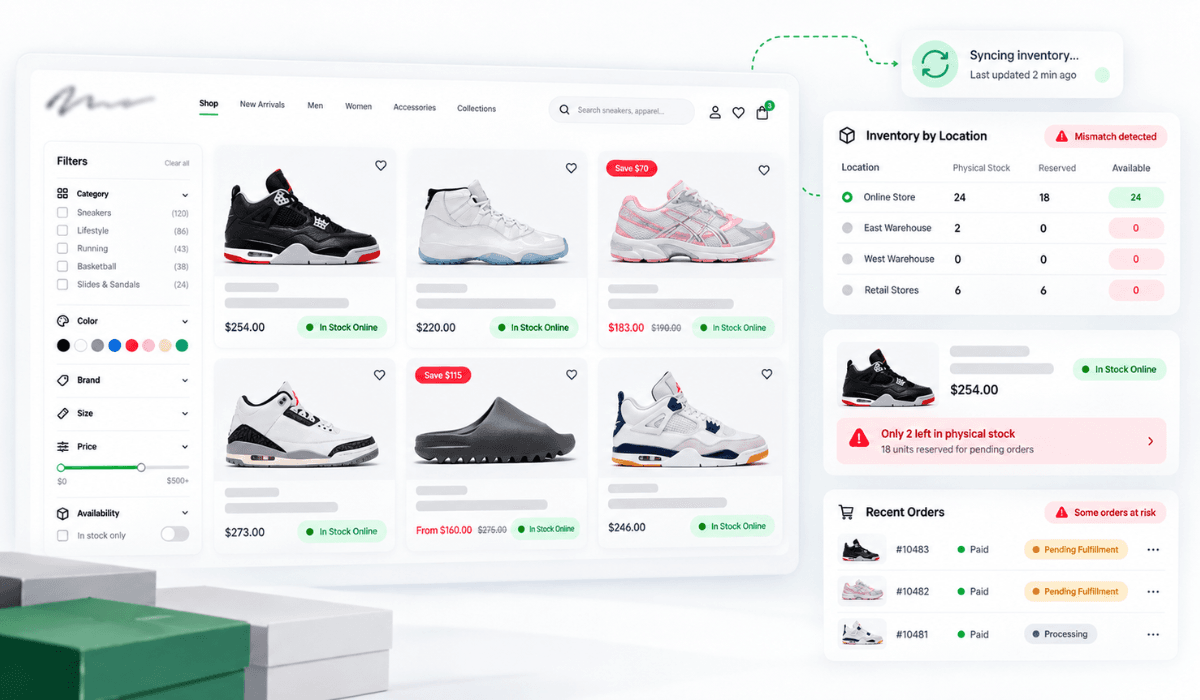
The conversation left several questions open. Nobody had established where recorded quantities first stopped matching physical stock, or whether the software was reflecting bad inputs rather than producing bad data itself. The retailer agreed to a separately scoped operational review that would examine inventory movements before any technology decision.
Review & Design Approach
We traced selected sneaker orders from purchase to fulfillment, reviewing Shopify inventory records, POS transactions, stock adjustments, store transfers, returns, and physical counts. We also examined order cancellations and employee workflows to identify where inventory discrepancies occurred.
We compared recorded stock with physical inventory and checked how products moved between stores and online orders. Transaction histories, return records, and staff feedback helped us separate software synchronization issues from gaps in daily inventory management.
Key Findings
The review identified three connected weaknesses.
Recorded stock and sellable stock were not always distinguished.
Some quantities represented physical inventory, not what could be sold right now. Pairs awaiting inspection, or already committed to open orders, were not treated separately.
Store transfers lacked consistent confirmation procedures.
Product movements were not always recorded at the same stage of the process. This created gaps between where pairs physically were and where the system said they were.
Manual inventory adjustments lacked consistent ownership.
Employees could correct quantities without consistently recording why. Each correction fixed one record but did nothing to prevent the same error from recurring.
These findings challenged the original assumption of faulty software. The larger issue was how inventory information was entered and changed across workflows. Software configuration still needed validation, but replacement was not justified by the evidence.
Decisions & Solution
We recommended fixing inventory processes before replacing the software. The retailer adopted clear rules to separate physical, reserved, held, and sellable stock. Store transfers also required proper dispatch and receipt confirmation to prevent inventory mismatches.
Each stock adjustment was assigned an owner and a recorded reason, making discrepancies easier to track. We also reviewed existing software settings against the new procedures, recommending technical changes only where the evidence showed they were needed.
Implementation
Implementation started with a set of high-demand footwear products, which limited disruption while the new procedures were tested.
Store managers confirmed stock ownership and receiving responsibilities, and employees were given updated instructions for transfers, return inspection, and adjustments.
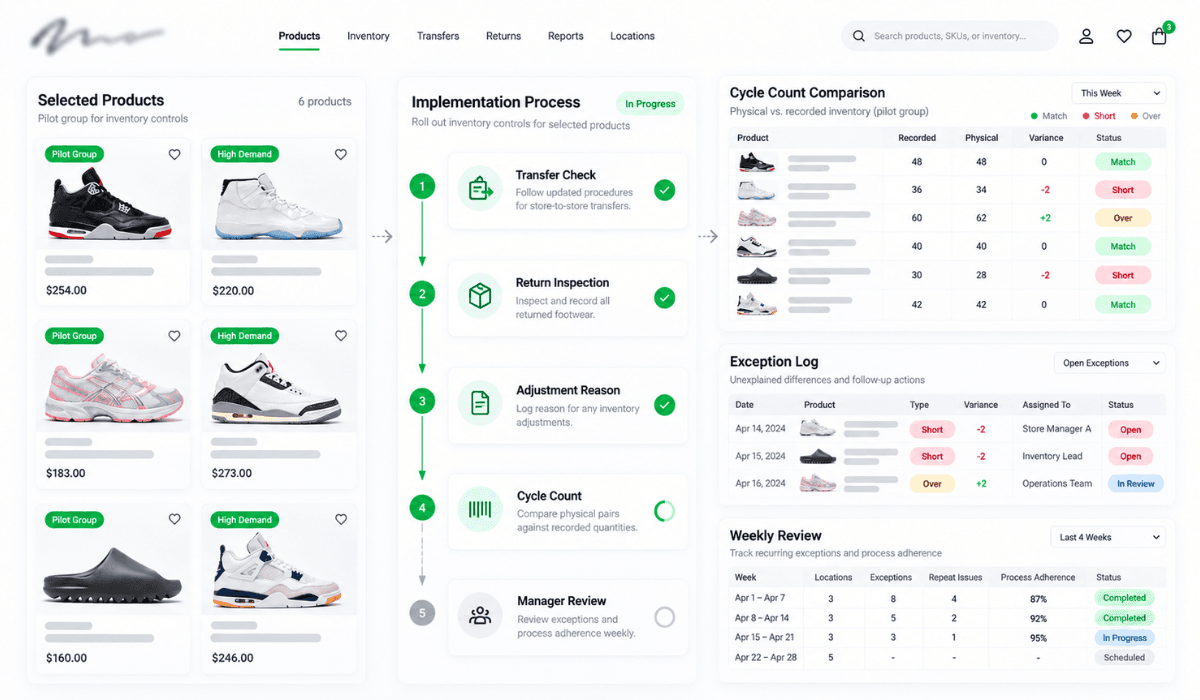
Targeted cycle counts compared physical pairs against recorded quantities. Unexplained differences went into an exception log with assigned follow-up. Availability settings and order reservation behavior were also checked against the new definitions.
Weekly reviews examined recurring exceptions and adherence to the procedures, creating a path to extend the controls to the remaining products and both locations.
Impact
The retailer improved inventory management across its stores and ecommerce operations by replacing repeated stock corrections with clearer procedures and regular checks.
- Improved stock visibility by separating available, reserved, and held inventory.
- Standardized store transfers with dispatch and receipt confirmations.
- Assigned responsibility for inventory adjustments and corrections.
- Introduced regular stock counts, exception logs, and weekly reviews.
- Reduced reliance on manual fixes and unnecessary software changes.
These changes helped the retailer track inventory discrepancies, improve stock accountability, and establish a more reliable process for managing stock availability and order fulfillment.
Why This Worked
The engagement started by questioning the original diagnosis. Instead of accepting that the software was at fault, Gyan Solutions examined how employees created, changed, and relied on inventory information. Software can only reflect the quality of the information it receives, so accuracy had to be treated as an operational responsibility.
Separating symptoms from causes produced a smaller, more focused set of changes, and left the retailer able to evaluate any future technology change against clearly documented requirements. The lesson applies beyond footwear retail. Accurate inventory depends on consistent decisions at every stage of a product’s life in the business.
The client's name and location have been anonymized to protect business confidentiality.