 Technology
Why Content Teams Still Depend on Developers After a CMS Change
A new CMS can change the technology without changing who controls everyday website updates. Explore why developer dependency persists and what real editor autonomy requires.



Focused insights for teams planning custom software, software modernization, systems integration, mobile applications, automation, dashboards, data alignment, AI-enabled workflows, and operational technology implementation.
TechnologyA new CMS can change the technology without changing who controls everyday website updates. Explore why developer dependency persists and what real editor autonomy requires.
 Technology
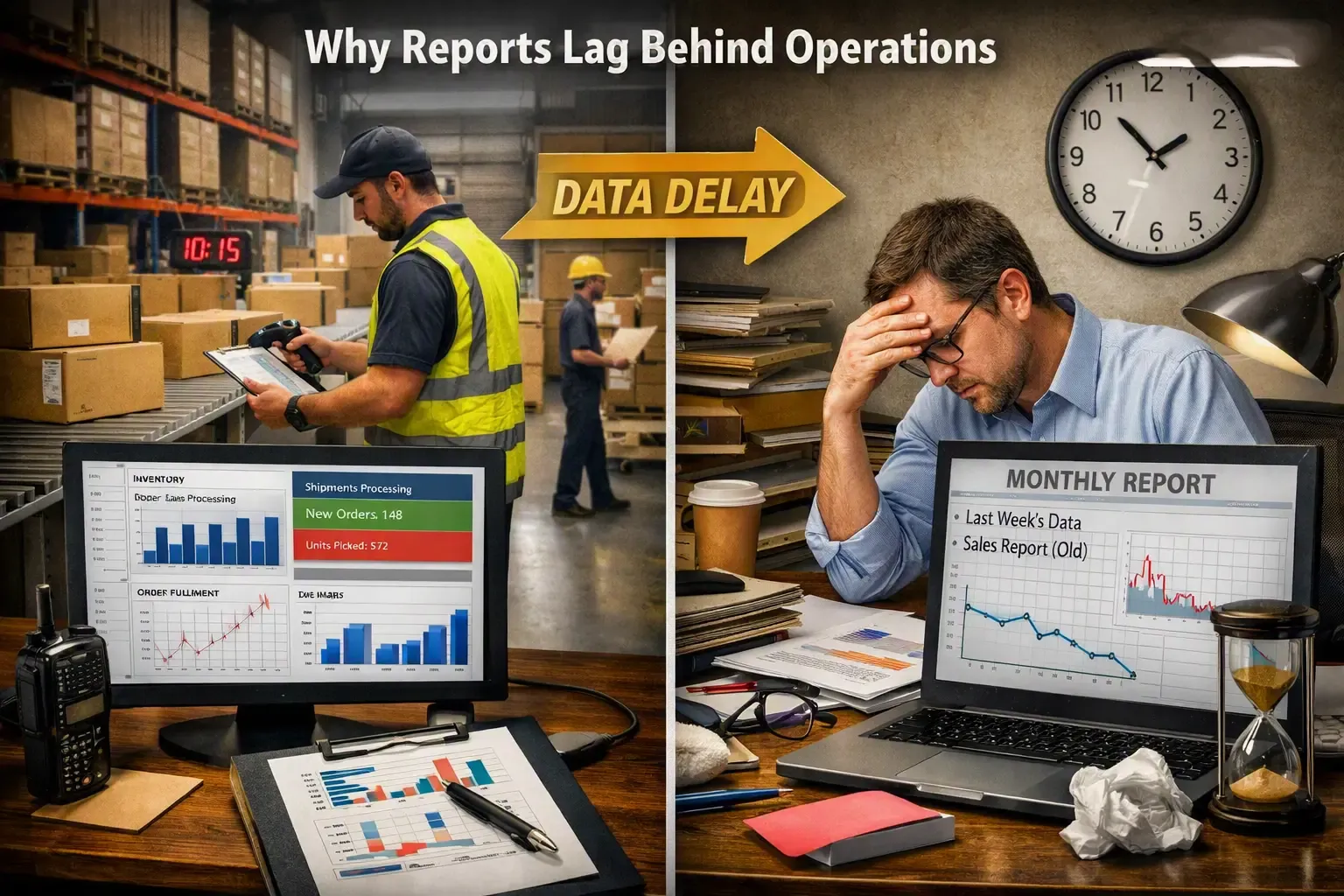
Operational decisions often fail not because teams lack reports, but because the data arrives too late, gets manually corrected, and hides real execution signals. When reporting lags reality, organizations keep moving, but decisions begin drifting away from what is actually happening.
 Technology
Operational reports often appear accurate but reflect conditions that have already changed. As teams adapt through informal updates and workarounds, decisions increasingly rely on delayed visibility, making operational clarity not more reporting the foundation for reliable execution and timely action.
 Technology
ERP go-live doesn't break operations it exposes the organizational gaps, unowned processes, and poor data quality that existed long before implementation began. The system doesn't create dysfunction; it removes the manual workarounds quietly hiding it. True readiness means resolving structural issues before configuration, not after cutover.
 Technology
Systems display formal workflows while real work happens through workarounds, spreadsheets, and direct messages. Teams compensate for rigid structure through invisible effort. Dashboards show stability while strain increases. Understanding actual practice must precede any system redesign or the drift repeats.
 Technology
Despite promises of efficiency, automation often fails to eliminate manual work because systems can't handle real-world exceptions, edge cases, and data quality issues. Teams compensate with shadow spreadsheets and informal workarounds, creating hidden coordination overhead that dashboards never reveal.
 Technology
Metrics can show success while operations strain beneath them. Dashboards miss the informal coordination and judgment that drive outcomes. The gap is not a data problem but a reality alignment problem. Clarity about work should precede efforts to refine reporting.
 Technology
When finance numbers do not match operations, someone fixes them before the report goes out. That fix happens quietly, consistently, and without formal documentation. It becomes routine. The system never records the gap. Leadership never sees the correction. The signal disappears into the spreadsheet.