


Quick Summary
Scaling AI in 2026 demands reliable MLOps tools that unify model development, deployment, and monitoring. From Kubeflow and TFX to SageMaker and Azure ML, modern frameworks help teams manage data pipelines, automate workflows, and maintain performance at scale. Strong MLOps practices enable enterprises to build resilient, efficient AI systems that evolve with real-time business needs.
Artificial intelligence is no longer a matter of speculation. Artificial intelligence is now used by businesses in various industries to streamline processes, guide strategic planning, and to broaden their possibilities. However, scaling AI to several business divisions is quite challenging. Companies, which apply AI models soon, find out that the process of production systems deployment and maintenance demands specific tools, strong structures, and certain technical skills. This is where MLOps (Machine learning operations) is needed.
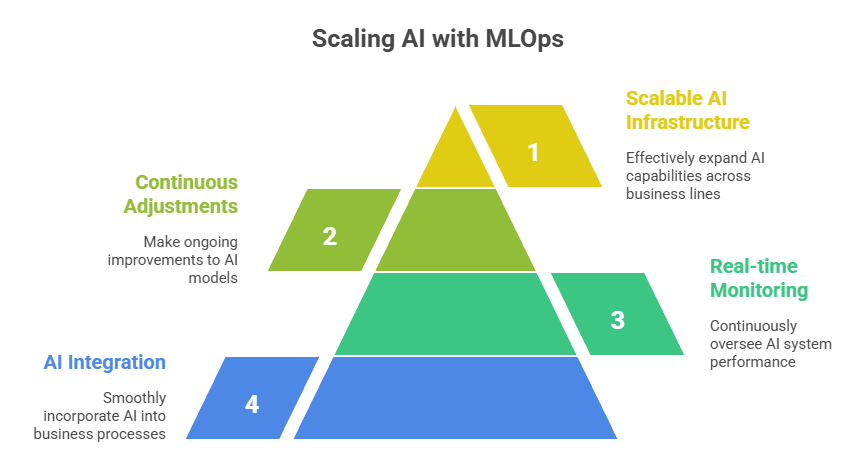
Due to the complexity of AI operations, organizations that want to readily expand their infrastructure in 2026 are forced to implement MLOps practices that facilitate easy integration and monitoring and allow continuous real-time adaptations. This discussion examines the key technologies and infrastructure that companies ought to use to successfully scale AI.
What Is MLOps, and Why Is It Crucial for AI?
MLOps describe those practices, tools, and systems, which combine machine learning model development and operational processes. The idea is to provide a collaborative environment, in which the data scientists, developers, and operational teams can work hand in hand, so that the AI models keep being trained, deployed and maintained.
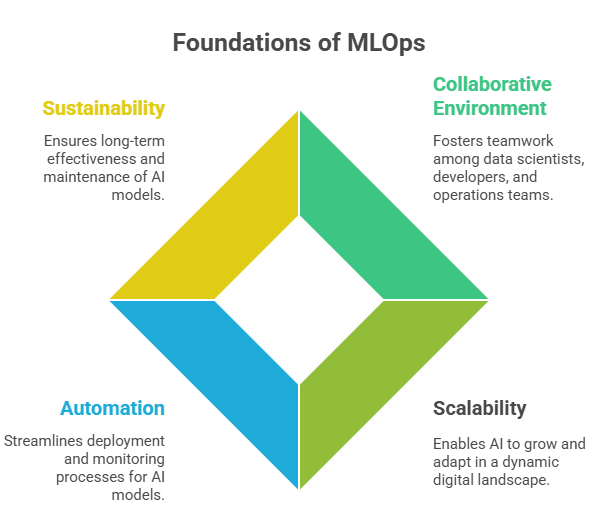
To scale AI in a rapidly changing digital world, MLOps are needed. It helps to fill the chasm between experimentation and deployment that enables businesses to extract the maximum value of their AI investments. MLOps manages to automate the deployment, monitoring process, and as a result, AI models are not only effective but sustainable in the long run.
Key Challenges in Scaling AI
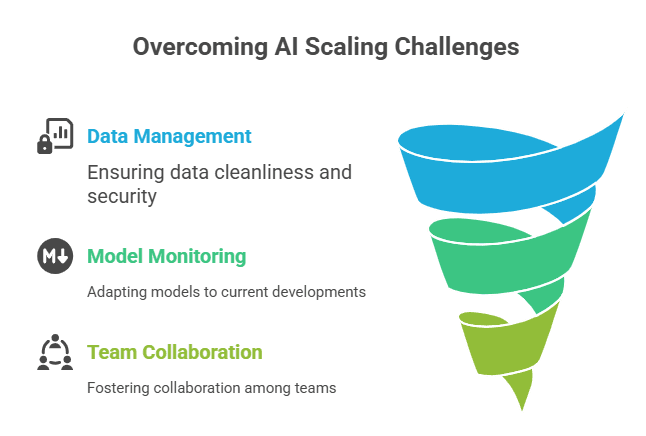
Scaling AI isn’t just a simple matter of throwing more data at the problem, or scale the model up. Most firms find it hard to incorporate AI models in their current systems and this causes inefficiency and sluggishness. The most important challenges are:
1.Data Management: Artificial intelligence on such a scale needs data management. It can be a significant obstacle to ensure the cleanliness, security, and ready availability of data.
2.Model Monitoring: The AI models require continuous adaptation and tuning to keep pace with the current developments. Lack of this may render the best models obsolete.
3.Team Collaboration: There should be close collaboration amongst data scientists, engineers, and business teams to make sure that the AI systems serve the operational requirements.
All these complexities can impede AI scalability but through appropriate tools and frameworks, businesses can deal with them successfully.
Essential MLOps Tools for Building Scalable AI
Businesses must have the appropriate MLOps tools to scale AI systems. These tools offer the framework of managing the automation of workflows, update models on a timely basis, and manage the complex data (transaction) processes. The following lists some of the most critical MLOps tools in 2026:
1. Kubeflow: A Platform for End-to-End ML Pipelines
Kubeflow is an open source workbench that enables enterprises to design, implement, and monitor complete machine learning pipelines on Kubernetes. This is a highly scalable tool and organizations can perform ML workflows on a distributed cloud application.
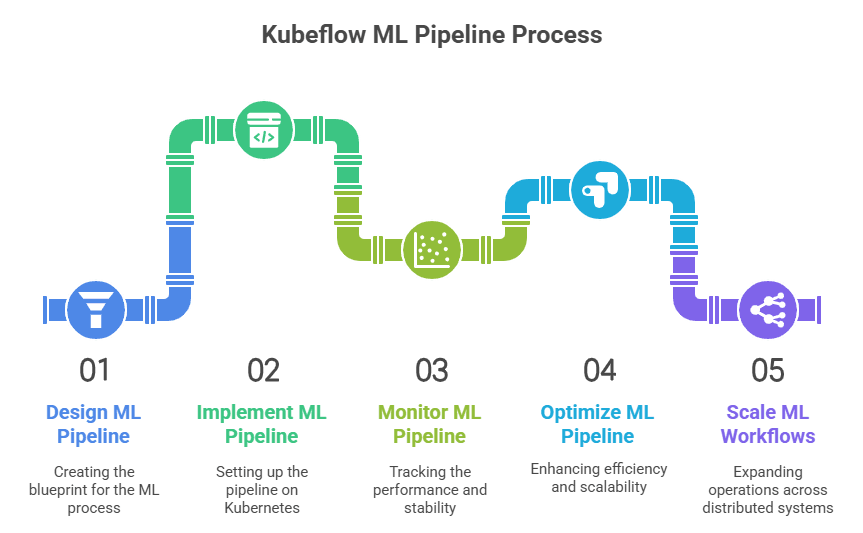
The efficiency of Kubeflow to optimize ML pipelines means that it is an obvious choice of business that wants to expand its AI work. An example would be the BMW which employs Kubeflow to run the machine learning models on various data sources ad locations, and remain stable in scale.
2. TensorFlow Extended (TFX): Managing the Full ML Lifecycle
TFX is the tool project of choice to develop production-quality ML pipelines by businesses with TensorFlow interests. It enables businesses to automate deployment, tracking and validation of models. TFX allows watching over the model evolution and data pipelines to make ML systems evolve continuously.
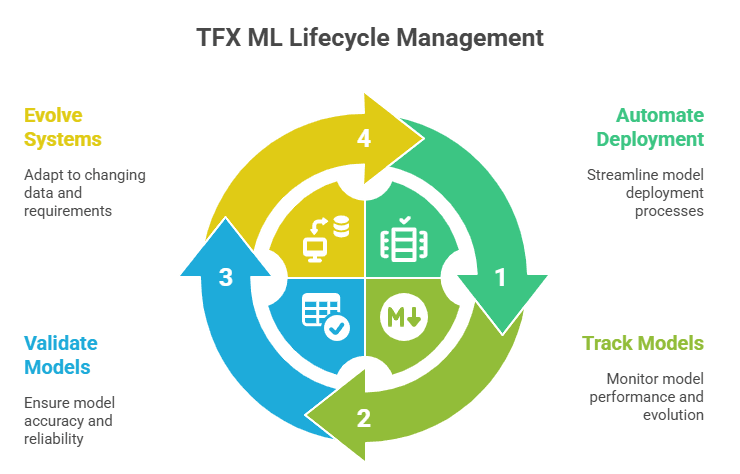
Organizations such as Airbnb depend on TFX to automate the machine learning workflow, which lowers the number of mistakes and speeds up the model deployment. TFX enables companies to rest assured that their AI systems will always be kept in step with fluxing data.
The Role of Cloud Platforms in Scaling AI
With the scale up of AI, right cloud infrastructure is essential. Cloud usage allows the scalability and processing power to execute massive AI models and control expenditure. The following are some of the most popular cloud platforms to enable scalable AI organizations:
1. AWS SageMaker: Comprehensive AI Development Platform
Amazon SageMaker is a complete platform to build, train and deploy machine learning models at scale with end-to-end machine learning. SageMaker also enables faster development cycles by companies with tools for model tuning, data labeling and real time predictions.
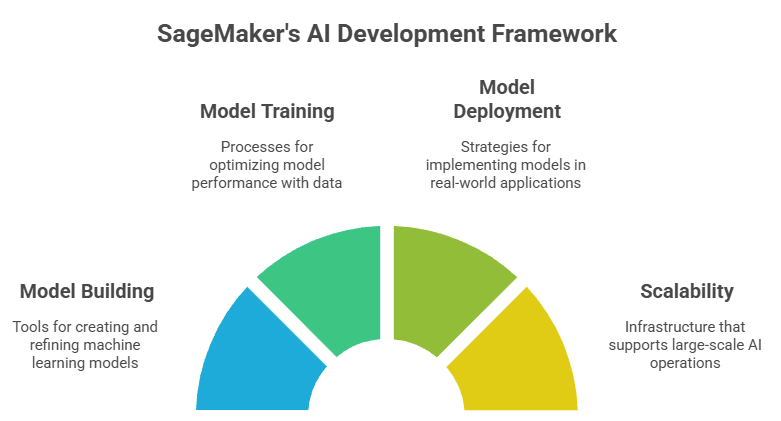
At scale, Amazon AI and ML applications are used by companies such as General Electric and Netflix who trust SageMaker to run AI in production. The cloud applications such as AWS allow businesses with no specific hardware to scale AI and the business does not directly handle the infrastructure.
2. Microsoft Azure Machine Learning: Scalable AI Operations
Another good cloud tool that businesses can use to scale their AI efforts is Azure Machine Learning. Azure includes numerous solutions, such as automated machine learning (AutoML), model management services, and workspaces- as a solution, with which you can collaborate within your team.
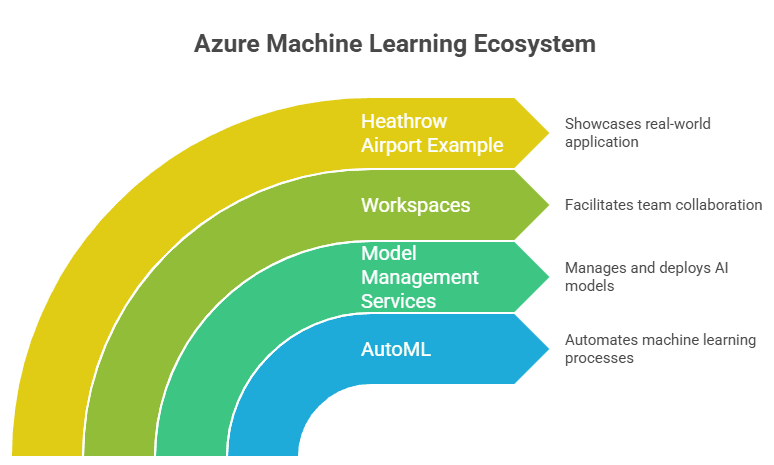
Enterprises such as the Heathrow Airport are using Azure Machine Learning to streamline their services including the handling of luggage and passenger flow forecasting. Heathrow is able to manage millions of data points because it is powered by AI models that can instantly change according to the need to achieve greater efficiency.
Automating AI Operations: The Power of AI-Driven Monitoring
Automation of AI operations is one of the major advantages of MLOps. The ongoing monitoring is the key to making sure that AI models would perform optimally as they engage new data. Automation tools enable the business to identify when models require a retraining level and are able to execute automated actions automatically to keep the system at an optimum level.
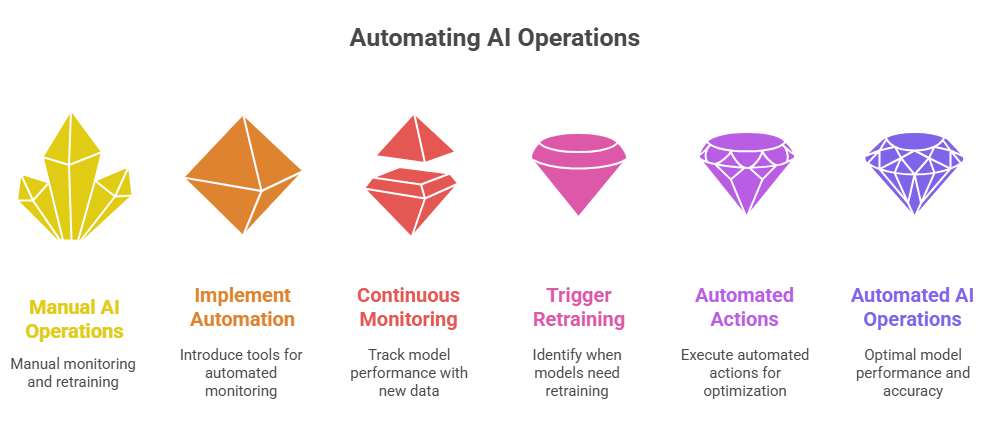
As an illustration, MLflow is an open-source MLOps software application that helps companies to trace the experiments, keep track of data and recreate results. The MLflow helps businesses to simplify their model training and deployment mechanisms, which makes models accurate and business aligned at all times.
Collaboration Between Teams: Why It’s Vital for Success
MLOps is not only about tools, it is about collaboration across teams. Software engineers, business stakeholders, and data scientists need to collaborate closely so that the AI models can be aligned with business operational objectives. The cross-functional collaboration will assist in ensuring models are not only technically fine but also technically aligned with the company goals and can therefore be deployed and scaled more easily. MLOps can eliminate the silo mentality to facilitate collective business knowledge and lead to quicker, more precise decision-making.
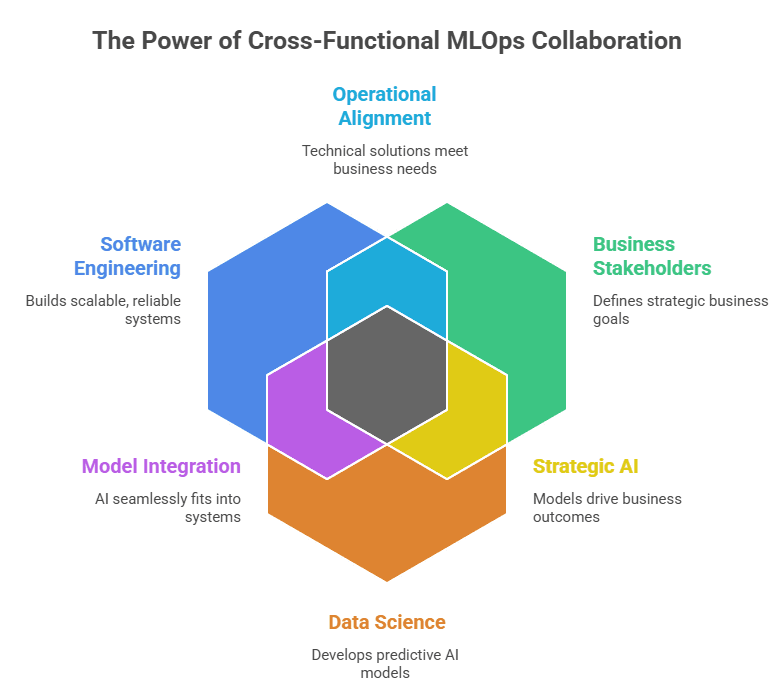
Ride pricing and supply-demand matching are carried out in teams that seek to enhance their predictive algorithms in a company such as Uber. The MLOps frameworks facilitate the strategy of making sure that data scientists are free to experiment and also make sure that models are easily integrated into broader systems that Uber is dependent on to operate. The frameworks support the continual inspection, certification, and deployment of models, so they may be promptly updated and offer high operational efficiency and stability in an evolving environment.
The Future of Scalable AI: What Lies Ahead?
With the further evolution of AI, demand in scalable solutions will continue to increase. As of 2026, the wide implementation of AI-based business solutions should result in the rise of the demand in MLOps tools. The next frontier will involve the implementation of AI into business operations in all parts, including inventory tracking, predictive servicing and personalized customer experience and much more.
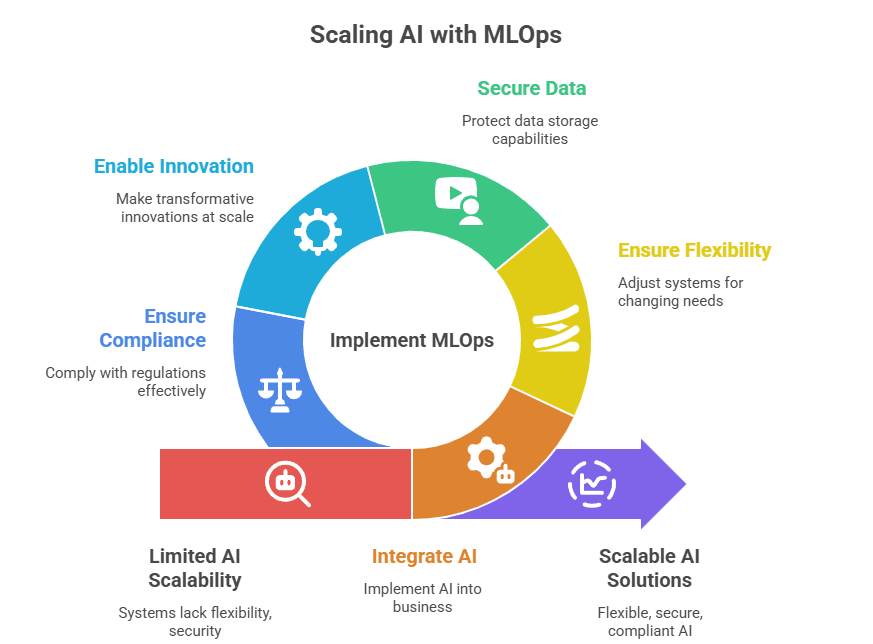
With companies integrating AI, it is important to make sure that their systems have the flexibility of adjusting and also become secure and capable of storing more and more data. MLOps is the key to this transformation as it will enable enterprises to make transformative innovations and scale. Furthermore, the use of effective MLOps will help organizations become compliant with regulations and ensure constant betterment of AI models.
Why MLOps Infrastructure Determines AI Scalability in 2026
Scalability, with sustainable model optimization, has become an important determinant of success as organizations increase AI adoption. MLOps systems offer the infrastructure needed, providing teams with a set of tools to automate the deployment process, keep track of the performance of the systems, and organize AI activities in a systematic way. By adopting MLOps, companies can quickly make data-driven decisions and improve the customer experience and competitive positioning as the industry standards change at a rapid pace.
By the year 2026, organizations that invest in scalable AI systems by adopting MLOps will define competitive advantages. The MLOps tools can be used to automate the workflow and create sustainable innovation regardless of whether organizations are deploying predictive maintenance, personalizing marketing campaigns, or conducting real-time analysis.
MLOps infrastructure decisions define what can be viable in the long run. The appropriate structures not only determine the immediate deployment success but also dictate whether the AI systems are able to adjust to the changes in the data pattern and business needs.

SUKHPREET SINGH
I'm Sukhpreet Singh, Director of Innovation & Technology at Gyan Solutions, specializing in generative AI, AI chatbots, and ERP integration. I design AI solutions that integrate seamlessly into existing systems without disruption. I build conversational chatbots that improve decision speed and agentic AI systems that automate complex workflows. Over 8+ years, I've deployed AI-powered decision-support platforms that improve visibility and planning accuracy. My approach centers on alignment: AI works best when designed around your business, not when your business is forced around the AI. I believe intelligent systems should be invisible they simply improve decisions and outcomes.





