


Quick Summary
AI route planning enhances same-day delivery by optimizing routes using real-time data and machine learning. It improves speed, fuel efficiency, and customer satisfaction. Integrating AI with fleet management ensures dynamic re-routing and continuous operational improvement.
The increase in e-commerce has resulted in a boom of same-day delivery. The consumers want to receive quick and dependable services and the logistics companies should adjust to the emerging demands. Nevertheless, efficient same-day delivery is not only a matter of speed but also about making smarter decisions particularly in regard to route planning.
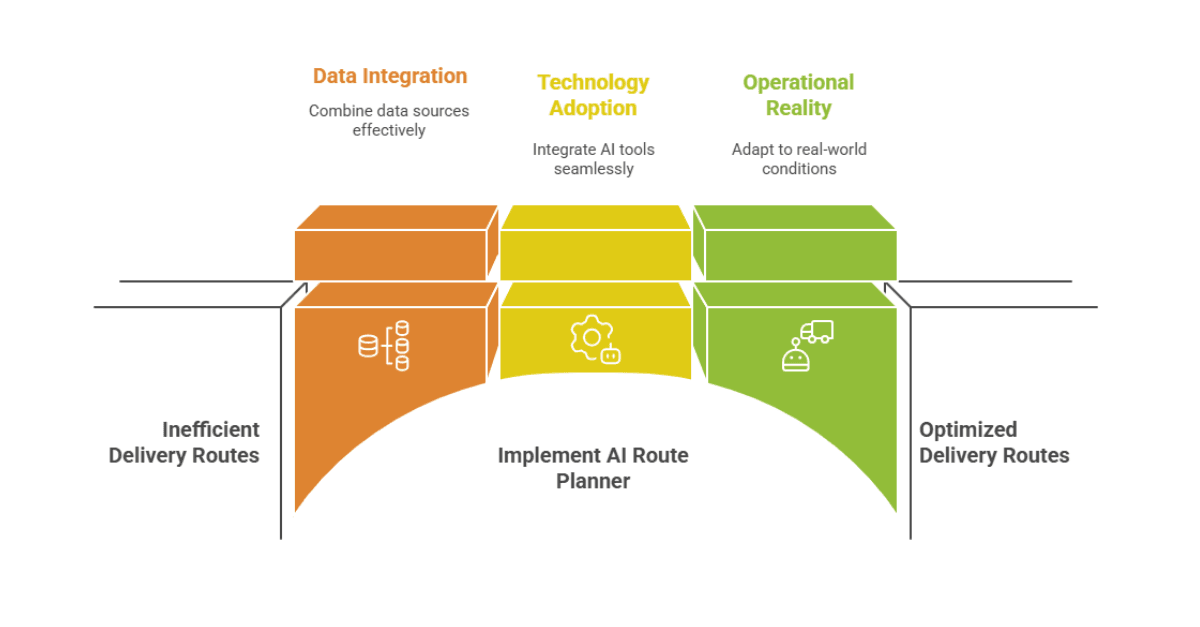
By using AI-based route planners, the logistics teams can optimize delivery time, fuel expenses, and increase customer satisfaction. However, applying AI into routing planning needs to go beyond incorporating a tool, to a plan that incorporates data, technology, and reality of operation. This guide will take you through the steps required to successfully adopt AI into your routine in route planning in the same-day delivery process.
Understanding the Role of AI in Route Planning
AI is transforming the field of logistics, especially in the process of route planning. With the help of machine learning algorithms and real-time data, AI assists in determining the most effective routes, considering such factors as traffic patterns, road closures, weather conditions, and even previous delivery performance.
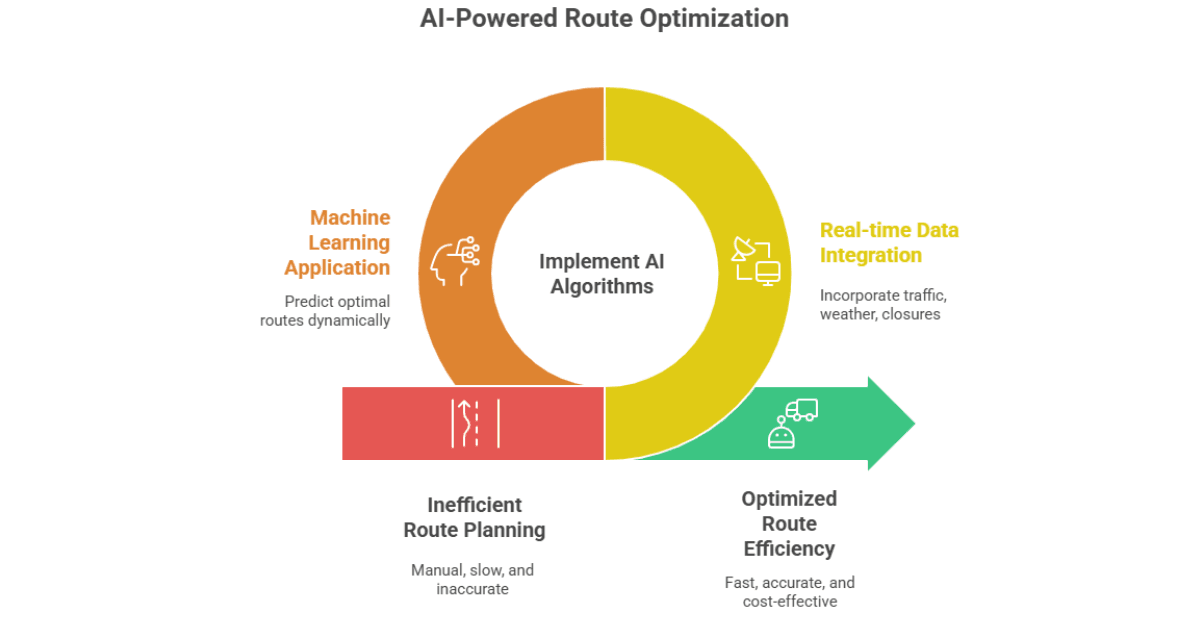
Speed is not the only advantage of AI with regard to route planning. It increases the predictive accuracy as well as allowing re-routing to be dynamic. This is not only to plan the most optimal route but to keep on optimizing it with fluctuating conditions so that your fleet may deliver within the narrowest of timeframes at the lowest possible cost. Generative AI development is playing a pivotal role in optimizing logistics operations.
Gathering Data for Effective Route Optimization
The first step to use AI in the process of route planning is to gather and synthesize data. AI relies upon data, and even the most advanced AI applications will not be efficient without qualitative and timely information. The information that is required is the traffic patterns, the time estimates of the delivery, capacity of the vehicles and the preferences of the customers.
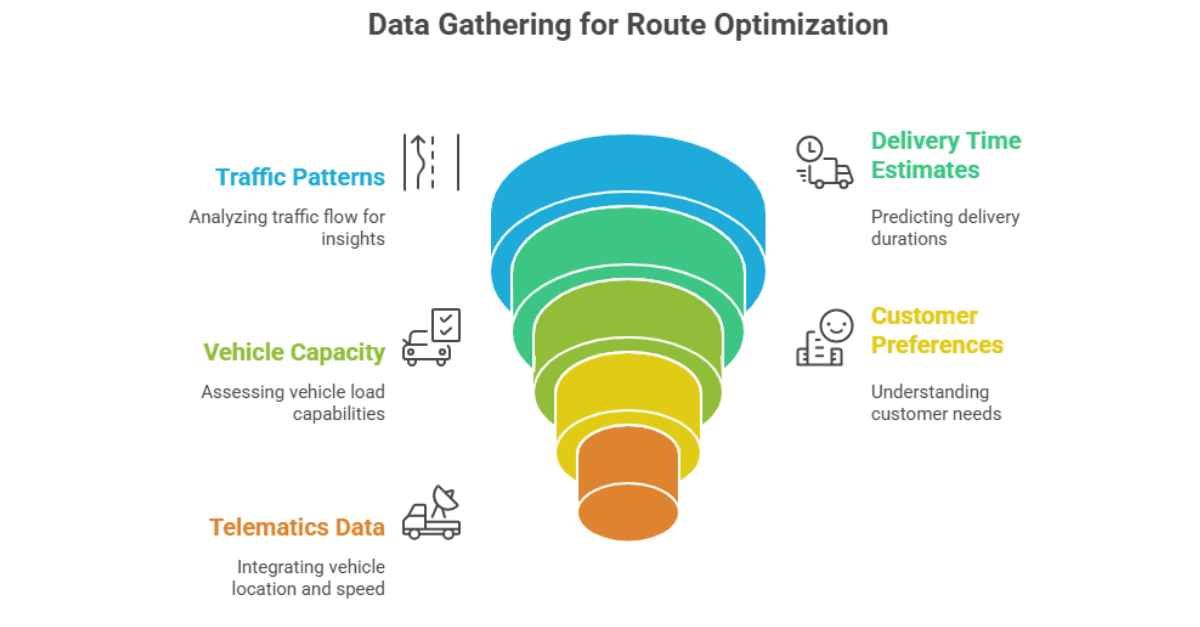
You will also require information of the telematics systems of your fleet such as the location of the vehicles, their speeds, and even weather reports. This information should be combined in a centralized system in order to have AI algorithms to process and analyze it. The closer to the truth and maximum details the information, the better your AI development services will be at optimizing routes.
Selecting the Right AI Tool for Your Business
The selection of the proper AI solution is a key to successful implementation. Not every AI route planning facility is equal, hence one must first understand the requirement of his business and then adopt a platform. There are those AI tools that provide fundamental optimization and those that have real-time decision-making and predictive analysis.
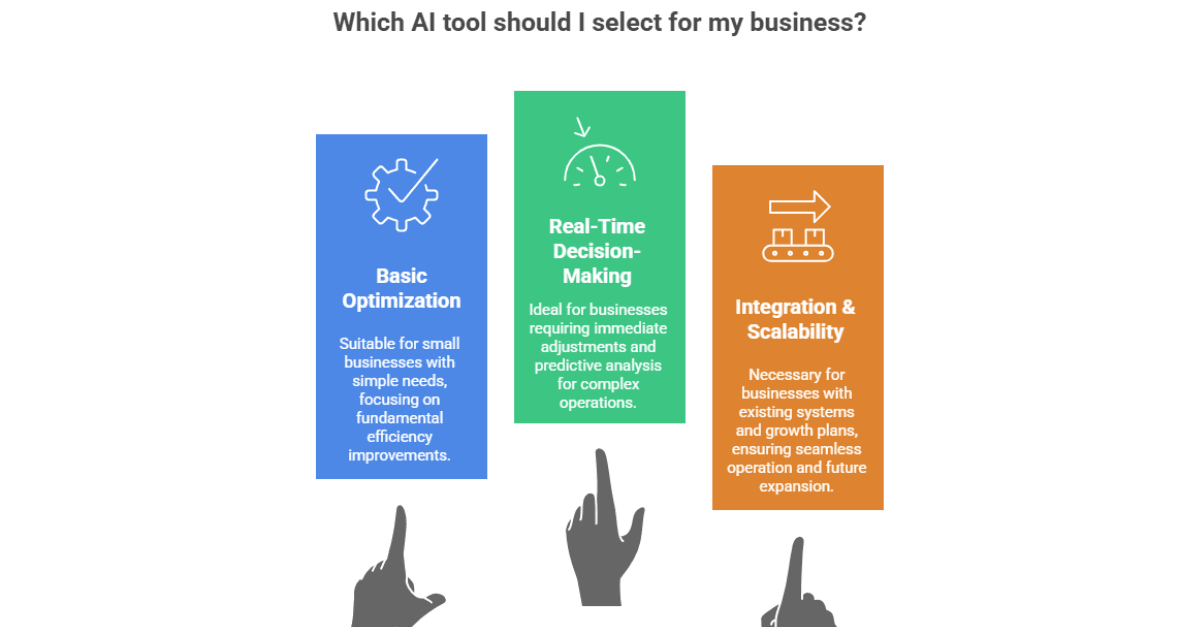
Seek something that will be integrated with your current fleet management systems, can be scaled and capable of addressing the complexity related to same-day deliveries. Regardless of the size of your business, whether it is a small-region provider or a large logistics company, your AI solution should fit your needs in terms of operations and keep up with the expansion of business.
Training the AI Model with Historical Data
After collecting your data and selecting an AI tool, the second thing to do is to train the model. The smarter the AI systems get with time as they process and get to know what has already been experienced. This process of training is performed by feeding the model with historical data so that it can be able to recognize patterns, maximize delivery times and modify routes depending on the real world conditions.
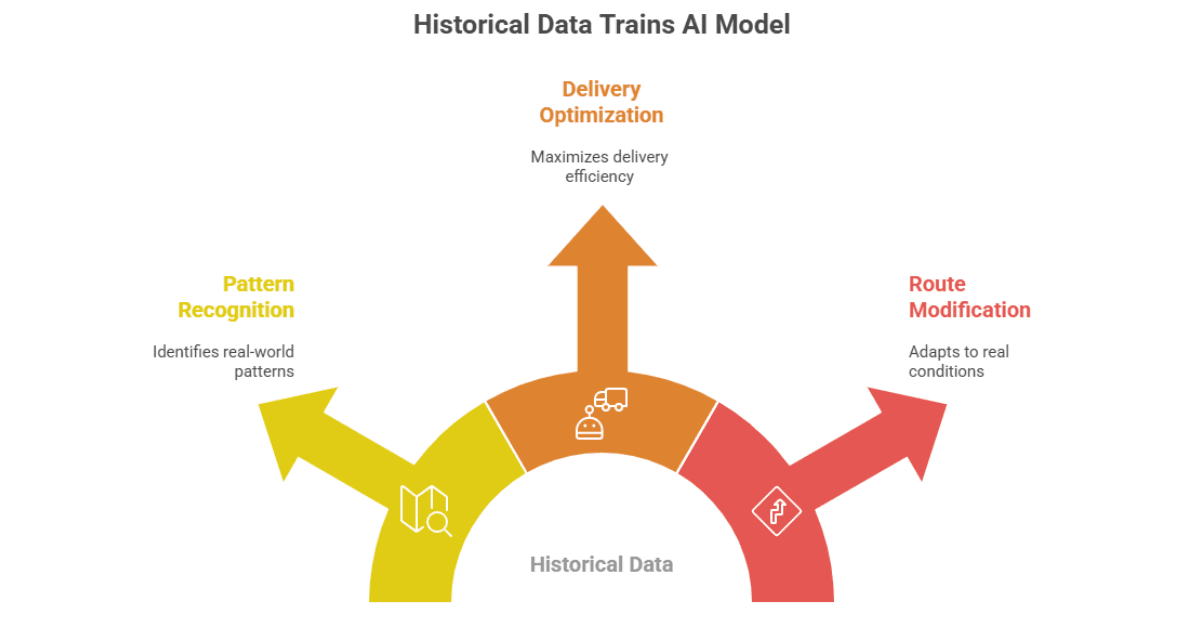
It might require a long time to train an AI model, but it will be worth it. Once the model has crunched enough data, it will be capable of estimating the best routes during varying times of the day, traffic around the rush-hour, and even recommend the best vehicle due to the size of the delivery and the location. The longer the model is running, the more it predicts.
Real-Time Monitoring and Dynamic Re-Routing
Dynamic re-routing is one of the major AI benefits in route planning. Real-time information enables the AI system to dynamically change routes in real time, responding to traffic congestion, road accidents or unexpected delays. This is vital in case of the same-day delivery. In case one way is blocked, the AI will be able to search the optimal alternative very fast and guide the drivers on the best route.
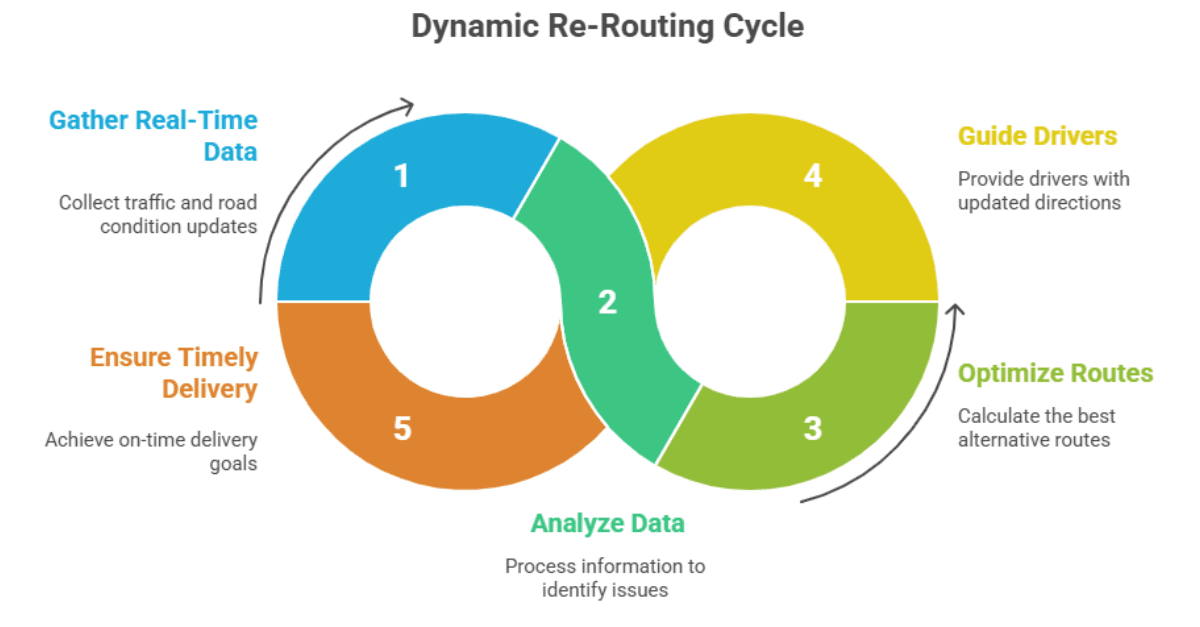
This live flexibility assists in making deliveries on time as it is promised. It also eliminates the situation of stress in drivers and enables the logistics managers to remain in control of the situation despite the occurrence of unexpected circumstances. It is aimed at providing the customer with the most favorable customer experience, regardless of the situation.
Integrating AI with Your Fleet Management System
AI route planning needs to be closely connected with your fleet management system (FMS) to be efficient at all. The integration enables AI to retrieve critically important data such as the capacity of the vehicle, fuel efficiency, maintenance, and driver performance. By linking these factors, AI can be used to optimize routes by having a better understanding of reality variables, which result in smarter decisions and more efficient processes.
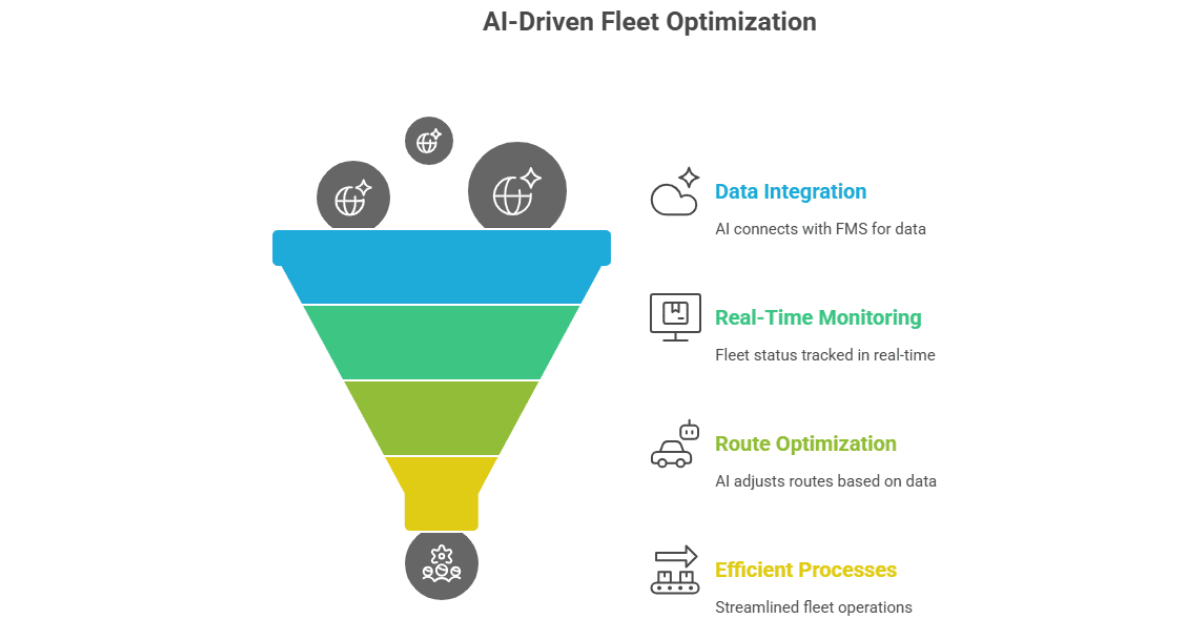
With AI together with FMS, the fleet managers are able to monitor the fleet status easily, track real-time deliveries and make adjustments where needed. The integration makes sure that your AI system does not exist as an island and can be utilized to make holistic decisions related to route planning as well as fleet management.
Analyzing Results and Continuous Improvement
Implementation of Artificial Intelligence route planning is not the end. An ongoing analysis will also be essential to make sure that your AI model is evolving and becoming better with time. Track the rates of on time deliveries, fuel consumption and driver performance to measure how AI will affect your business. This continual inspection will make sure that your AI system will develop in tandem with the shifts in traffic, routes, and working priorities.
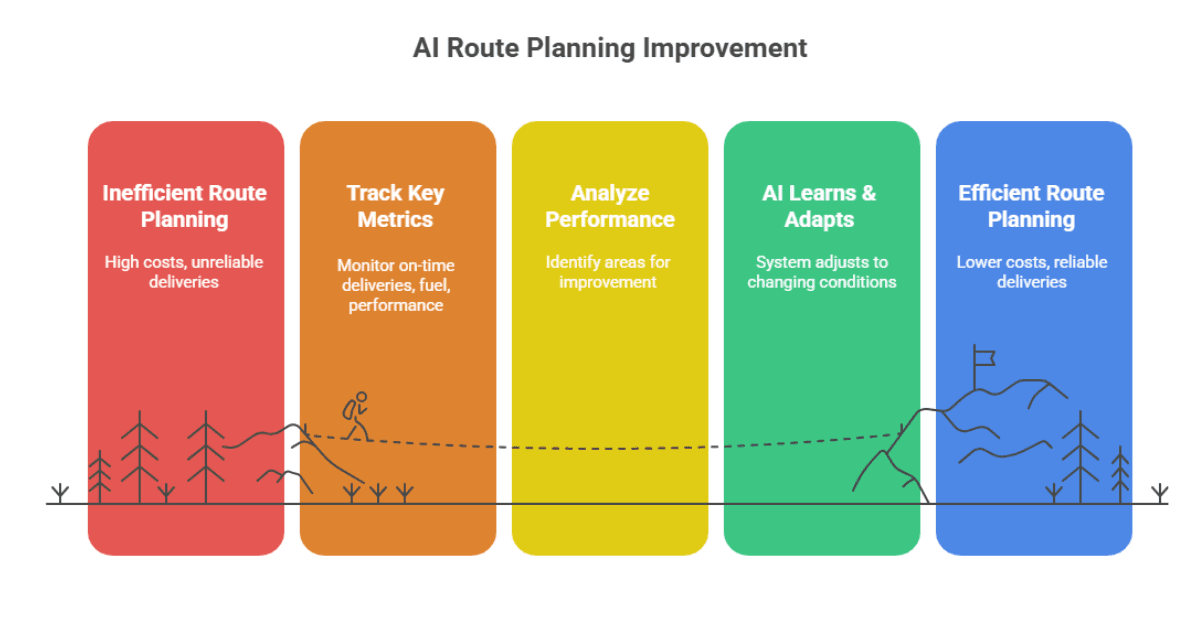
The intelligence of AI is that it is able to learn through past experiences and therefore the more the system delivers, the closer its predictions are to the actual. With time, this will translate to an efficient fleet, increased reliability in deliveries and also increased cost savings. This is a cycle of continuous learning which enables the system to adjust to the dynamically changing conditions and this also enhances the performance of operations.
Conclusion
The use of AI in your route planning system is not only competitive but a way to be even more efficient, reduce costs, and offer a better service to your customers. The optimization of routes through AI makes sure that your fleet works optimally, changing depending on current circumstances in real-time and forecasting on the most effective routes.
The way to AI adoption might appear to be an erratic one, yet, when logistics enterprises are equipped with the necessary tools and the right approach, it is possible to expand the range of activities of same-day delivery. The AI route planning future is present, and the advantages are obvious: smarter solutions, faster deliveries, and customers who will be happier.
At Gyan.Solutions, we deal with the implementation of AI solutions that make a change in logistics operations. And when you are willing to go the way of same-day delivery, we can discuss how we can assist you in adopting AI-based route planning and bring your operations to the next level.

PAUL LUCKI
I'm Paul Lucki, Head of Business Development at Gyan Solutions, specializing in business automation, ERP implementation, and operational reporting. I partner with C-suite leaders to diagnose coordination failures and design systems that align teams, data, and processes. I've helped organizations reduce operational delays by 30-40% through integrated systems and decision-support infrastructure. My expertise focuses on automating manual processes, developing ERP implementations that reflect operational reality, and building reporting systems that drive real decisions. I believe operational excellence begins with systems that reflect reality, not theory.





