



Quick Summary
Modern AI systems can only earn real user trust when transparency and data protection are built into every layer. By applying GDPR principles like minimization, consent control, and privacy-by-design, businesses reduce risks, strengthen security, and improve performance. This approach creates safer, smarter AI solutions that keep systems compliant while protecting people and their data.
The privacy of data has turned to be the most prominent trust aspect in the current AI systems. The firms are currently supposed to be inventive and prompt in innovations, and they are supposed to treat sensitive information with utmost care. However, not all organizations have managed to get transparency and thus they end up exposing themselves accidentally, out of flow, or even failure to comply, which will destroy the confidence of users almost immediately.
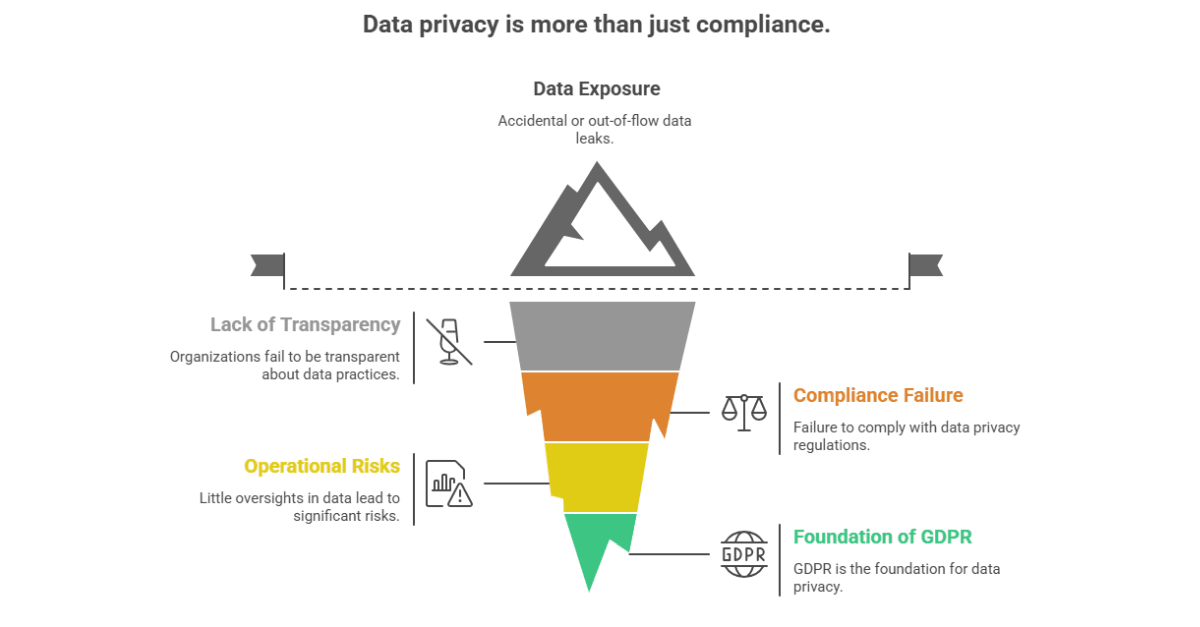
In the last couple of years, we observed how little oversights in data can turn into significant risks in operations. This is the reason why GDPR is not a checkbox to us- a foundation. All our AI systems are based on transparency, user control, and security so that companies could grow intelligently without privacy loss.
Data Minimization: Reducing Exposure While Improving Performance
The unnecessary gathering of data in case is one of the most prevalent problems that we face. In one instance, a product recommendation retail analytics system had over 50 user attributes. Once we minimized the data by the GDPR-imposed requirements, we were left with 14 features. This reduced exposure to risk by almost 70% and model accuracy increased due to removal of noise.
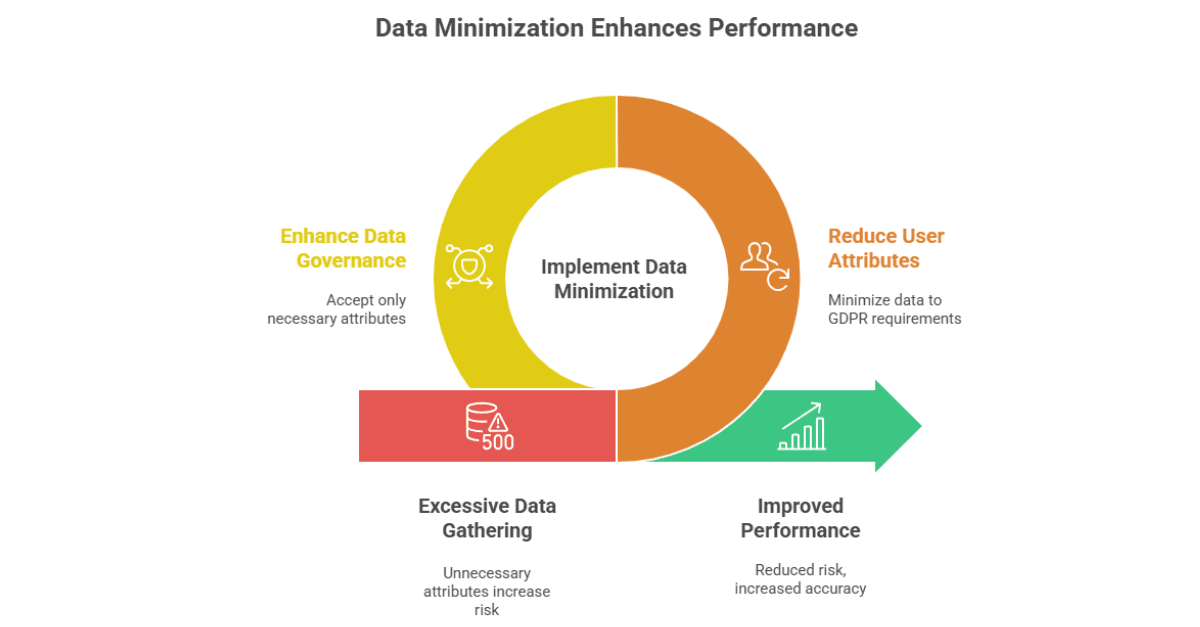
It also enhances data governance through minimization. By accepting only the necessary attributes, systems have fewer vulnerabilities, reduced storage overheads and reduced processing cycles. Not only do leaner data pipelines protect users but also assist companies to perform at higher levels using fewer resources. This systematic practice ensures that compliance and efficiency do not compete but rather scale together the same alignment emphasized in our security and compliance architecture.
Purpose Limitation: Ensuring Information Is Never Misused
Legacy systems can easily use data in several teams or workflows without apparent authorization. The purpose limitation rule of GDPR discourages this by ensuring that all data is used in a single defined, documented manner. As the case in point, a client of financial services had to reuse the identification numbers when applying analytics and support services in the past, which is an unwarranted risk.
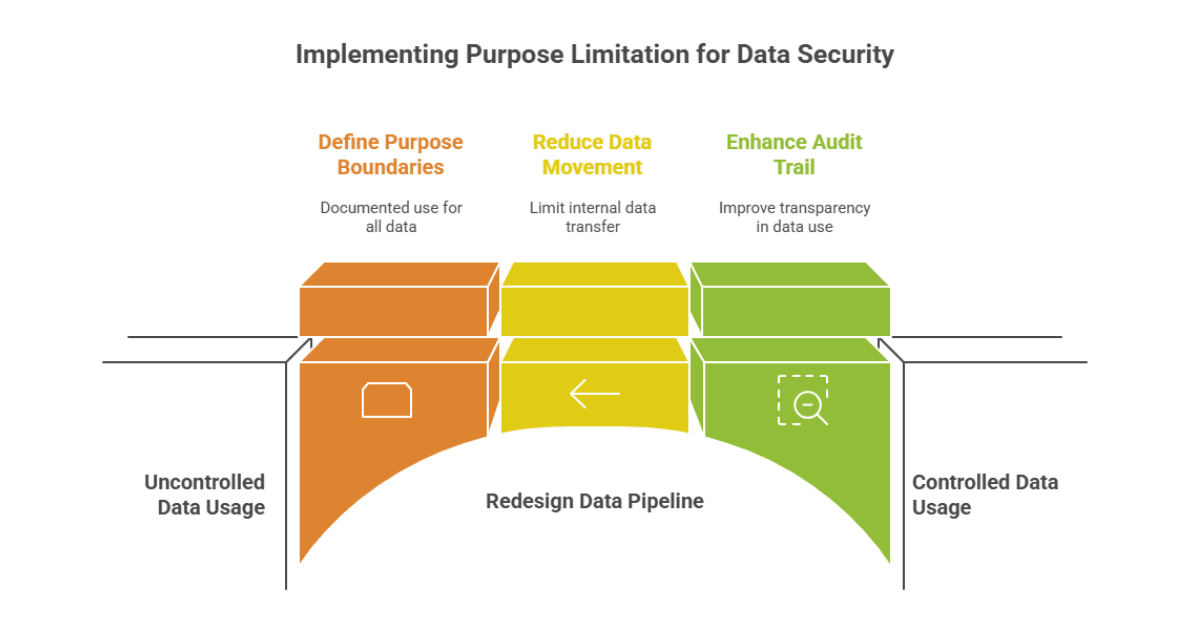
Following redesign of their pipeline consisting of tight purpose boundaries, internal movement of data was decreased by 42% and transparency in audit trail was enhanced tremendously. By keeping data within its intended use, not only do organizations remain compliant, they also achieve operational transparency that is useful in avoiding unintentional misuse of the data.
Privacy by Design: Safeguards Built from Day Zero
Privacy is not an option that can be added once development is done: it needs to be designed at the architecture level. In the case of a European retailer, we applied tokenization and anonymization to the ingestion layer, which means that personal identifiers did not get to the analytics or the training environment. Even debugging logs had values that were masked.
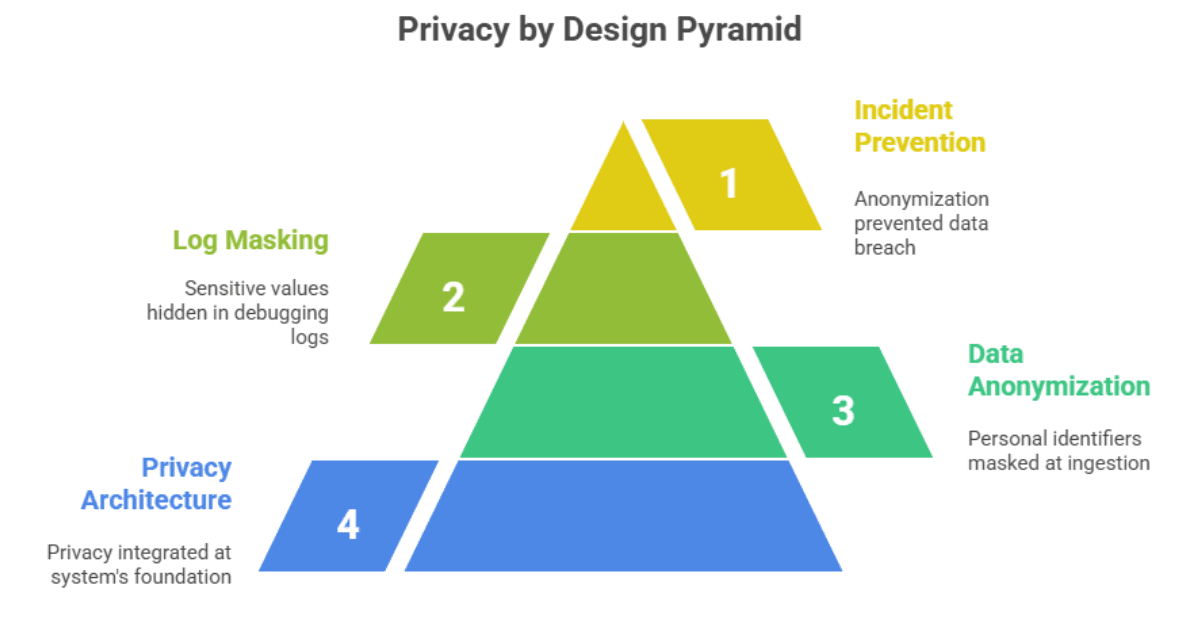
Many months later, this design saved a huge incident. One of the third-party connectors malfunctioned and revealed internal logs for a few seconds, and all identifiers were anonymized. Since privacy by design aligns deeply with established GDPR frameworks, the company avoided what could have become an expensive and reputation-damaging breach.
Consent and User Control: Turning Transparency Into a Feature
Today users demand to know how their data is being processed and GDPR makes it compulsory. As we created a data insights dashboard on a healthcare platform, we provided a live consent center where users were able to revoke, change, or increase permissions instantly. This degree of openness not only enhanced user trust, but also enabled the platform to ensure all the compliance, which did not slacken the working processes of the platform.
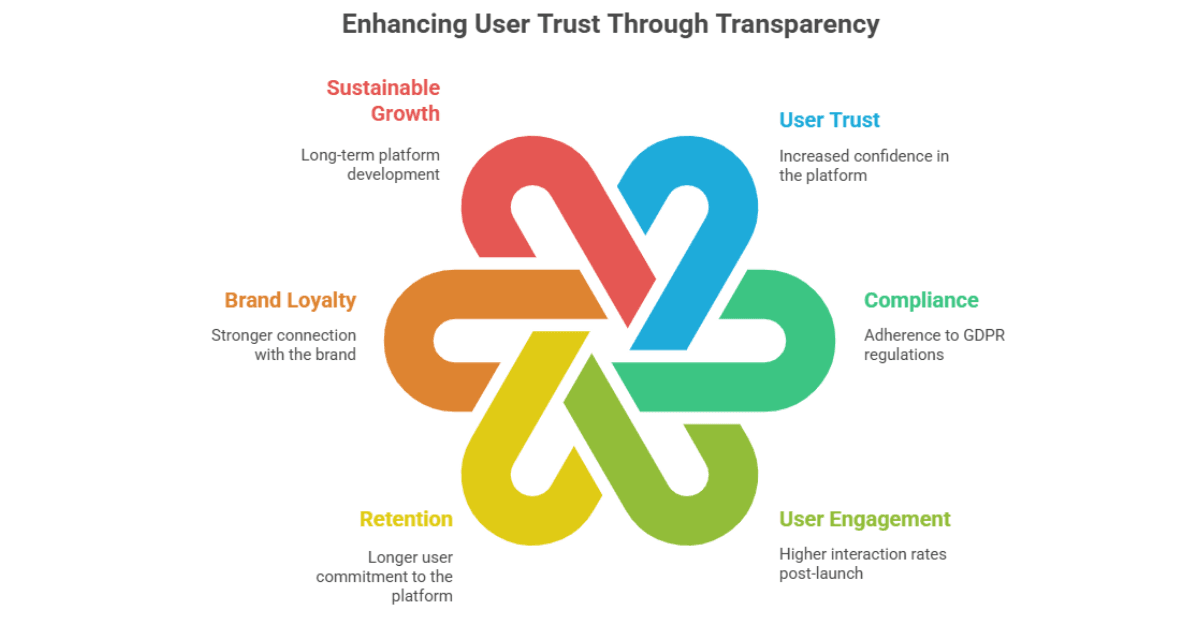
User engagement had gone up by 22% in the first quarter post launch. Transparency was an edge and not a burden. When individuals have access to and the ability to manage the way their information is processed, they are more likely to trust the products in question– and the digital environment, in general, will be healthier. The resultant trust leads to prolonged retention, brand loyalty and more sustainable growth.
Secure Processing: Encryption, Role Controls, and Active Monitoring
Security controls should change in line with the threat environment. In our systems, there is multi-layer encryption, access segmentation, and real-time monitoring of abnormalities. Our logistics deployment was designed with a zero-trust architecture, in which the teams in the warehouse only accessed operational insights, whereas teams in finance only saw metadata pertaining to payments.
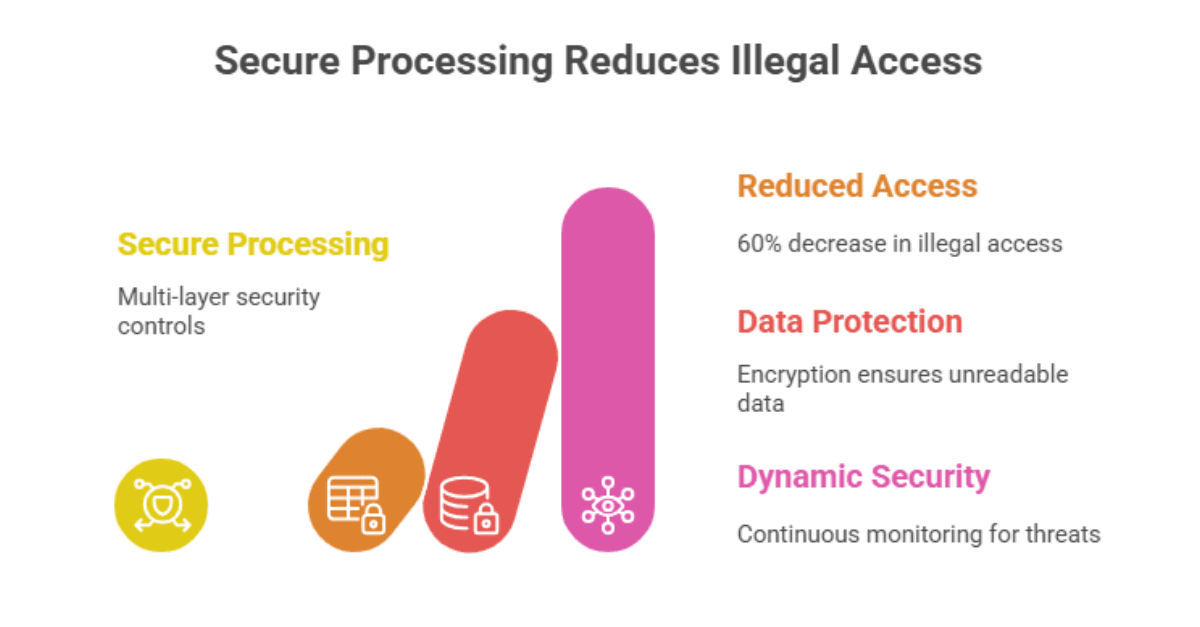
Illegal access to data was reduced by 60% in three months. The encryption ensured that on intercepting data, it was not readable. Through continuous data flow monitoring, security is a dynamic system and not a fixed setup. This dynamic method assists the organizations to be ahead of the emerging threats and protect itself at a rapid rate as the vulnerability changes.
Real-World Example: GDPR Architecture Prevented a High-Risk Incident
One of our European ecommerce customers requested us to upgrade their recommendation engine. Raw email addresses were stored in their logs- a great risk. This was substituted with hashed tokens that were anonymized and a 24-hour cycle of the token expiration was implemented to minimise exposure. This not only increased compliance, but it also considerably reduced the blast radius in case of any leakage of data.
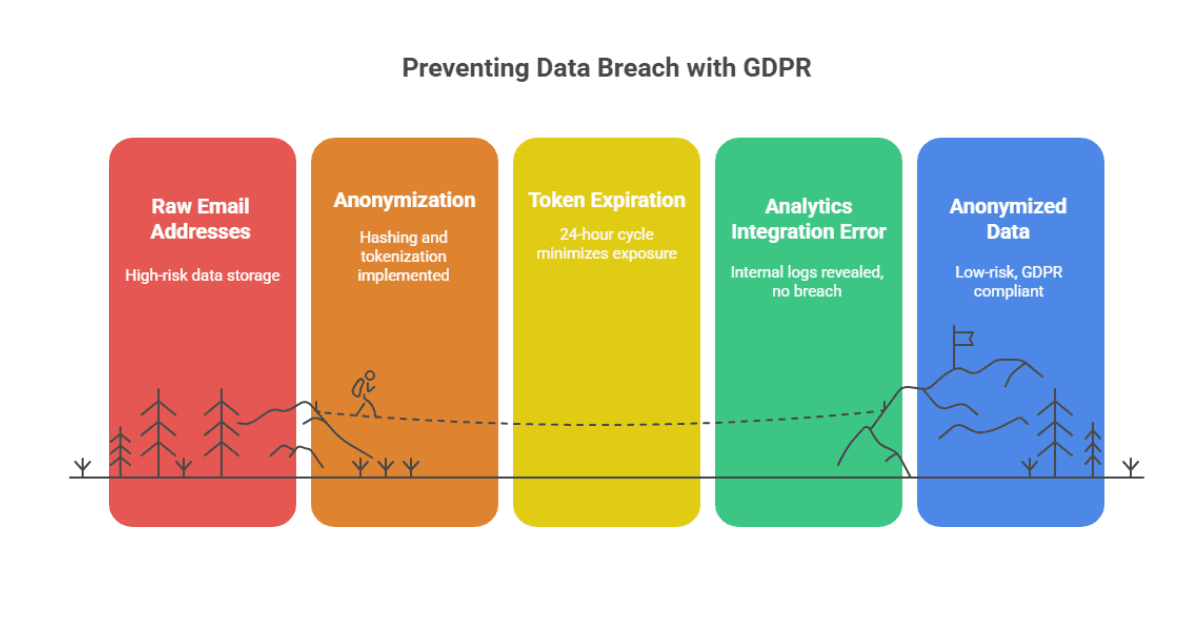
Six months later, an incorrect analytics integration was set up that revealed internal logs through partner testing. Since identifiers were all anonymized and were automatically expired, no personal data was breached. A possible violation turned into an internal quality warning not a publicly reported event as GDPR principles were intimately connected.
Documentation and Auditability: Making AI Systems Explainable
GDPR asks the companies to show the way data flows, decision-making, and the minimization of risks. We have a development strategy that involves full documentation: data lineage maps, model explainability summaries, risk logs and consent histories. This degree of transparency makes the stakeholders confident that all AI decisions can be held to account and completely traced.
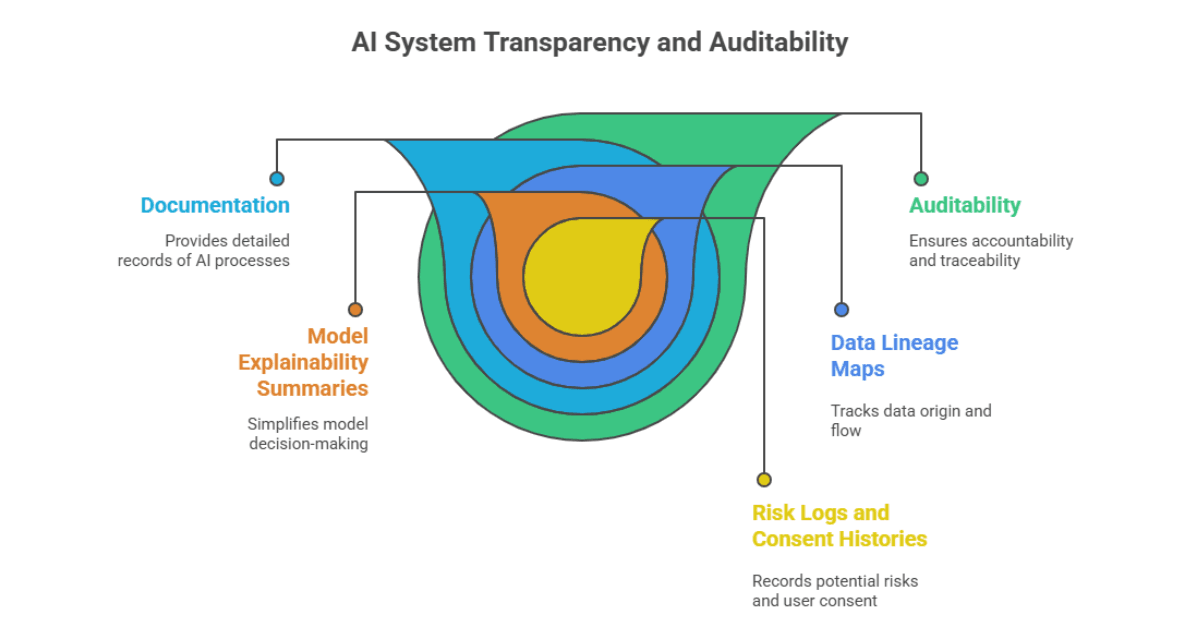
This documentation saved 45% of the time taken to resolve audits during a multinational SaaS audit. Trust is measurable and visible when the teams are able to articulate their systems. Well-organized engineering is what leads to compliance, as opposed to an emergency practice at the time of audits.
Conclusion
The innovation of AI cannot be associated with compromising transparency or protection of the user. GDPR is a framework where privacy, accountability, and transparency are secured in all the stages of the AI lifecycle. By implementing these principles, companies will secure their users and themselves in the long-term effects of mismanagement of data.
When combined with purpose limitation, active monitoring, and user control, privacy-by-design will make AI systems even stronger and more reliable. Any organization that takes GDPR as an architecture, rather than a regulatory burden, will open up to greater use and user confidence.
At Gyan.Solutions, we design AI and software systems that reflect the GDPR principles during the initial design discussion to the ultimate deployment. We have solutions that are transparent, secure, and compliant, yet are capable of providing the speed, intelligence and innovation required by modern business to develop in a responsible way.

PAUL LUCKI
I'm Paul Lucki, Head of Business Development at Gyan Solutions, specializing in business automation, ERP implementation, and operational reporting. I partner with C-suite leaders to diagnose coordination failures and design systems that align teams, data, and processes. I've helped organizations reduce operational delays by 30-40% through integrated systems and decision-support infrastructure. My expertise focuses on automating manual processes, developing ERP implementations that reflect operational reality, and building reporting systems that drive real decisions. I believe operational excellence begins with systems that reflect reality, not theory.





