

Quick Summary
AI is reshaping eCommerce by enabling real-time personalization, predictive insights, fraud detection, and scalable automation capabilities traditional platforms cannot match. While conventional systems offer stability and lower upfront costs, AI-driven eCommerce delivers higher efficiency, smarter decision-making, and stronger customer loyalty. Understanding the strengths of both helps businesses choose a platform that supports long-term growth and evolving customer expectations.
The Changing Face of Online Shopping
A decade ago, to develop a successful store online, it was more or less enough to have an attractive and uncomplicated interface and trustworthy payment system. Nowadays that is standard fare. The customers demand artificial intelligence based on individual recommendations, blazing speed and user-friendly experiences across devices. This transition has become a point of debate where the question is whether the businesses should use familiar traditional eCommerce software or switch to AI-driven ones.
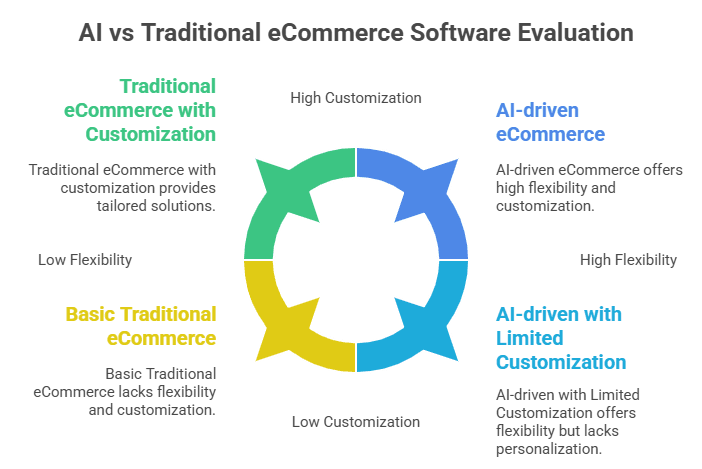
It is not as much as picking the latest technology. Each business is exclusive in their needs, resources and objectives. Being aware of the weaknesses and advantages of both the methods can allow you to arrive at an informed decision, one that encourages and drives your long term growth, and in doing so be careful that the solution taken by you can be flexible when it comes to the changes that occur in your business and in the market.
What Is Custom eCommerce Software Development?
Custom eCommerce software development means creating a platform, which fits your particular processes of work, goods, and customer experience. It is not like off-the-shelf tools that are not composed with the individual needs of your brand in mind and hence it can be completely integrated with your current systems, including CRM and the inventory system. This is an agility that makes sure that all functions interact harmoniously with your team and provide an uninterrupted experience to your customers and can expand just as your business does.
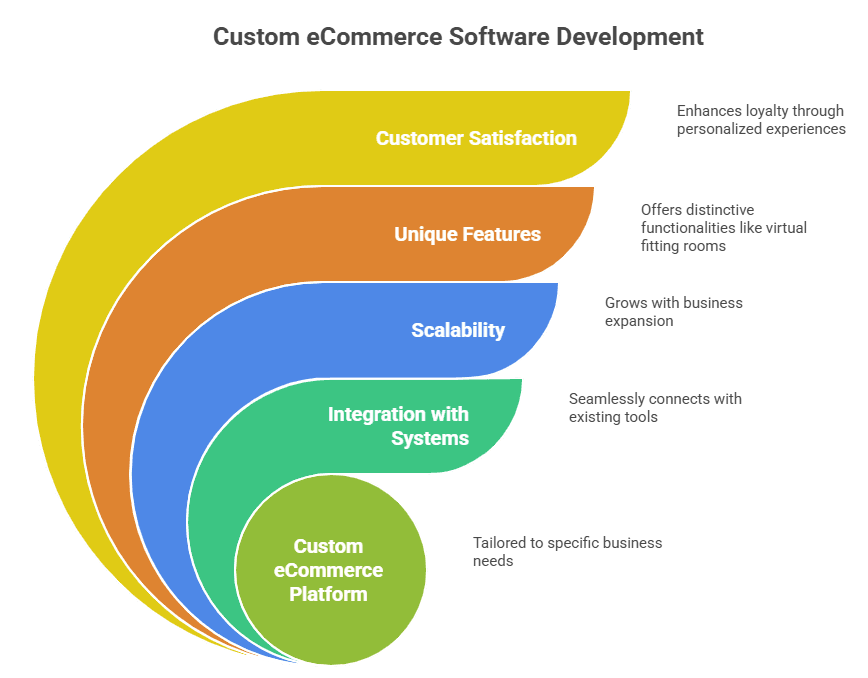
As an example, a high-fashion shopping store would have to have a platform that would incorporate real-time inventory of the stock in different warehouses and could offer the custom-designed virtual fitting room options. Making this out of nothing guarantees that it will be part of the brand promise, which generic templates can hardly do. It also enables a smooth combination with exclusive loyalty programs and individual styling advice, which helps improve the customer satisfaction and brand loyalty.
How AI Is Changing eCommerce Forever
Artificial Intelligence in eCommerce is more than automation of tasks; it changes the way companies know and engage with their customers. The AI technology is an aspect that is capable of studying past purchases, searching patterns and in some instances live behavior so as to advise on what a particular user prefers and when. Such systems learn as time goes on based on the feedback provided by the customers and with every interaction, they become smarter, more relevant, and able to increase conversion rates along with customer loyalty.
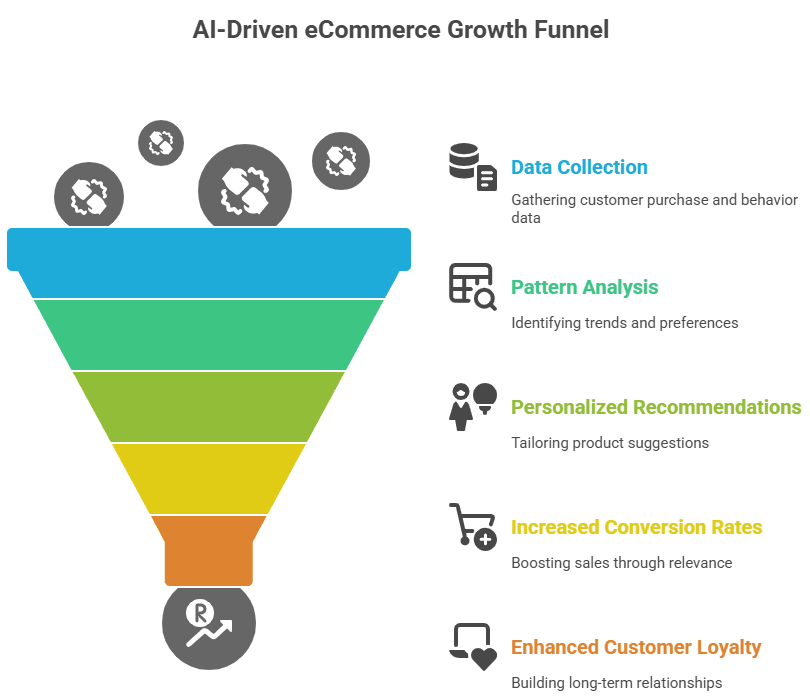
This is a skill that retailers such as Amazon and Alibaba have perfected and AI on average contributes up to 35 percent of their revenue based on personalized recommendations. This degree of predictive engagement will bring customers back and also escalate average order value without requiring that your team put in more man hours. Smaller retailers can run on a more equal terms and compete with the industry giants by implementing similar AI-powered personalization and provide experiences that the customers truly enjoy.
Personalization: The Ultimate Competitive Edge
Customers are able to group with the help of the basic parameters on the traditional eCommerce platforms, such as location or previous purchases. AI then goes a few steps further by perceiving micro-patterns like how the probability of purchasing some products increase when those colors or styling are displayed to a customer and optimizes their experience accordingly. Such extreme personalization allows companies to offer the right product, at the right time, in the right form, which prompts improvement in the conversion rate and decreases customer dissatisfaction.
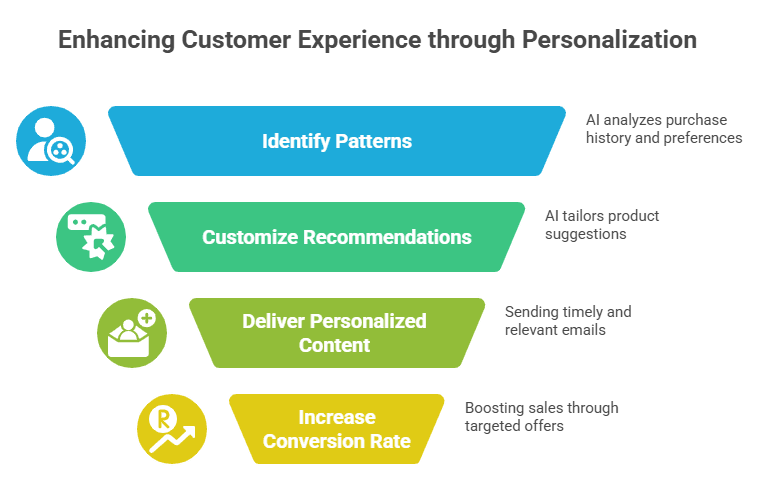
Consider having an online bookstore and AI recognizes that one of your customers purchases a new mystery novel after every three weeks. They can then be automatically sent a customized email titled, Next Mystery to Love, just in time as they’re about to read it. Eventually, the AI might learn to make recommendations based on who they like as an author, their desired pace or what is popular in the genre, and it may seem like each recommendation is custom made to them. Such active personalization creates loyalty that is impossible to achieve with the help of traditional approaches.
Security & Fraud Prevention in AI vs Traditional Systems
eCommerce can never do without security. The conventional systems use rule-based checks such as flagging suspicious orders, high values and shipping address discrepancies. Although having its advantages up to a certain extent, such rules may fail to detect more complex threats or may falsely posit. Instead, AI-powered systems constantly absorb the transaction patterns and reconfigure on the fly to recognize the newer types of fraud and minimize the amount of legitimate orders falsely identified.
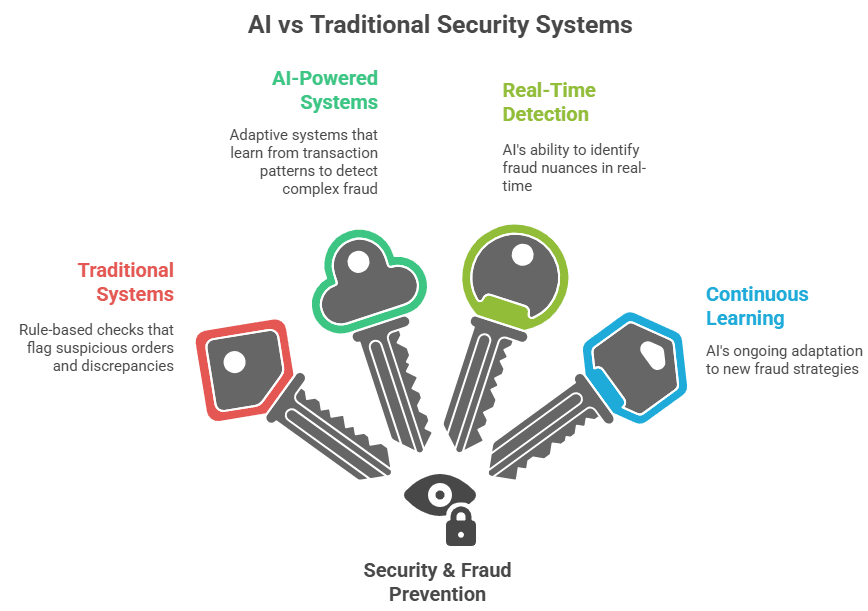
In contrast, AI-driven systems will keep on being educated by new information. In real-time, they can identify nuances of fraud, such as an abnormal device fingerprint or behavior at checkout. Stripe and PayPal are examples of payment providers implementing AI in projects that achieve a low fraud level and only stop the fraudulent transaction frequency, not the actual decision of the merchants. These models improve over time and learn to counter new fraud strategies and they also reduce interference with the shopping experience.
Scalability & Future-Proofing Your Platform
The conventional software usually needs serious redevelopment in order to cope with growth, be it additional product lines, increased traffic, or new markets. AI-enabled solutions would be more dynamic; they would be able to scale personalization algorithms, automate inventory forecasts, and add features to the current system without disturbing it. These businesses can react more quickly to changes in the market and still perform and satisfy consumers despite the high rates of growth.
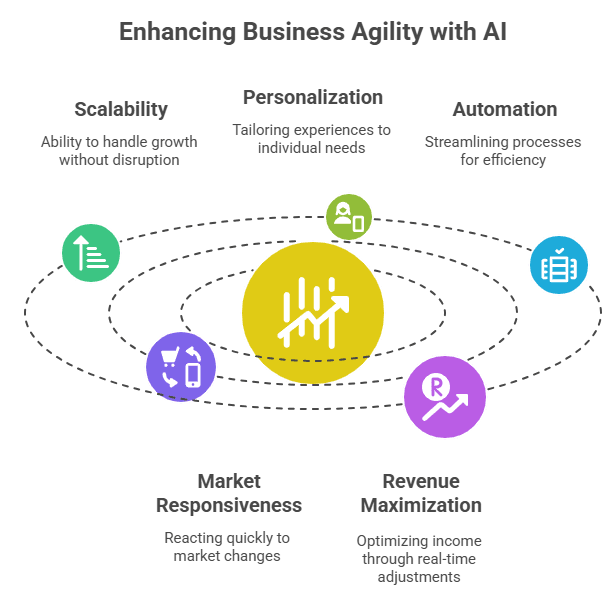
As an example, an eCommerce store with AI may automatically change prices depending on the demand, the actions of competitors, or the season. This implies that you are able to react to the market changes in real-time when conventional systems may take weeks to correct manually. It is not just this agility that enhances competitors but also enables competence in the opportunity taking in real-time maximizing the revenue potential.
Cost Considerations & ROI: The Real Numbers
Initial cost by face value, conventional eCommerce software tends to look cheaper to implement. However, it has continuing expenses on manual marketing campaigns, customer support and inventory management which can mount at a high price. AI solutions can also increase operational expenses since they comprise greater initial investment but they can help reduce operational costs through automation of said process and in the long run spare resources that can be used to grow and innovate strategically.
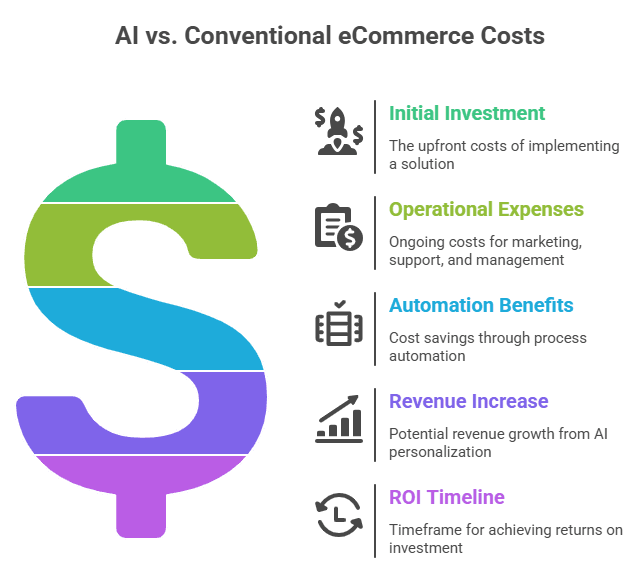
2023 McKinsey research concluded that personalization powered by AI is the solution that could bring eCommerce providers an increase in revenue by 10-30 percent, and returns (ROI) were received within a year by some companies. The important thing is to have your AI investment tied to hard business targets right at the beginning and every new feature you add to it should add directly to customer engagement, customer retention, and long-term profitability.
Which Is Right for Your Business?
A traditional platform that is well crafted may be a good fit to run your business as long as your business has stable simple transactions and does not require a lot of customization. Nevertheless, in a highly competitive market place where customer loyalty depends on customer-specific experiences and real-time interaction, AI-based eCommerce can give you the competitive edge you require to stay in front, respond nimbly when opportunities present themselves, and generate customer retention.
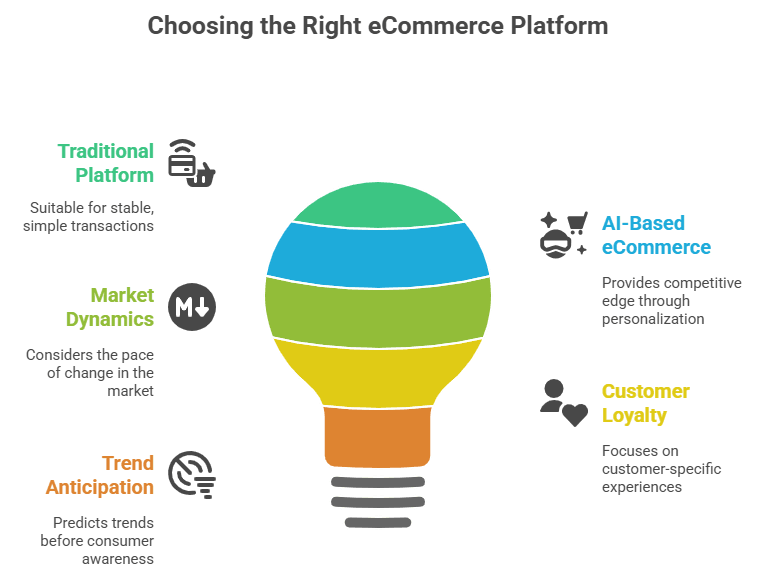
Consider how fast change has been in your line. In markets that are constantly changing, such as the fashion, electronics, or specialty retail world, just responding to fads is not enough to stay on track because one needs to anticipate trends, sometimes even before the consumer is aware of his/her needs. And that is precisely what AI will do with the data, converting it into immediate and personalized action, with which you will be way ahead of the game.
Conclusion
The war between AI enhanced and conventional eCommerce software is not to supplant each other; rather it is to know the right combination that will make a business grow, be efficient, and deliver consumer loyalty. The familiar systems offer familiar workflow and stability whereas AI provides the intelligence to make things personal, predictable, and scalable when it was not possible a few years back.
Simply put, AI allows your eCommerce site to improve its business through all clicks, look-ups and buyer transactions – and then act upon those insights to make your customers happier. By adapting now, the businesses will not only match the emerging customer expectations, they will take the market lead in innovation and profits.
At Gyan.Solutions we are experts in developing custom eCommerce software that are reliable and infused with the intelligence behind AI and machine learning. Whether you are refactoring a legacy application or building from the ground up, we can assist with your development of a future-proof solution that scales along with your business. Today, let us chat to understand how we can make your eCommerce platform smarter, faster and more profitable.

SUKHPREET SINGH
I'm Sukhpreet Singh, Director of Innovation & Technology at Gyan Solutions, specializing in generative AI, AI chatbots, and ERP integration. I design AI solutions that integrate seamlessly into existing systems without disruption. I build conversational chatbots that improve decision speed and agentic AI systems that automate complex workflows. Over 8+ years, I've deployed AI-powered decision-support platforms that improve visibility and planning accuracy. My approach centers on alignment: AI works best when designed around your business, not when your business is forced around the AI. I believe intelligent systems should be invisible they simply improve decisions and outcomes.





