

ECOMMERCE & RETAIL / MOBILE APP DEVELOPMENT
Ecommerce Mobile App Development for Retail & B2B Businesses
We support ecommerce teams, retailers, and B2B businesses with ecommerce mobile app development services focused on how customers shop and how orders are managed. This includes iOS and Android apps for product browsing, checkout, customer accounts, and retail operations.
Whether you need a new app or want to improve an existing one, we review the user journey and technical requirements before development begins.
For businesses evaluating new ecommerce apps, integrations, or improvements to existing mobile experiences.
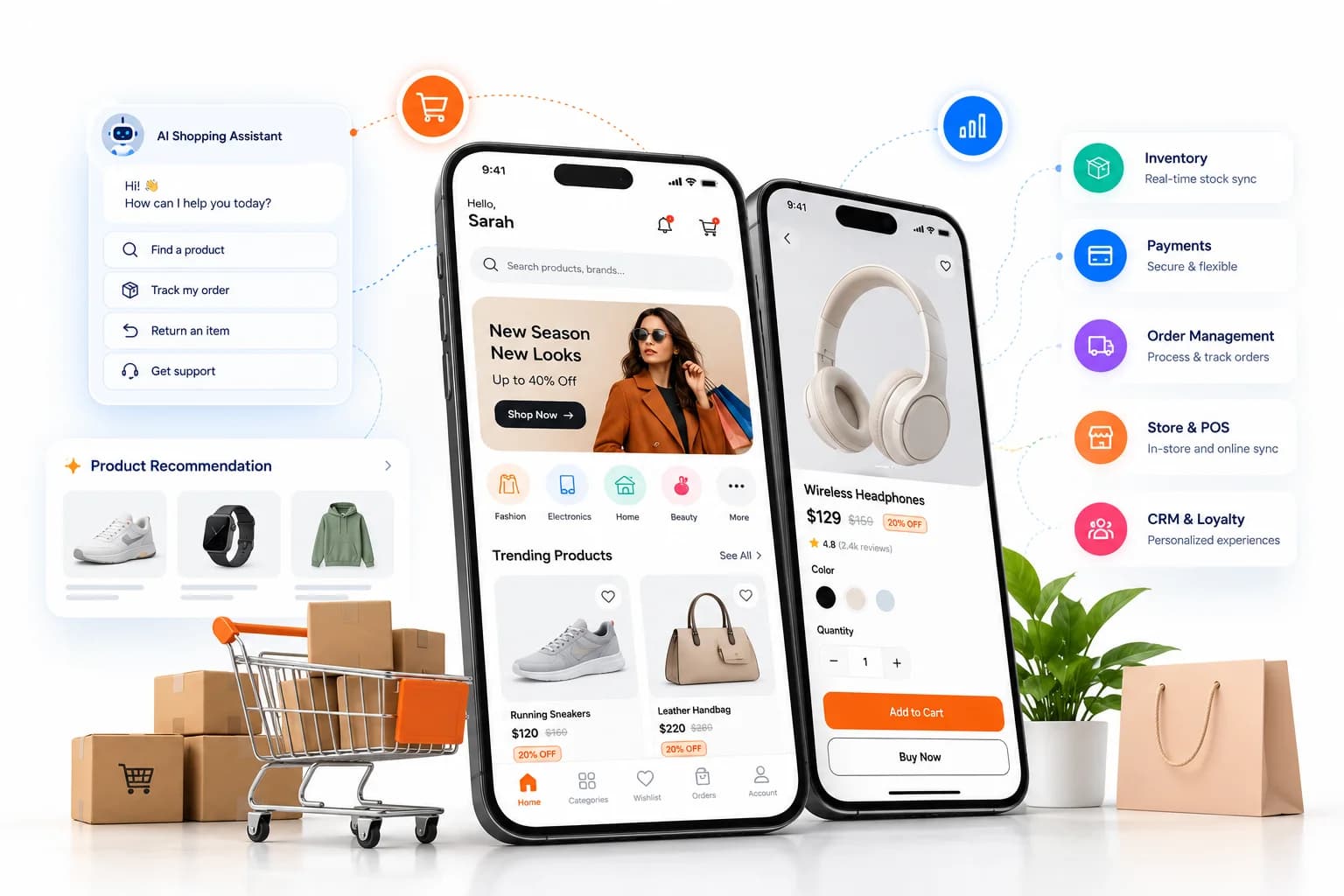
Build mobile shopping apps with product search, checkout, accounts, loyalty, and order tracking.
Support account pricing, bulk ordering, reordering, quotes, and purchase approvals.
Give employees mobile access to inventory, scanning, picking, pickup, and deliveries.
Connect mobile apps with ecommerce, ERP, POS, CRM, payments, automation, and AI.
A Mobile App Should Make Ecommerce Easier, Not More Complicated
A mobile app needs to do more than offer another way to shop. When customer accounts, inventory, orders, and store systems do not work together, even simple tasks become frustrating for shoppers and employees.
The App Offers Little New Value
Customers see the same shopping experience as the mobile website, with few useful reasons to install the app or return.
Customer Accounts Feel Disconnected
Saved addresses, order history, loyalty rewards, and account preferences do not stay consistent between the app and other channels.
Product Availability Is Unreliable
The app displays outdated stock or incorrect availability because store, warehouse, and ecommerce inventory are not properly connected.
Checkout and Orders Create Problems
Payment failures, inconsistent order details, or missing updates leave customers unsure whether their purchases were completed.
Notifications Are Not Useful
Customers receive repeated promotions but miss important updates about orders, deliveries, pickup readiness, or loyalty benefits.
Employee Apps Slow Down Work
Store and warehouse teams still rely on manual steps because mobile tools do not match receiving, picking, fulfillment, or exception workflows.
Operational Clarity
Not sure whether the right solution is a mobile app, improved mobile web experience, customer portal, or operational application?
A Mobile App Is One Part of Your Ecommerce Business
A customer might browse products on an app, complete checkout, collect an order from a store, and request a return later. They expect their account, order details, and payment information to remain consistent.
Behind those interactions, your ecommerce platform, inventory, order management, and fulfillment systems need to exchange reliable information. Mobile screens alone cannot solve disconnected processes.
The same applies to employee applications. Picking, barcode scanning, inventory checks, delivery updates, and returns need to reflect the actual work taking place.
We design mobile experiences around these connections, so customers and employees can complete tasks without unnecessary steps or inconsistent information.
Key insight
A useful ecommerce mobile app does more than put your store on a phone. It gives customers or employees a better way to complete tasks while staying connected to the business.
User → Mobile Experience → Commerce & Business Systems → Workflow → Action → Status
Two Ways We Support Ecommerce Mobile App Development
Some businesses know their mobile experience needs improvement but are unsure what to build. Others have clear requirements and need an implementation team.
Operational Review & Improvement
For ecommerce and retail teams that need to understand customer journeys, employee tasks, mobile requirements, and gaps between existing systems.
 Review how customers and employees complete tasks across mobile, web, stores, and business systems.
- Identify problems with checkout, accounts, inventory visibility, order handling, or manual work.
- Determine whether mobile app development, integration, workflow improvement, or another approach makes sense.

Operational Review & Improvement can stand alone without a development commitment.
Technology & AI Implementation
For businesses ready to build, integrate, modernize, or extend a mobile shopping or operational application.
- Define app features, user journeys, architecture, platform requirements, APIs, and delivery priorities.
- Connect mobile apps with ecommerce, payments, ERP, CRM, POS, inventory, order management, and other systems.
- Develop, test, deploy, and support agreed iOS, Android, or cross-platform application functionality.
Implementation can begin directly when the business requirement is already defined.
Ecommerce Mobile App
Development Experience
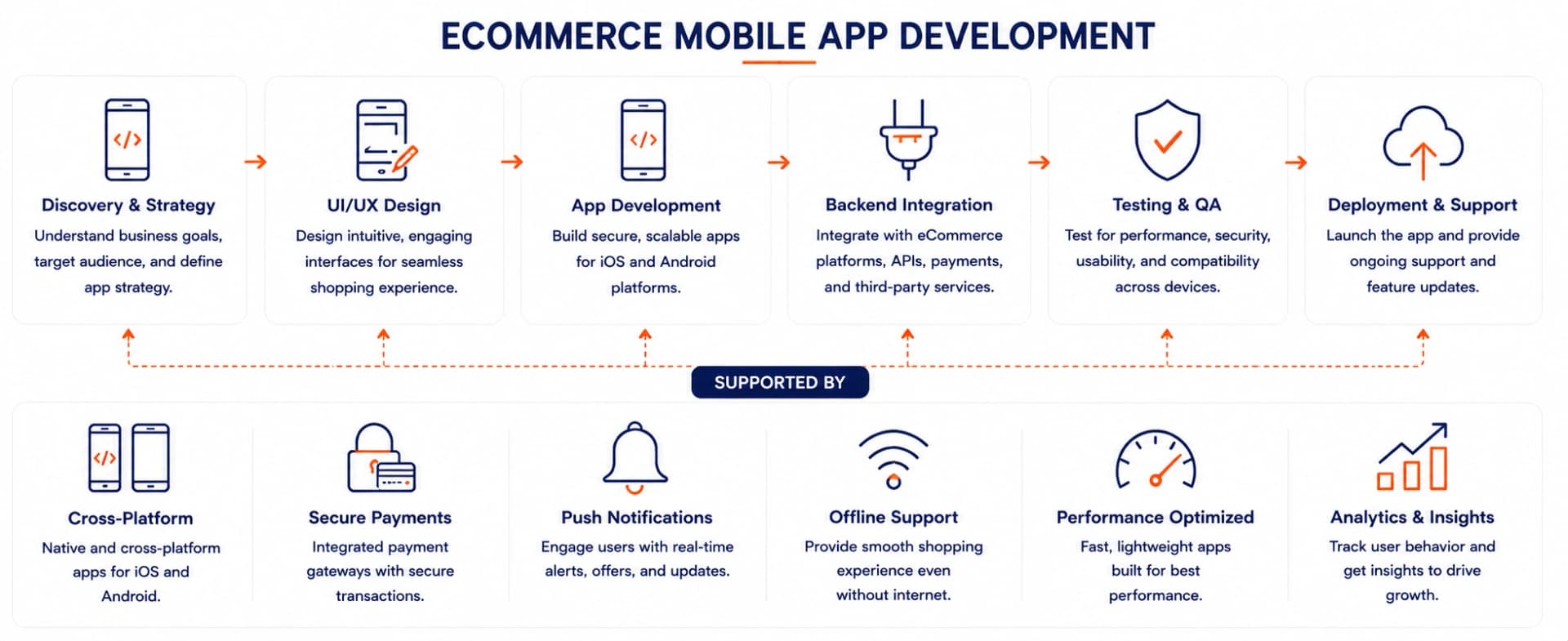
Our mobile app work covers the shopping and operational tasks customers and employees need to complete. That includes product discovery, checkout, accounts, inventory, order tracking, loyalty, store fulfillment, and delivery.
We review the app experience alongside the systems behind it, including authentication, payment services, APIs, notifications, and data updates.
This helps determine which features belong in the app, what should remain in existing platforms, and where additional development or integration is needed.
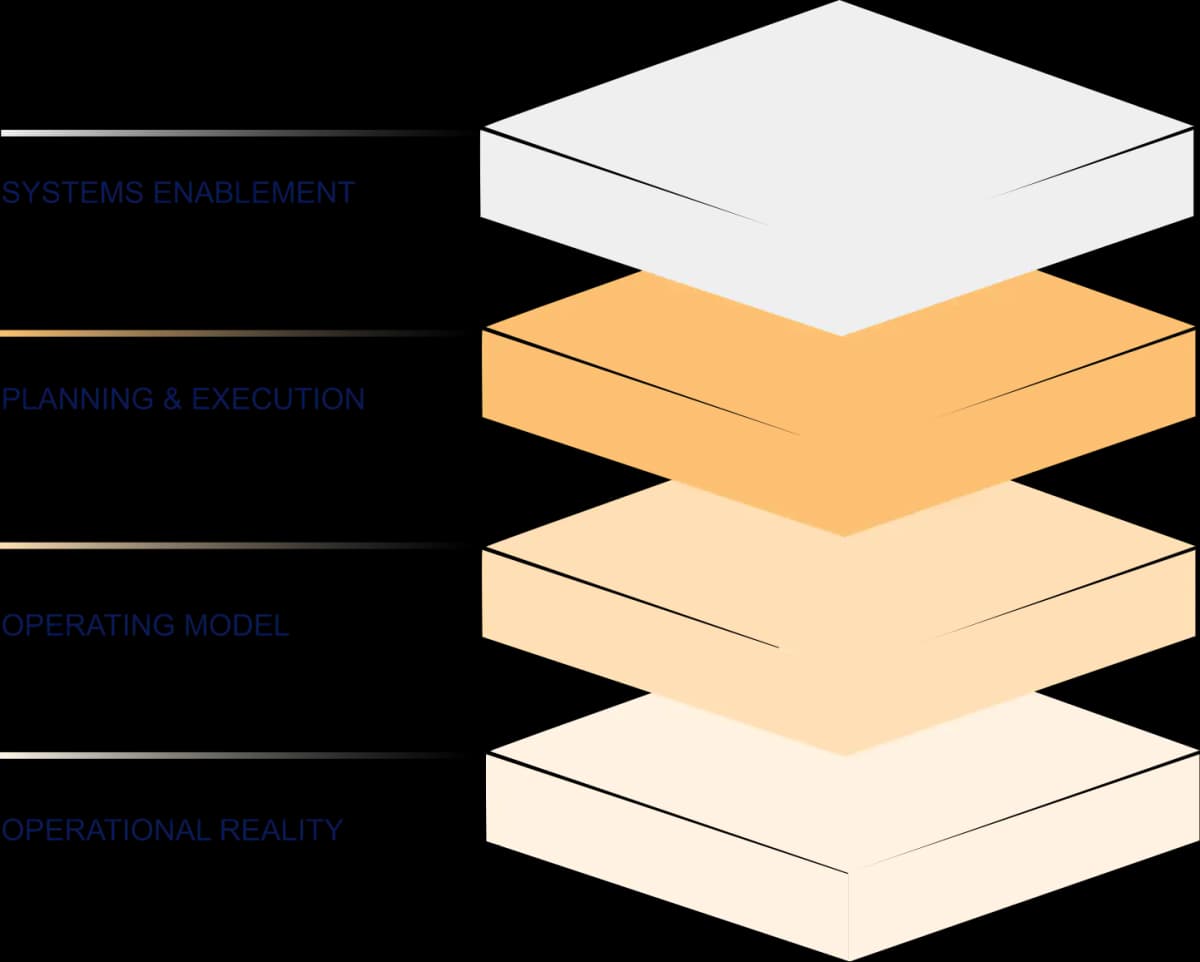
Where Ecommerce Mobile Apps Connect With Daily Operations
A mobile app needs to work with the same products, customer information, orders, and business rules as the rest of your ecommerce operation. We examine eight areas where mobile features and connected systems affect the experience.
Shopping & Product Discovery
Mobile shoppers need to find products quickly, understand their options, and make buying decisions without navigating complicated menus. We examine how product search, filters, and catalog data work together on smaller screens.
What We Examine
- Product categories and navigation
- Search and filtering
- Product variants and options
- Product descriptions and images
- Stock availability
- Saved items and wishlists
- Recommendations and related products
- Product comparison needs
- Catalog and content APIs
- Mobile accessibility and usability
Desired Outcome
Make it easier for customers to find, understand, and choose products using accurate catalog information.
Customer Accounts & Loyalty
Customers returning to an app expect their saved details, order history, preferences, and loyalty information to remain available. These features need consistent account data across mobile and other sales channels.
What We Examine
- Registration and sign-in
- Customer authentication
- Profiles and saved addresses
- Order history
- Saved preferences
- Wishlists and favorites
- Loyalty points and rewards
- Memberships and subscriptions
- Repeat purchases
- Account and CRM integration
Desired Outcome
Give returning customers convenient account access without creating conflicting information across channels.
Checkout & Payments
Mobile checkout should make purchasing straightforward while using reliable payment and order-processing systems. We examine where customers face unnecessary steps, payment failures, or unclear order confirmation.
What We Examine
- Cart and checkout steps
- Guest checkout options
- Payment gateway integration
- Supported payment methods
- Taxes and shipping charges
- Promotions and discounts
- Address validation
- Payment failure handling
- Order confirmation
- Transaction security
Desired Outcome
Support a clear, reliable mobile checkout that stays connected to the business's payment and order systems.
Orders & Fulfillment
Customers need to see what happened after checkout. Employees also need reliable information for picking, packing, and fulfilling orders. We examine how mobile order activity connects with fulfillment operations.
What We Examine
- Order history and status
- Order management integration
- Picking and packing status
- Shipment tracking
- Partial fulfillment
- Pickup readiness
- Cancellations and changes
- Delivery updates
- Order exceptions
- Customer notifications
Desired Outcome
Keep customers and operational teams informed using the same approved order and fulfillment information.
B2B Commerce
B2B customers often purchase through account-specific catalogs, agreed pricing, approval rules, and repeat ordering workflows. A mobile app should support these requirements without bypassing existing commercial controls.
What We Examine
- Business account access
- Account-specific catalogs
- Contract pricing
- Bulk ordering
- Reordering
- Quote requests
- Purchase approvals
- Order and invoice history
- Business documents
- ERP and account integration
Desired Outcome
Give business buyers convenient mobile purchasing while preserving account rules and approval workflows.
Store & Warehouse Operations
Employees need mobile information where the physical work happens. We examine tasks such as receiving, stock checks, picking, packing, and transfers alongside the systems that record those activities.
What We Examine
- Goods receiving
- Inventory lookup
- Barcode scanning
- Picking workflows
- Packing and staging
- Stock transfers
- Cycle counts
- Store fulfillment
- Pickup preparation
- Damaged or missing stock exceptions
Desired Outcome
Support day-to-day store and warehouse tasks with mobile tools connected to reliable inventory records.
Delivery Workflows
Delivery teams need clear assignments, order information, status updates, and a way to record completed work. Mobile workflows should reflect actual dispatch and delivery requirements.
What We Examine
- Delivery assignment
- Dispatch information
- Driver access and roles
- Route information
- Delivery status updates
- Customer instructions
- Proof of delivery
- Failed delivery handling
- Notifications and handoffs
- Delivery system integration
Desired Outcome
Give delivery teams access to the information and actions needed to complete assigned deliveries.
Service & Returns
Customers may need help after placing an order. Mobile support should provide clear policies, service options, return information, and access to employees when a request cannot be completed through self-service.
What We Examine
- Help and support access
- Return and exchange policies
- Return eligibility
- Refund status
- Account support
- In-app messaging
- Service ticket creation
- Customer notifications
- Human escalation
- Support and CRM integration
Desired Outcome
Make common post-purchase requests easier to manage while keeping exceptions with the appropriate team.
Ecommerce Mobile App Development Services
Gyan Solutions builds and improves mobile apps for shopping, business purchasing, and retail operations. Our work includes app development, connected payments, customer accounts, inventory access, order workflows, and integrations with existing commerce systems.
Custom Ecommerce Shopping Apps
Build iOS and Android shopping apps with product catalogs, search, carts, secure checkout, customer accounts, order tracking, and loyalty features.
B2B Mobile App Development
Develop account-based apps with business catalogs, customer-specific pricing, repeat orders, quote requests, documents, and purchasing approvals.
Store & Warehouse Applications
Build mobile tools for stock checks, barcode scanning, receiving, picking, packing, transfers, inventory counts, and fulfillment tasks.
Delivery & Pickup Applications
Support dispatch, delivery assignments, route details, order updates, proof of delivery, pickup handling, and operational exceptions.
Ecommerce App Integration
Connect mobile apps with commerce platforms, payment gateways, ERP, CRM, POS, OMS, WMS, inventory, shipping, and loyalty systems.
Mobile App Modernization & Support
Improve existing apps through UX changes, performance updates, API improvements, security reviews, testing, platform updates, and maintenance.
Already Know What Your App Needs to Do?
Share your requirements, current ecommerce platform, and the features or systems that need to be connected.
Add AI to Mobile Commerce Where It Solves a Real Problem
AI can make certain mobile interactions easier, particularly when customers need product guidance or employees need quick access to information. Not every ecommerce app needs AI.
We first identify the customer or operational problem, then assess whether AI is more useful than standard search, self-service, or workflow automation.
AI Product Discovery
Let shoppers describe what they need and receive product suggestions based on approved catalog details, attributes, and availability.
In-App Customer Assistance
Answer common product, order, return, and account questions using connected knowledge sources and defined support workflows.
Employee Knowledge Assistance
Give store and warehouse teams easier access to product details, process instructions, and approved operational information.
Order & Inventory Exception Support
Identify or summarize missing stock, delayed orders, failed fulfillment steps, and service issues for employee review.
Conversational & Voice Assistance
Use natural-language or voice interaction when it makes product search, support, or employee tasks easier to complete.
Implementation Control
AI features need reliable data, clear permissions, business rules, and human oversight.
When Ecommerce Mobile App Development Makes Sense
A mobile application should address a clear customer or operational need. The starting point depends on whether the problem still needs investigation or your requirements are ready for development.
When You Need Operational Clarity
- Mobile shoppers struggle with browsing, checkout, or account access.
- Repeat customers need easier reordering, loyalty, or order tracking.
- Your team is unsure whether an app offers enough value over mobile web.
- Store and warehouse employees rely on disconnected manual workflows.
- Delivery teams need better access to assignments and order updates.
- Existing systems create inconsistent information across sales channels.
When the Requirement Is Clear
- You need a custom ecommerce shopping app for iOS or Android.
- A B2B ordering or customer account app needs to be developed.
- Your business needs a store, warehouse, or delivery application.
- An existing mobile app needs new features or modernization.
- The app must connect with Shopify, Medusa, ERP, CRM, POS, or other systems.
- Your mobile commerce app needs secure payments, loyalty, notifications, or order tracking.
A Clear Starting Point for Mobile App Development
You do not need to commit to a full app build before understanding the requirements. We start with a discussion about the business need, then agree on the scope and delivery approach.
Ecommerce Mobile App Fit Call
We discuss your users, shopping or employee workflows, existing ecommerce platform, current mobile experience, integrations, and development requirements.
Engagement Scope
We agree on features, supported devices, user journeys, system integrations, data requirements, responsibilities, testing, timelines, and the appropriate delivery approach.
Review, Implementation, or Both
We carry out the agreed review or implementation, covering application design, development, API connections, testing, deployment, and rollout.
30-minute call
No obligation
Review and implementation scoped separately
Who Benefits From Ecommerce Mobile App Development?
Our ecommerce mobile app development services cover shopping, repeat orders, and daily operations. This includes building new apps, connecting existing platforms, and improving applications already in use.
Strong Fit For
Ecommerce brands with repeat customers.
Retailers investing in mobile shopping experiences.
Grocery and food commerce businesses.
B2B ecommerce and distribution companies.
Omnichannel retailers with store pickup.
Multi-location retailers with shared inventory.
Businesses with store and warehouse mobile workflows.
Companies modernizing existing ecommerce apps.
A Different Provider May Be Better If
Your existing mobile website meets customer needs.
You only want an app because competitors have one.
Customers have little reason to install or reuse an app.
You only need a simple website wrapped in an app.
The business requirement can be solved through existing platform features.
You need only a generic website template.
Your current priority is website performance rather than mobile functionality.
There is no defined customer or operational problem to improve.
Connect Mobile Commerce With the Systems Behind It
A mobile app depends on reliable product information, customer records, checkout, inventory, and order workflows.
Discuss Your Mobile App Requirement→

30-minute call

No obligation

Consulting and implementation scoped separately
Connect Mobile Commerce With the Systems Behind It
A mobile app depends on reliable product information, customer records, checkout, inventory, and order workflows. These related services address the operational and technical requirements that may affect your mobile application.
Explore by Operational Focus
Ecommerce Customer Experience
Review product discovery, mobile navigation, accounts, checkout, loyalty, and service journeys to identify where customers face unnecessary effort.
Ecommerce Growth Strategy
Examine buying friction, mobile conversion, repeat purchases, and customer journeys before introducing new app features.
Ecommerce Order Management
Keep mobile orders, confirmations, fulfillment status, cancellations, and delivery information aligned with the order lifecycle.
Inventory Management & Fulfillment
Support stock visibility, receiving, scanning, picking, transfers, packing, pickup, and delivery through connected mobile workflows.
Explore by Technology & Integration
Headless CMS Development
Manage structured product, editorial, and promotional content across your mobile apps, websites, and other customer channels.
ERP & Ecommerce Integration
Connect mobile transactions, products, accounts, inventory, fulfillment, and business data with existing ERP processes.
Ecommerce POS Integration
Connect mobile activity with in-store product availability, loyalty, orders, pickup, and customer information.
AI Chatbot Solutions
Add in-app conversational support for product questions, order tracking, account assistance, returns, and human support handoffs.
Common Questions
What is ecommerce mobile app development?
Ecommerce mobile app development involves designing and building applications that let customers shop or employees complete commerce-related tasks on mobile devices. These apps can support product browsing, customer accounts, checkout, payments, order tracking, loyalty, inventory, and fulfillment. They may connect with an existing ecommerce platform or require additional backend development.
Does Gyan Solutions develop ecommerce apps for both iOS and Android?
Yes. Gyan Solutions supports ecommerce mobile application development for iOS and Android. The delivery approach depends on the app's features, device requirements, integrations, performance needs, and budget. We review whether native or cross-platform development is appropriate before defining the scope.
Can you develop a custom mobile shopping app for our existing ecommerce business?
Yes. We can plan and build mobile shopping applications around your existing commerce environment. Features may include product catalogs, search, cart, checkout, customer accounts, order history, loyalty, notifications, and support. The app's architecture and integrations are defined around the systems you already use.
Can an ecommerce mobile app connect with Shopify, Medusa, or another commerce platform?
Yes, where the platform offers suitable APIs or supported integration methods. A mobile app can use existing commerce services for products, customers, carts, checkout, orders, and inventory. The specific integration depends on platform capabilities, authentication, business rules, and any required custom development.
Should we build a mobile app or improve our mobile website?
A mobile website may be enough when customers mainly browse and purchase occasionally. A dedicated app becomes more useful when repeat purchasing, loyalty, notifications, saved preferences, barcode scanning, or operational mobile workflows create additional value. Gyan Solutions can review the customer journey before recommending either approach.
What features should an ecommerce mobile app include?
Common features include product search, categories, filtering, variants, customer accounts, wishlists, carts, secure payments, order tracking, and support. Depending on the business, an app may also need loyalty programs, subscriptions, store pickup, repeat ordering, B2B pricing, or staff workflows. Features should reflect actual customer and operational requirements.
Can you integrate payment gateways and protect customer transactions?
We can implement payment integrations using supported gateway APIs and approved payment flows. The scope includes authentication, transaction handling, error states, order confirmation, and applicable security requirements. Sensitive payment data should be handled through appropriate payment-provider methods, with compliance responsibilities established for the project.
Can you build B2B, grocery, marketplace, or multi-location retail apps?
Yes. Gyan Solutions supports mobile requirements across ecommerce and retail models. These may involve account-based ordering, grocery substitutions, store pickup, location-specific inventory, delivery workflows, or specialized marketplace functionality. Each project is scoped around the required business processes and connected systems.
How much does ecommerce mobile app development cost?
Development cost depends on whether the project uses an existing ecommerce backend, the number of platforms, app design, feature complexity, integrations, testing, security, and ongoing support. A focused customer app generally has different requirements from a multi-vendor marketplace or an app connecting several operational systems. We provide estimates after reviewing the scope.
How long does it take to develop an ecommerce mobile app?
The timeline depends on design requirements, features, existing backend capabilities, integrations, testing, and app store preparation. A smaller application connected to an existing commerce platform may require less work than a new custom commerce system with extensive integrations. Milestones and delivery expectations are agreed during scoping.
Can Gyan Solutions improve or modernize an existing ecommerce mobile app?
Yes. We can review an existing mobile application and identify issues involving usability, performance, checkout, APIs, authentication, platform compatibility, integration quality, and maintainability. The recommended work may involve focused improvements, new features, backend changes, or broader modernization.
Do you provide testing, deployment, and ongoing app support?
Testing and deployment can be included in a defined implementation scope. Work may cover functional testing, checkout and payment validation, device compatibility, integration testing, app store release preparation, and rollout. Maintenance, monitoring, security updates, and future enhancements can also be discussed as part of the engagement.
Discuss Your Ecommerce Mobile App Requirement
Tell us what customers, employees, stores, warehouses, partners, or delivery teams need to accomplish through mobile. We'll use the initial conversation to understand the users, workflows, systems, integrations, and whether the appropriate starting point is Operational Review & Improvement, Technology & AI Implementation, or a combination.
Focused on your goals
You decide the next step.
Consulting & implementation