

ECOMMERCE & RETAIL / RETAIL SOFTWARE DEVELOPMENT
Retail Software Development Built Around Real Store and Commerce Operations
Gyan Solutions helps retailers build software around the workflows connecting stores, ecommerce, customers, inventory, orders, fulfillment, employees, service, reporting, and business systems.
We design and implement retail applications, operational tools, portals, integrations, mobile workflows, reporting systems, and other purpose-built software when standard retail platforms no longer support how the operation needs to work.
Choose the path that fits your current need for operational clarity or defined implementation.
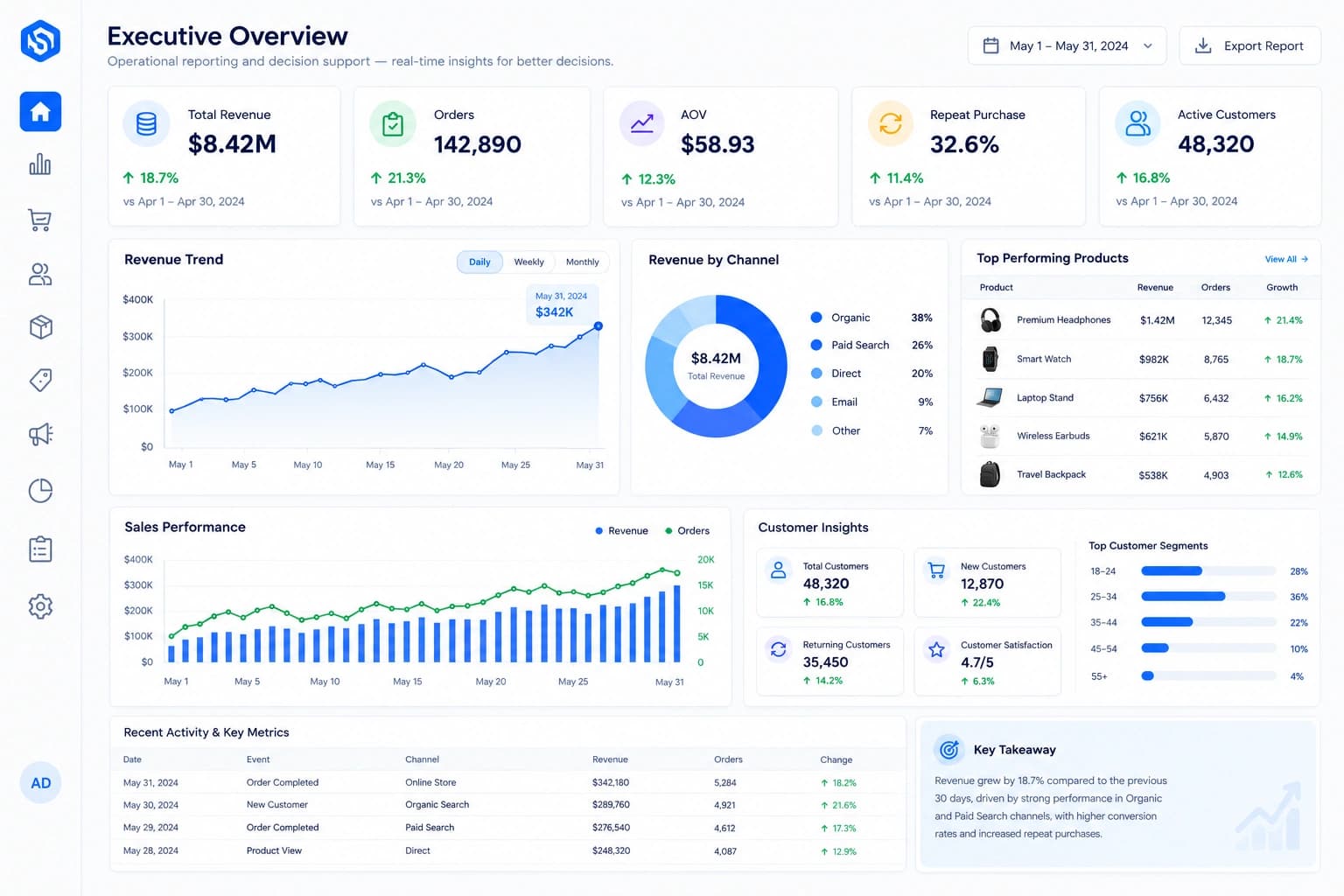
Build applications around inventory checks, receiving, transfers, fulfillment, tasks, exceptions, approvals, and daily store workflows.
Connect customer accounts, orders, pickup, returns, loyalty, service, and other experiences across digital and physical channels.
Improve inventory visibility, allocation, order routing, store fulfillment, pickup, delivery, and multi-location coordination.
Connect retail data, dashboards, workflow automation, AI capabilities, and custom applications around defined operational requirements.
Retail Software Problems Usually Appear Between
Systems and Store Workflows
Retailers may already have ecommerce, POS, ERP, inventory, CRM, workforce, fulfillment, and reporting systems. The problem begins when employees still need spreadsheets, email, manual re-entry, separate applications, and individual knowledge to make the operation work across locations and channels.
Store Teams Work Around the Systems
Employees use spreadsheets, messages, paper, or manual work because existing applications do not fit receiving, transfers, inventory, fulfillment, service, or other daily workflows.
Ecommerce and Store Operations Do Not Stay Aligned
Orders, inventory, pickup, returns, customer information, pricing, and status may behave differently depending on whether the interaction starts online or in a store.
Employees Re-enter the Same Information
Product, customer, order, inventory, transfer, or status information is repeatedly moved between POS, ecommerce, ERP, CRM, WMS, spreadsheets, and internal systems.
Multi-Location Workflows Become Hard to Coordinate
Each store or location develops its own workaround because the central system does not provide the visibility or workflow required locally.
Customer Requests Cross Too Many Teams
Returns, pickup, order changes, customer service, loyalty, account questions, or special orders require employees to search several systems or contact another department.
Growth Creates Requirements the Original Retail Stack Cannot Support
New locations, channels, fulfillment models, customer programs, product categories, or operating rules create workflows the existing systems were never designed to manage.
Operational Clarity
Not sure whether the right answer is custom software, integration, automation, reporting, or improvement to an existing retail platform?
Retail Software Should Connect the Store With the Wider Commerce Operation
A store does not operate independently from ecommerce, inventory, customer service, fulfillment, finance, and reporting.
An employee may need to receive inventory, fulfill an online order, transfer stock, serve a customer, process a return, check availability, complete a pickup, or resolve an exception using information spread across several systems.
That is why Gyan designs retail software around the full operating workflow rather than treating each application as a separate technology project.
Key insight
The goal is not to give store teams more software. The goal is to make the work easier to execute across locations, channels, systems, and customers.
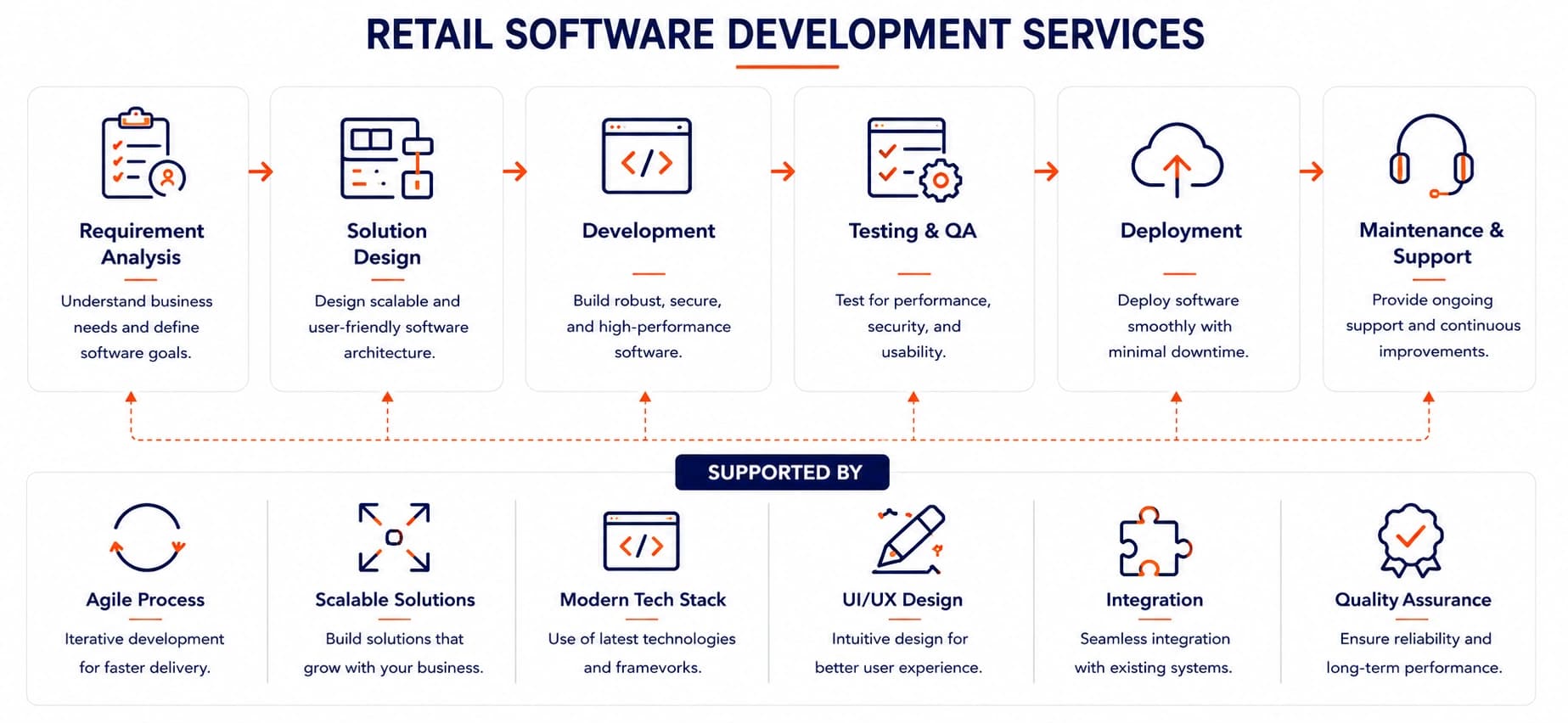
Customer / Store Need → Operational Workflow → Connected Systems → Retail Application → Action → Reporting
Two Focused Ways to Improve the Retail Software Environment
Some retailers know their store or omnichannel operation is creating unnecessary work but are not yet certain what should be built. Others already have a defined software requirement and need implementation.
Operational Review & Improvement
For retail teams that need clarity across store workflows, ecommerce, inventory, customer service, systems, data, reporting, and ownership before deciding whether custom software is required.
 Map how stores, customers, inventory, orders, fulfillment, returns, employees, reporting, and systems currently work together.
- Identify where manual work, platform limitations, duplicate entry, poor visibility, exceptions, or disconnected tools are creating friction.
- Determine whether the right improvement is workflow redesign, systems integration, automation, reporting, platform extension, or custom software.

Operational Review & Improvement can stand alone from assessment and redesign through prioritized retail operational improvements.
Technology & AI Implementation
For retailers with a defined requirement for store applications, customer tools, portals, order or inventory systems, integrations, reporting, automation, mobile workflows, or AI-enabled capabilities.
- Turn the defined requirement into a practical implementation plan with clear users, functionality, outcomes, systems, and responsibilities.
- Align the application with POS, ecommerce, ERP, CRM, OMS, WMS, inventory, loyalty, marketplaces, databases, and reporting.
- Build, integrate, test, deploy, and support the agreed retail software implementation.
Technology & AI Implementation can begin independently or work alongside Operational Review & Improvement.
Retail Software
Development Experience
Our retail software work is shaped by how stores, customers, employees, inventory, orders, fulfillment, service, reporting, and digital channels interact in daily operations.
We examine how POS, ecommerce, ERP, CRM, OMS, WMS, inventory platforms, loyalty systems, marketplaces, databases, reporting tools, automation, and custom applications support the work and where employees still depend on manual coordination.
This reveals where existing technology can be improved and where focused software development can add the missing operational capability.
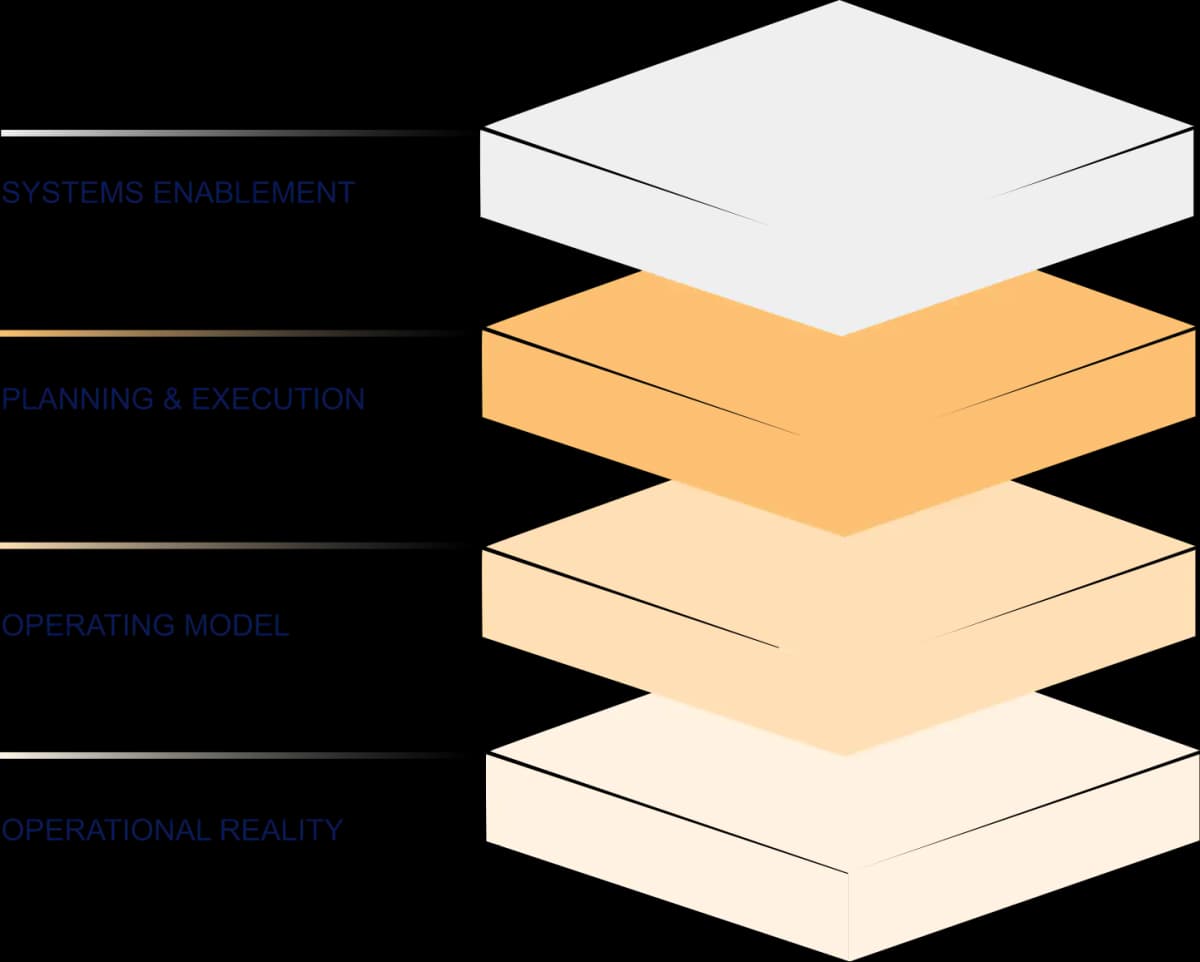
Where Retail Software Can Support the Operation
We focus on the parts of retail where store execution, ecommerce, customer experience, inventory, fulfillment, employees, and technology depend on one another.
Store Operations
Store employees often complete important operational work using several systems, spreadsheets, messages, or manual processes. Purpose-built software can bring defined store workflows into one clearer operating experience.
What We Examine
- Daily store workflows
- Receiving
- Inventory checks
- Task management
- Approvals
- Operational requests
- Store exceptions
- Product information
- Order lookup
- Customer lookup
- Role-based access
- Manager visibility
Desired Outcome
Give store employees a clearer way to complete operational work without moving unnecessarily between disconnected systems.
Inventory & Transfers
Retail inventory moves across stores, warehouses, ecommerce channels, receiving, transfers, fulfillment, returns, and adjustments. Software needs to reflect both where inventory physically exists and how it is being used operationally.
What We Examine
- Inventory by location
- Available-to-sell inventory
- Receiving
- Transfers
- Transfer requests and approvals
- Replenishment
- Stock adjustments
- Inventory exceptions
- Reserved inventory
- Store and warehouse availability
- Return inventory
- Inventory reconciliation
Desired Outcome
Improve inventory visibility and control across locations while reducing manual transfer and reconciliation work.
Omnichannel Orders & Fulfillment
Customers may order online and interact with a store later through pickup, return, exchange, service, or fulfillment. The software supporting those workflows needs to keep the order, customer, inventory, and store operation aligned.
What We Examine
- Online order visibility
- Store fulfillment
- Buy online, pick up in store
- Ship from store
- Local delivery
- Order allocation
- Pickup readiness
- Customer arrival
- Partial fulfillment
- Order exceptions
- Cross-channel status
- Fulfillment completion
Desired Outcome
Create a clearer operating workflow between ecommerce orders and the stores or locations responsible for fulfilling them.
Customer & Associate Applications
Retail employees often need better customer context while customers may need better access to account, product, order, loyalty, or service information.
What We Examine
- Customer profile
- Order history
- Product information
- Availability
- Loyalty information
- Customer preferences
- Account information
- Associate-assisted selling
- Customer lookup
- Reordering
- Service history
- Customer self-service
Desired Outcome
Give customers and employees the information and actions required to support a more connected retail interaction.
Returns & Customer Service
Retail returns and customer-service workflows may begin online and finish in a store—or begin in a store and require action across ecommerce, inventory, finance, CRM, or order systems.
What We Examine
- Order lookup
- Return eligibility
- Return authorization
- Store returns
- Ecommerce returns
- Exchanges
- Refund handoffs
- Customer-service cases
- Inventory disposition
- Customer communication
- Exception handling
- Cross-channel return history
Desired Outcome
Create a clearer return and customer-resolution workflow across stores, ecommerce, customer service, inventory, and financial systems.
Multi-Location Operations
As the number of stores or locations grows, operational differences become more difficult to manage through spreadsheets, email, and individual knowledge.
What We Examine
- Location hierarchy
- Store-specific workflows
- Store tasks
- Inventory by location
- Transfers
- Fulfillment capacity
- Location-level approvals
- Operational exceptions
- Store communication
- Manager oversight
- Regional visibility
- Location performance
Desired Outcome
Give central and local teams clearer visibility and workflow consistency while preserving the operational differences that matter by location.
B2B & Account-Based Retail
Some retail businesses also serve commercial, trade, wholesale, professional, or account-based customers with requirements beyond standard consumer transactions.
What We Examine
- Customer accounts
- Account hierarchy
- Account-specific pricing
- Product catalogs
- Quote workflows
- Purchase orders
- Approval workflows
- Reordering
- Documents
- Sales-assisted orders
- Store and account interactions
- ERP and CRM connections
Desired Outcome
Support more complex account-based buying while keeping store, ecommerce, sales, and business-system workflows connected.
Reporting & Decision Support
Retail reporting becomes more useful when management can connect store activity with ecommerce, inventory, orders, customers, fulfillment, returns, and operational exceptions.
What We Examine
- Store performance
- Revenue and orders
- Inventory availability
- Stockouts
- Transfers
- Fulfillment
- Pickup
- Returns
- Customer-service activity
- Location comparisons
- Exception reporting
- Management actions
Desired Outcome
Connect operational information with the locations, workflows, and decisions responsible for retail performance.
Implement Around the Retail Workflow the Business Needs
Technology should support a defined retail operating requirement. Once the need is clear, Gyan can plan, build, connect, or improve the relevant software layer.
Store Operations Applications
Build employee tools around receiving, inventory, tasks, approvals, exceptions, order lookup, customer lookup, and other defined store workflows.
Omnichannel Applications
Connect ecommerce, stores, customers, inventory, orders, pickup, returns, service, and other cross-channel interactions.
Inventory & Fulfillment Tools
Build software around inventory visibility, transfers, allocation, store fulfillment, pickup, delivery, and exception management.
Customer & Associate Applications
Build customer self-service, associate-facing tools, account applications, product-information tools, loyalty workflows, and assisted-selling applications.
Reporting & Management Applications
Build store, regional, inventory, order, customer, fulfillment, and operational decision-support views.
Mobile Retail Applications
Extend inventory, receiving, fulfillment, store tasks, customer lookup, approvals, and operational workflows to mobile users.
Already Know What Needs to Be Built?
Turn the retail software requirement into a practical implementation plan.
AI Should Support a Defined Retail Workflow—not Become Another Standalone Feature
AI can help retail teams retrieve information, support employees, organize customer requests, summarize exceptions, assist with product knowledge, and prepare operational decisions.
Its value depends on reliable data, defined workflows, clear rules, connected systems, and human ownership.
Associate Knowledge Support
Help employees retrieve approved product, policy, inventory, service, store, and operational information without searching across several sources.
Customer Assistance
Support defined product, order, account, return, pickup, service, or self-service interactions.
Operational Exception Support
Summarize or prioritize inventory, order, fulfillment, return, or store exceptions so employees can investigate more efficiently.
Product Information Support
Assist with product attributes, descriptions, categorization, data completeness, and retrieval while keeping approved publication and pricing workflows under business control.
Reporting & Management Support
Help users summarize defined operational changes, retrieve context, and investigate relevant store, order, inventory, or customer information.
Trust Statement
Before recommending AI, Gyan assesses the workflow, source information, data quality, business rules, system access, decision boundary, and human oversight required.
When a Retail Software Fit Call Makes Sense
Use the call to clarify an operational problem or discuss a defined software implementation requirement.
When You Need Operational Clarity
- Store teams rely on spreadsheets, email, or manual work for important workflows.
- Ecommerce and store processes do not stay aligned.
- Employees repeatedly move information between POS, ERP, ecommerce, CRM, or inventory systems.
- Inventory, transfers, fulfillment, or returns are difficult to manage across locations.
- Customer interactions require employees to search several systems.
- You know the retail operation needs improvement but are not certain whether custom software is the answer.
When the Requirement Is Clear
- A store operations application is required.
- An associate or customer-facing application is required.
- Inventory, transfer, fulfillment, pickup, or return workflows need a custom tool.
- A multi-location operational application is required.
- Existing retail software needs to be extended or modernized.
- A defined application needs integration with POS, ecommerce, ERP, CRM, OMS, WMS, loyalty, or other systems.
A Clear Starting Point Without a Forced Sequence
Start with Operational Review & Improvement, Technology & AI Implementation, or both based on how clearly the retail software requirement is already defined.
Retail Software Fit Call
We discuss the stores, users, workflow, operational problem, current systems, manual workarounds, customer requirements, and any software need already identified.
Engagement Scope
We define whether the work should focus on Operational Review & Improvement, Technology & AI Implementation, or both. The required outcomes, users, functionality, systems, integrations, responsibilities, priorities, timeline, and delivery approach are agreed before work begins.
Review, Implementation, or Both
We deliver the agreed work—from workflow review and software definition through application development, integration, reporting, automation, AI, testing, deployment, and rollout.
30-minute call
No obligation
Review and implementation scoped separately
Who This Is For
This service is designed for established retailers where store operations, customers, ecommerce, inventory, fulfillment, service, or multi-location workflows require capabilities that standard platforms do not support effectively.
Typical Environments
Omnichannel retailers
Multi-location retailers
Specialty retail
Grocery and food retail
High-value retail
Retailers with ecommerce and physical stores
B2B and trade-focused retail
Retailers using several operational systems
Businesses with store fulfillment or pickup
Organizations with a defined retail software requirement
A Different Provider May Be Better If
You only need a basic ecommerce storefront
You only need a POS installed
You only need a standard retail plugin configured
You only need product data entered
You only need hardware setup
The existing retail platform already supports the workflow cleanly
There is no defined customer, store, workflow, or operational reason for custom development
Build Retail Software Around Real Operations
Clarify the workflows, systems, users, and operational needs before deciding what to build.
Discuss Your Retail Software Requirement→

30-minute call

No obligation

Consulting and implementation scoped separately
Find the Right Ecommerce Operational Starting Point
Custom software is most valuable when the workflow, users, data, and system gap are already clear. Explore the operational problem the software needs to support or the connected technology layer it must work with.
Explore by Operational Focus
Ecommerce Order Management
Define the order lifecycle, ownership, routing, exceptions, and visibility requirements before building software around order operations.
Inventory Management & Fulfillment
Clarify how availability, inventory movement, allocation, picking, fulfillment, and location workflows should operate before translating them into custom functionality.
Ecommerce Customer Experience
Map the customer, service, account, order, return, and self-service workflows a customer-facing application needs to improve.
Ecommerce Analytics & Reporting
Establish KPI definitions, data sources, reporting logic, and decision requirements before building dashboards or operational reporting applications.
Explore by Technology & Integration
Ecommerce Mobile App Development
Extend defined customer, store, inventory, order, fulfillment, or employee workflows into purpose-built mobile applications.
ERP & Ecommerce Integration
Connect custom applications with ERP-owned transactions, products, inventory, customer records, fulfillment, finance, and business data.
Ecommerce POS Integration
Support applications that depend on live store inventory, customers, orders, pricing, returns, or other POS-managed activity.
Ecommerce Analytics Dashboard
Turn the reporting requirement into dashboards and management views connected to the systems and workflows behind daily commerce operations.
Common Questions
What are retail software development services?
Retail software development means building applications, operational tools, portals, integrations, mobile workflows, and supporting systems around store and commerce requirements that standard retail platforms do not support effectively.
What types of retail software can Gyan build?
Gyan can build store operations applications, customer and associate tools, inventory and transfer applications, order and fulfillment software, return workflows, multi-location tools, reporting applications, portals, and other defined retail systems.
Can Gyan build around our existing POS or ecommerce platform?
Yes.Custom software can extend and connect with existing POS, ecommerce, ERP, CRM, OMS, WMS, inventory, loyalty, and other business systems rather than replacing them unnecessarily.
Can you build software for multi-location retailers?
Yes.Software can support location-level inventory, transfers, fulfillment, store tasks, approvals, customer service, reporting, and other workflows across multiple stores or operating locations.
Can you build retail inventory applications?
Yes.Retail inventory applications can support location visibility, availability, receiving, transfers, reservations, stock exceptions, replenishment, fulfillment, returns, and other defined inventory workflows.
Can Gyan build omnichannel retail software?
Yes.Software can connect ecommerce, stores, customers, inventory, orders, fulfillment, pickup, returns, and service across channels where the required systems provide appropriate access.
Can you build associate-facing retail applications?
Yes.Associate applications can support product information, customer lookup, order history, inventory, store tasks, fulfillment, service, approvals, and other defined employee workflows.
Can retail software include AI?
Yes, where there is a defined use case.AI may support employee knowledge, customer assistance, operational summaries, product information, workflow support, exception analysis, or reporting.
Do we need to replace our retail systems?
Not necessarily.The right solution may involve extending an existing platform, connecting systems, automating a workflow, improving reporting, or building a focused application around a missing requirement.
What is the difference between Retail Software Development Services and Software Development for Ecommerce?
Retail Software Development Services focuses more deeply on store operations, physical locations, POS-connected workflows, omnichannel execution, associate tools, inventory transfers, pickup, and other retail-specific requirements.Software Development for Ecommerce focuses more broadly on digital commerce applications, customer and B2B portals, order tools, ecommerce operations, marketplaces, and online commerce workflows.
Do we need an Operational Review before development?
No.If the users, workflows, functionality, integrations, and desired outcome are already clearly defined, Gyan can move directly into Technology & AI Implementation.Operational Review & Improvement is used when the underlying retail problem or appropriate software direction still needs to be clarified.
Discuss Your Retail Software Requirement
Tell us what your stores, employees, customers, locations, or retail operation need to do that the current technology does not support effectively. We'll use the initial conversation to understand the workflow, users, systems, operational requirement, and whether the appropriate starting point is operational review, software implementation, or a combination.
Focused on your goals
You decide the next step.
Consulting & implementation